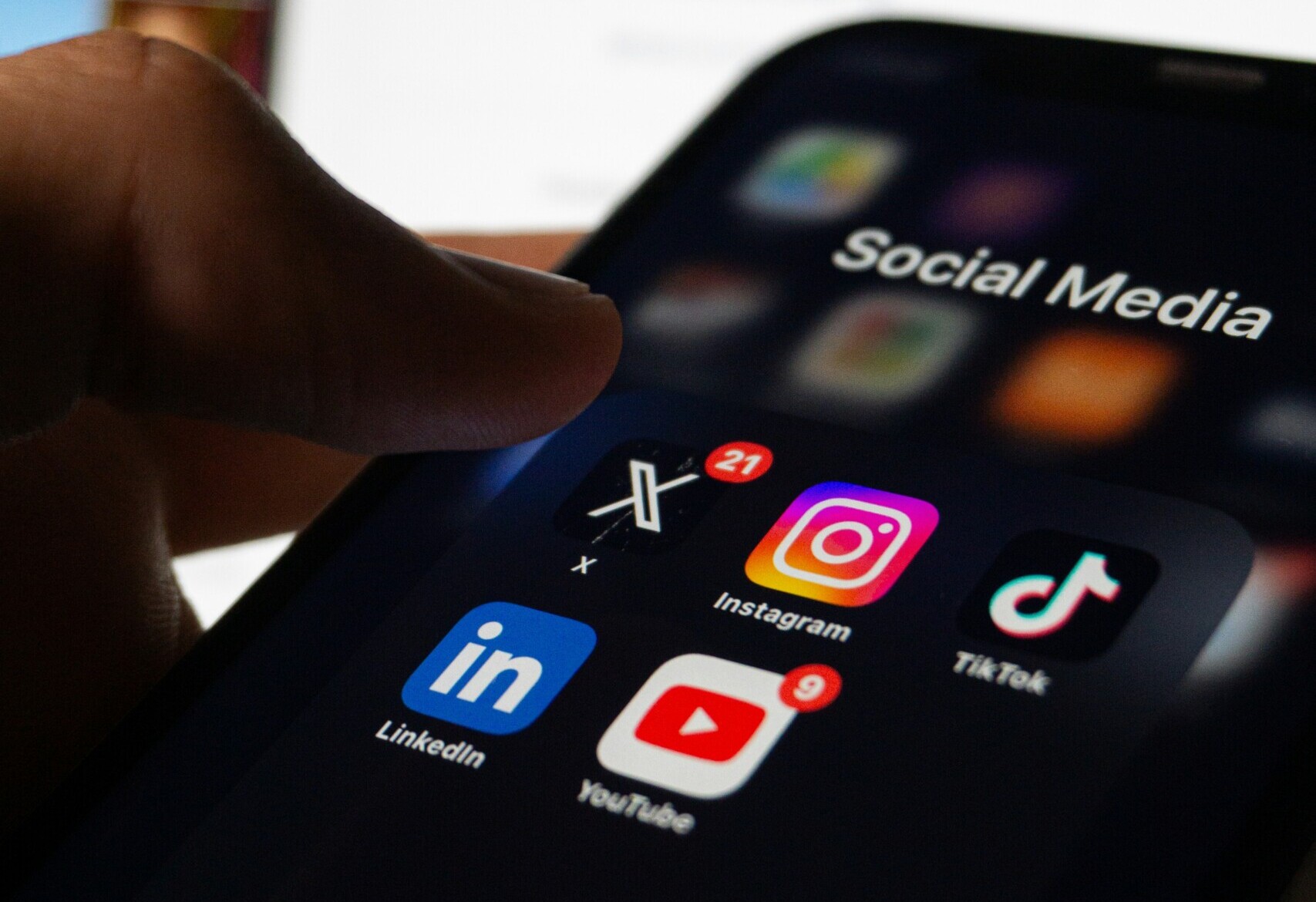
The adage still holds true: “You are what you eat.” French author and gastronome Jean Brillat-Savarin astutely commented, “Tell me what you eat, and I will tell you what you are.”[1] Although his comment was focused on the things we physically consume to fuel our bodies, it also rings true of the things in our lives that fuel our mind and soul. Our students, as well as our society today, live on consumption, from television to music to books to social media to news to gossip; they love to be in the know and devour the newest trend, factoid, or news bit. In fact, for most students, to be out of “the know” often relegates them to a lesser social circle, making them feel irrelevant.
There is a war constantly being fought for student attention. Working in Student Affairs over the last eight years, it has been painstakingly obvious how our student advertising has become increasingly less effective even though we have doubled our efforts. We create pictures, posters, flyers, chalkboards, signage, media posts, videos, and yes, sadly, even TikTok videos- yet, when surveyed the number one complaint most students have is that there was a lack of advertisement, or they did not know about the events. Students are distracted, and not just students; I think I can speak of this in my own life as well. There is a market for our attention, and many of us give it away freely without intentionally thinking of what it costs us.
Historically, consumption was used to refer to diseases that wasted away our bodies, what a fitting word to describe our disease of consumption of media today. What can save our students from habits of scrolling and running to social media out of the fear of missing out? American social psychologist, Jonathan Haidt talks in his writings about the need to limit phone and social media use in youth under sixteen and creating phone free schools. Although these steps are an attempt to address the issue, I believe Christian Higher Education can offer something more.
As Christian educators part of our duty is to guide our students in virtue formation. While several words describe the virtue contrasting distractedness: mindfulness, attentiveness, intentionality, I most want to focus on presence. We see this Paul’s admonition in Philippians 4:8 to fix our minds on and practice things “what is true, noble, right, pure, lovely, admirable, praiseworthy.”
However, before students can develop virtue, I believe they must first stop the vice. Justin Whitmel Earley, in his book The Common Rule, speaks to the idea of how smartphones both allow us to project our presence across the globe and fracture it until there is nothing left.[2] When we hold our phones instead of focusing on those around us, we communicate that the people present with us are not as important as the information that may come across our screen. It seems that if consumption of excess is the problem, then moderation and limits may be a step in the right direction. I have witnessed mindful students attempt this approach in ways such as “social media fasts” or even buying a device such as a Brick[3] that blocks your applications and limits your screen time. However, it seems there might be a simpler solution.
If the computers in our pocket and social media are the problem, it seems the simplest, cheapest solution would be to turn the phone off. Yet rarely are bad habits simple to cure; otherwise they would not be vices. Phones provide our access to the world around us; turning them off can be terrifying to students. They are no longer in the know, no longer accessible. They may become irrelevant. Yet our accessibility to all things at all times is precisely what keeps us from being fully present in the individual moments of time with the people we are with. A student turning off their phone means trading quantity for quality. How much free time might be created if students simply turned off their phones? Problem solved? Sadly no. Stopping the vice is only the first step; the virtue must still be cultivated.
Yet before one immediately launches into character formation, I believe there is an important middle step- the pause. I love the use of the word selah[4] in the Psalms, the idea of pausing and looking forward to what is next. There is a reason that Christ went into the wilderness to fast to pray. Silence helps us refocus and reorient our minds towards God, fasting increases our dependence on the One who sustains us. We must help our students to be mindful in the moments of pause and times of relying on God, but they cannot stop there either. While the monastic life may be appealing and abstaining from our phones is good, that is not where our call as Christians ends. We are called to “Go into the world” Mark 16:15, from creation we have been called to be image-bearers. Merely staying removed from the world is not an option.
Students are not typically looking to live a life of distraction, but without forming meaningful habits of presence, they will continuously be drawn into the doomscroll. After creating a void of distraction by turning off their phones, if students do not fill that vacuum with something intentional, something unintentional will fill the void. Students need to have good liturgies in place to cultivate mindfulness in the absence of distraction. The term liturgy stemming from the Greek leitourgia[5], translates to “work done on behalf of the people”. In religious circles today, many use it to refer to habits that help one intentionally focus on and encounter worship, or communion with our Creator. It requires active participation; it requires intentional habits.
Romans 12:1-2 points out, “Offer your bodies as a living sacrifice…. your true and proper worship. Do not conform to the pattern of this world but be transformed by the renewing of your mind [emphasis added].” Mindfulness, or presence, is at the heart of all relationships. Our relationship with God, our family and friends all depend on it. So how do students not give their attention away freely, and remain diligent, habitual even, on how they spend their focus? Justin Whitmel Earley suggests a series of intentional liturgies throughout our day. While Justin recommends going to Scripture before phone, I would take it a step further and say students need to practice prayer, Scripture and fellowship before turning to the devices that distract.
Scripture reminds us of who we are and whose we are. It reminds us that we are sons, daughters, and image bearers of the King. Students need to be reminded daily of who the Creator says they are before they engage the world and have that identity challenged. Secondly, intentionally developing the habit of prayer brings us into communion with the One who gives us our identity and constantly provides students with the opportunity to be present with Him, bringing their concerns and their curiosities before the Creator. Finding postures such as kneeling in prayer help us to intentionally engage and focus, rather than getting distracted by the next of many things on our busy schedule. Lastly, fellowship, we need to intentionally engage with the world around us, especially those physically in our time and space, if we are to grow and reach the nations.
James K. A. Smith would say that we are all pulled by a telos[6]– our vision of what a good life or flourishing looks like. So, how can we, as educators, mentors, and community members, show students what flourishing looks like? Modeling good habits, challenging them to think critically, guiding them to find and structure their telos, and to be mindful about the practice of presence. Encouraging students towards restorative practices and habits focused on restorative virtues and ethics in direct contrast to our vices of our fallen nature. Intentionally engaging our students in a Christ-centric community and reminding them of their identity in Him.
As Maximus the Confessor states so beautifully.
Let us be satisfied simply with what sustains our present life, not with what pampers it. Let us pray to God for this, as we have been taught, so that we may keep our souls unenslaved and absolutely free from domination by any of the visible things loved for the sake of the body. Let us show that we eat for the sake of living, and not be guilty of living for the sake of eating. [7]
[1] Jean Anthelme Brillat-Savarin, The Physiology of Taste: Or, Meditations on Transcendental Gastronomy, trans. M. F. K. Fisher (Everyman’s Library, 2009), 45.
[2] Justin Whitmel Earley, The Common Rule: Habits of Purpose for an Age of Distraction (InterVarsity Press, 2023), 64.
[3] Those wishing to utilize technology to assist in this practice can find it here: https://getbrick.com/
[4] Emil G. Hirsch, “Selah,” in The Jewish Encyclopedia, ed. Isidore Singer (Funk & Wagnalls, 1906), 11:181, https://www.jewishencyclopedia.com/articles/13398-selah.
[5] See Daniel, Christ: The Liturgy; Christopher Carstens, Principles of Sacred Liturgy: Forming a Sacramental Vision (Hillenbrand Books, 2020); David W. Fagerberg, Theologia Prima: What is Liturgical Theology? (Chicago: Hillenbrand Books, 2004). See also Godfried Cardinal Danneels, “Liturgy Forty Years After the Council: Boston College Canisius Lecture: April 27, 2007,” in America: The Jesuit Review (August 27, 2007), available at https://www.americamagazine.org/issue/623/100/liturgy-forty-years-after-council. John H. Miller, C.S.C., “The Nature and Definition of the Liturgy,” in Theological Studies 18 (1957) 325–356, considered, at the time of the publication of his article, that the “definition of the liturgy given by the Encyclical Mediator Dei can now be considered as the teaching of the Church, since it has thus received official pontifical sanction (339).
[6] James K. A. Smith, Desiring the Kingdom: Worship, Worldview, and Cultural Formation (Baker Academic, 2009), 86.
[7] The Philokalia (Volume 2, page 300).