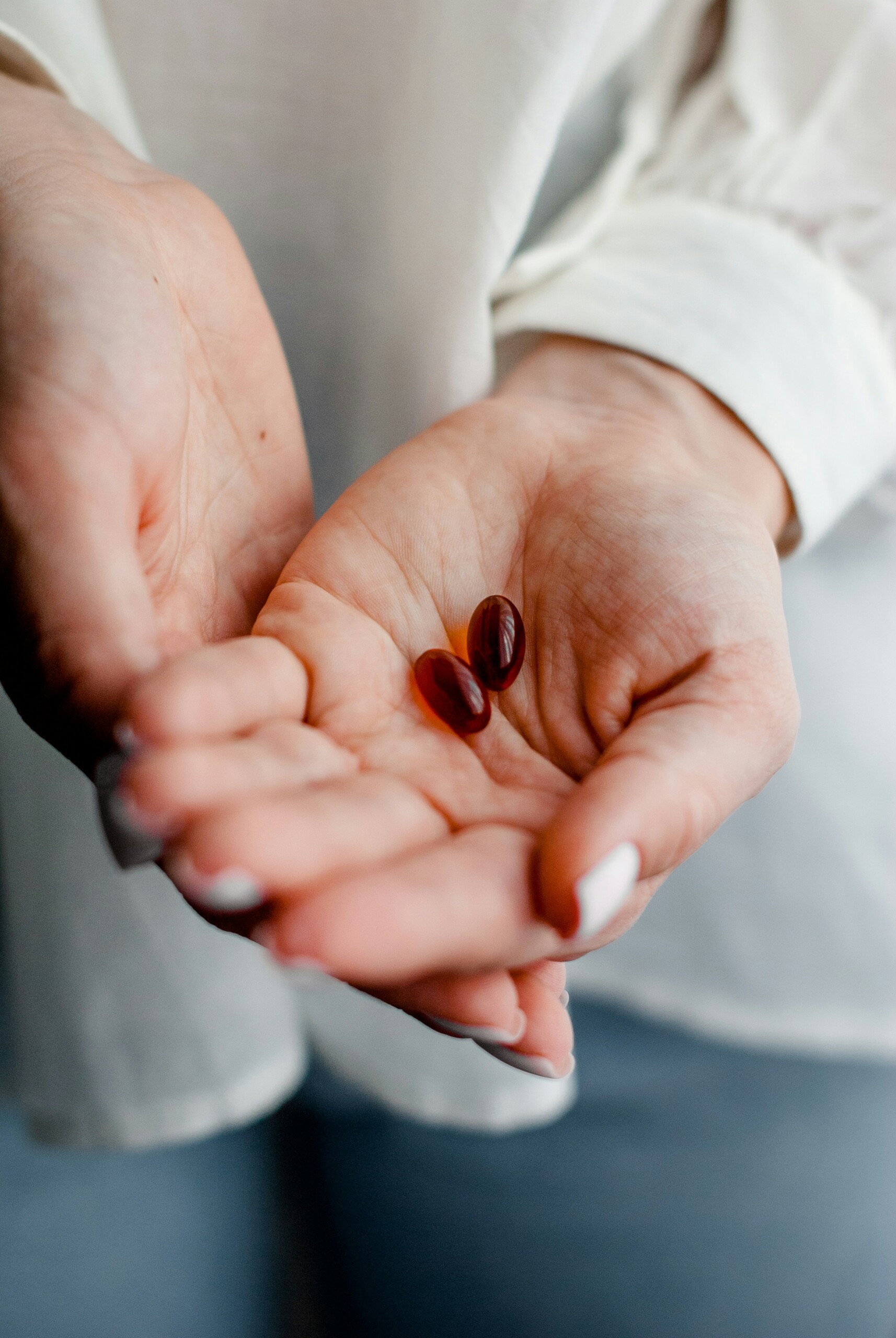
It is a privilege to communicate the connections between pharmacy education and the image of God. Initially, one may not think that these could be linked; however, the ties between these two topics are strong. To set the stage, overviews of the profession as well as the imago Dei will be offered.
The Pharmacy Profession
The American Pharmacists Association’s Code of Ethics for Pharmacists states that “pharmacists are health professionals who assist individuals in making the best use of medications.” Pharmacists are known as medication experts on the healthcare team and have various roles. Our responsibilities include advocating for patients personally and through public policy, assessing both prescription and non-prescription medications for appropriateness and safety, engaging in evidence-based practice, monitoring the effects of medications, assisting in disease state management, filling and compounding prescriptions, seeking to ensure the right medication is reaching the correct patient, and interacting with insurance companies for coverage of medications.
In doing this, pharmacists can be found serving in a variety of settings. When thinking of a pharmacist, most will picture someone in a white coat standing behind a counter at a drug store. These are community pharmacists who are the public’s most accessible healthcare professionals. Hospital pharmacists work in the central pharmacy, assessing and filling medication orders, or on a unit with a healthcare team to provide medication expertise and assist with dosing and monitoring patients regarding the effects of medications. Pharmacists working in ambulatory care are found in both specialty and primary care clinics, and we can assist providers in creating treatment plans or manage our own patients by practicing as mid-level practitioners. Home healthcare pharmacists provide intravenous medications for patients to receive at home for a period of time. Pharmacists working in the pharmaceutical industry help to create, test, and teach others about new medications. Long-term care pharmacists provide medications and monitor drug therapy for residents who live in a facility as their home. Pharmacists who work in managed care assist in making decisions about medication use for large numbers of patients. Nuclear pharmacists compound radioactive pharmaceuticals that aid in diagnosing and treating patients. Pharmacists in academia not only teach future pharmacists but students in other healthcare professions. Clearly, in every area of healthcare where medications are involved, both seen and unseen, there is a pharmacist.
The Imago Dei
As pharmacists, we hold that each person with whom our field interacts across all these practice areas is made in God’s image. To that point, it is both astonishing and extremely humbling to consider that we are all created in the imago Dei. When contemplating this mystery, the opportunities and responsibilities of being God’s image-bearers to those around us are profound. Pastor and author Tom Nelson states that it is clear in Scripture that we are designed to “uniquely reflect who God is to this good world. The repeated use of the word image by the Genesis writer tells us of the importance of this concept for our understanding of what it means to be human.” To that end, one may honestly wonder about the rationale for God’s making us in this manner. American monk and theologian Thomas Merton offers that “what God seeks of us is His own image in ourselves. This image is not something that we can produce by our own efforts. Our job in life is not so much to produce anything, as to be what we are supposed to be, letting the divine image come out and manifest itself in our lives by the way in which we live.”
From a practical perspective, being made in God’s image is a function of both relationship and work. First, the triune God has always existed in relationship among Father, Son, and Spirit. Dallas Willard, philosopher and a main founder of the Christian spiritual formation movement, posits that “the Trinity is the model of life with God. What was God doing before he created the world? They were enjoying themselves. But what was that? That was their fellowship with one another.” Therefore, we are designed to be in relationship with each other as well and to fully enjoy this community within God’s purposes. Pastor and author Greg Boyd assures us that we are “created in the image of a God whose very nature is communal. It’s against our nature to be isolated.” Undoubtedly, it is no wonder that likely the harshest punishment imposed on someone in a correctional facility is solitary confinement.
Second, God is a worker. Following the creation of the cosmos and specifically the earth, Genesis 2:3 declares that “then God blessed the seventh day and made it holy, because on it he rested from all the work of creating that he had done.” In reflecting the imago Dei, humans were given work to do to steward well what God had created and to honor him through it. The Theology of Work Project explores this reality and has a vision “that work, workers, and workplaces throughout the world are transformed to reflect God’s good design for work.” A few of the many people who have written about the importance of work in our spiritual lives are Tim Keller and Katherine Leary Alsdorf (Every Good Endeavor: Connecting Your Work to God’s Work), R. Paul Stevens (Work Matters: Lessons from Scripture), Ben Witherington (Work: A Kingdom Perspective on Labor), and Tom Nelson (Work Matters: Connecting Sunday Worship to Monday Work). To summarize, Nelson states that “as image-bearers of God, who is a worker, we must remember that our work has intrinsic value in itself and is to be an act of worship.”
The focus of this article will be how the image of God is evident in both the relationships and work of a pharmacist and how we share these aspects with our pharmacy students. In an effort to train pharmacy students to do this, the Samford University McWhorter School of Pharmacy’s mission is “to prepare students in a nurturing, Christian environment to be exemplary pharmacists and improve health worldwide through innovative pharmacy practice, scholarship and service.” Additionally, McWhorter’s guiding Scripture verse relates to both relationships and work by encouraging students, faculty, and staff to “let us run with perseverance the race marked out for us.” Our professional program spans four years following the completion of two years of prerequisite coursework. The relationships that pharmacists cultivate and the work that pharmacists do to help patients maximize the effects of their medications are the crux of our profession.
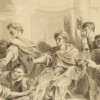
Along these lines, it is intriguing to note that Christ has been depicted as a pharmacist. Biblical scholar Torrey Seland reports that approximately 150 paintings of Jesus as an apothecary have been created in Europe starting in the 17th century. Of note, Dutch medical anthropologist Sjaak van der Geest describes one painting in particular: “The figure of Christ is a conventional one: long hair, beard, halo and the familiar robe. What is unusual, however, is the entourage. Christ is depicted leaning against the counter of a pharmacy.” His right hand is raised to pronounce a blessing, and His left hand “holds a scale, a common tool in traditional pharmacy.” More recently, the image of Jesus in this same painting was made into a commemorative stamp in Austria in 2024. It is very interesting to see that the healing presence of the Messiah, evident in biblical passages, has been portrayed in his representation of the pharmacy profession not only a few centuries ago, but also within the past few years. With so much of Jesus’s ministry involved in healing the sick, these depictions of Jesus as a part of the pharmacy profession are powerful portrayals that pharmacists are also important in the healing process by being made in God’s image.
Building on these illustrations of Christ as a pharmacist, our aim will be to discuss the imago Dei concerning the relationships and work that our pharmacy students have with themselves, with patients, and with other healthcare professionals. Various courses in our pharmacy program will be highlighted, as these aspects are addressed in both classroom and clinical settings across the four years of our curriculum.
Students Interacting with Themselves
We have more conversations with ourselves than we do with anyone else. This constant self-talk is very powerful and shapes the lens through which we view the world. It also relates to A. W. Tozer’s famous statement that “what comes into our minds when we think about God is the most important thing about us.” Without question, our thoughts about God strongly influence what we think about ourselves and how we interact with others. With the current pressures of social media and the general societal anxiety that seems to be increasing, it is crucial for students to pay attention to how they are communicating with and caring for themselves. To this end, there are some ways that we at Samford seek to help pharmacy students engage with themselves as being made in God’s image.
First Year
Before faculty can guide students in learning how to care for patients, we must first encourage them to care for themselves. To facilitate this, all beginning pharmacy students in our program are enrolled in the Foundations of Health and Pharmacy I course in the fall semester. On the first day of class in this course, we incorporate a wordplay on the term healthcare system by rearranging the words and separately discussing care, health, and system. For instance, when addressing care, it is stated that to care means to be present with others and to suffer with them, thereby reflecting the imago Dei through relationships. When discussing the word health, we mention that the World Health Organization (WHO) defines it as “a state of complete physical, mental and social well-being and not merely the absence of disease or infirmity.” Following this description, we look at the depiction of a balanced lifestyle offered by William Danforth in his classic book, I Dare You. Danforth, a businessman and the founder of the Ralston Purina Company, mentions the three areas in the WHO definition, and he also includes the religious or spiritual dimension in his text. Scripture passages are then incorporated into this discussion that address each of these four aspects. Specifically, from Mark 12:30, we highlight the verse on Samford’s main entrance sign that we are to love the Lord our God with all our heart (emotionally), soul (spiritually), mind (mentally), and strength (physically). Then, from Luke 2:52, we see that Jesus grew in wisdom (mentally), stature (physically), in favor with God (spiritually), and favor with people (socially). Thus, since Christ models for us how to have a balanced life and we are made in the image of God, it is logical to conclude that it is important for us to do this as well regarding our overall health. Lastly, when we mention a system, we think about communication, teamwork, and coordination—all components of being in relationship with others. This illustration from the first day of class provides an overall theme for what these students will encounter and do individually in the coming weeks of the course.
To give this emphasis on holistic health practical context, students then hear about ways to care for themselves in these aspects: physical (involving both nutrition and exercise), mental/emotional, social (involving both people and cell phone use), spiritual, and sleep/rest.
After this instruction, these students have an assignment of creating their own well-being plan that incorporates each of these health areas that they will seek to follow in the subsequent two months. The intent of this assignment is to impress upon the students that we are serious about their well-being as they begin in and move through the program, and we want them to be serious about it as well. It assists in conveying to them that they are worthy image-bearers of God.
As students progress into the Foundations of Health and Pharmacy II course in the spring semester, they also learn about the important differences between generalizations and stereotypes. This is crucial in healthcare because it is very helpful for pharmacists to anticipate what may be welcomed by a patient and to avoid pigeonholing a group of people by thinking that they all act a certain way. To make this personal, an enlightening assignment in this course addresses cultural humility and sensitivity; students are to experience individually a new activity of their choosing and reflect on what that felt like to participate in it. These experiences expose students to situations with which they are unfamiliar and enable them to gain insights into particular biases that they may have—an internal realization that is absolutely necessary when learning how to appropriately care for a variety of patients made in God’s likeness.
Second Year
These aspects are further discussed in the Ethics in Healthcare and Christianity course in the second year of the curriculum. Following the discussion of foundational underpinnings of the course (e.g., decision-making, ethical theories and principles, moral development), the course is then based around the six core character traits of the “Character Counts! Coalition”: respect, responsibility, citizenship, fairness, caring, and trustworthiness. Students in the course are divided into groups, and each group presents a passage of the Bible that reflects one of these six traits. Sample passages include the woman at the well, the prodigal son, the good Samaritan, Jesus’s washing the disciples’ feet, throwing the first stone, and loving our enemies. They read the passage, share commentary about these verses, discuss times when these verses are particularly challenging, and offer how these verses relate to them as students or as future pharmacists. Since these presentations always involve discussions about relationships and their pharmacy work experience to date, they relate to students thinking about being in the image of God.
Following this presentation of the biblical perspective for each of the traits, the next class session addresses how that trait is operationalized in a healthcare perspective. Topics that are discussed include emergency contraception, relationships with the pharmaceutical industry, needle exchange programs and safe injection sites, physician-assisted suicide, euthanasia, living wills, medical cannabis, and transgender care. These challenging issues provide ways for students to reflect on what they think about them and how they would handle potential future situations. Certainly, thoughts about the imago Dei are present in this unique course in all of pharmacy education.
Third Year
The Human Resource Management for Pharmacy course enables students to learn about how to manage and lead pharmacy employees. Pharmacists not only oversee various components of drug therapy, but they are also responsible for the personnel in their particular pharmacy setting. These relationships can be enjoyable yet also challenging at times, especially for new graduates who suddenly find themselves as the ones in charge. Aspects that need to be considered in leading others include fairness, accountability, encouragement, motivation, and communication. Our pharmacy students need to take these elements into consideration as they think of both themselves and their co-workers as being made in God’s likeness.
Fourth Year
Our students have introductory pharmacy practice experiences (IPPEs) during the first three years of the program and advanced pharmacy practice experiences (APPEs) in the final year. These APPE rotations involve various opportunities for students to reflect on what they have learned thus far and see how well they can transfer that knowledge to patient care on a more consistent basis. Students participate in self-assessments during these rotations and share these thoughts with their preceptors; some students may find that they feel adequately prepared, while others may determine that they need to make significant improvements. Their self-talk during these times is important as they keep in mind that they are made in the image of God when learning about taking care of patients.
All of these courses incorporate the imago Dei in one form or another as students interact with themselves and ponder on a deeper level who they believe themselves to be. This brings us to how we teach students about communicating with patients and viewing them in God’s likeness.
Students Interacting with Patients
A recent study in the Journal of the American Pharmacists Association shows that almost 90% of the United States’s population lives within five miles of a community pharmacy. This proximity relates to pharmacists having the chance to interact with many people every day, and we need to be as prepared as possible for these conversations.
First Year
During Foundations of Health and Pharmacy I and II, as well as our laboratory courses, we begin teaching students how to communicate effectively and compassionately with patients. This discussion begins by reminding students that they represent not just their preceptor, our school, and the pharmacy profession, but they are also the face and hands of Christ, serving with humility and grace. They have the opportunity to show God’s love to every patient with whom they come into contact during their experiential courses by demonstrating kindness and empathy. We then discuss that all patients—regardless of any factors that may influence their interactions (e.g., race, political affiliation, social beliefs)—should be treated with the respect they deserve as children of God, without prejudice or judgment. One poor exchange in a pharmacy setting can cause a patient to lose trust in the healthcare system as a whole, so promoting effective communication is essential for building lasting relationships. The particular length of an encounter that a patient has with a pharmacist may not be what the patient remembers, but how the pharmacist treats that patient can change a life.
Furthermore, we review how communication is multimodal and how both nonverbal and verbal approaches deeply influence a patient’s perceptions. Encyclopedia Britannica defines nonverbal communication as the “transfer of information from one person to another without the use of words or spoken language and can occur in a variety of ways, including through facial expressions, gestures, and body posture or position.” In our pharmacy courses where communication is expressly taught, there is a segment on what we may be conveying to others without intention, which often surprises students during practice scenarios. We share that our facial expressions and body postures can be barriers to building rapport, showing empathy, and promoting patients’ willingness to be honest with healthcare professionals, thereby ultimately diminishing overall care quality and patient satisfaction. For instance, standing with arms crossed can be comfortable, especially while in a chilly clinic; however, it can be interpreted that this person is not engaged or is upset, creating unnecessary tension or misunderstanding. Certainly, our verbal communication can be undermined by nonverbal activity, and this makes awareness and intentionality essential for effective patient interactions. Being mindful of how others may view our silent actions is respectful and considerate of their status as image-bearers.
Similarly, time is devoted to instructing students on how to communicate with patients verbally, emphasizing clarity, knowledge, and professionalism. One main way is to ask open-ended questions, which encourage patients to share concerns and provide meaningful details about their health experiences. The importance of questions cannot be overstated; they invite dialogue, foster understanding, and build trust that strengthens therapeutic relationships and promotes positive outcomes. In Scripture, questions hold profound significance; Jesus asked far more questions than he answered, using them to engage hearts and minds rather than simply delivering information. In healthcare, the same principle applies; thoughtful questions open doors to deeper insight. This fosters care that is both compassionate and informed, reflecting a commitment to holistic, patient-centered practice.
When students learn to ask open-ended questions naturally, they move beyond just gathering information to truly connecting with patients, thereby promoting meaningful conversation. They allow patients to share their experiences in their own words; this can reveal emotional, cultural, and personal factors that might otherwise remain hidden and which often influence treatment decisions and medication adherence. This approach mirrors the relational nature of biblical questioning—questions that invite reflection rather than demand quick answers, thus encouraging deeper thought and authentic engagement. In both contexts, the goal is not control; it is understanding that advances collaboration and mutual respect throughout the interaction. By cultivating curiosity and humility, healthcare professionals demonstrate respect for the patient’s story, which can subsequently lead to better results.
First, Second, and Third Years
An important way that our students practice these skills is with the assistance of standardized patients (SPs). These are members of the community who are generally paid to come to campus and play the role of a particular kind of patient. They are given a script to know what type of patient they will be that day, e.g., frustrated, sad, talkative, quiet, questioning, scared, or illiterate. Samford’s College of Health Sciences (CHS) has several individual treatment rooms that have cameras that can record interactions in them. Students receive feedback from the SPs and can view the video footage afterward to assist them in learning what they did well and what needs to be enhanced. Even though the students know that the SPs are not ‘real’ patients, students treat them as if they were. As our students work with SPs during the three years of the didactic program and get ready for their culminating year, a goal is for them to become increasingly more aware of thinking about patients as being in God’s image.
Fourth Year
During the APPEs in their final year, students are able to apply what they have learned about patient care and translate classroom principles into real-world action. During these rotations, students see many areas of pharmacy practice that require interacting with patients in different ways, but there is one overarching premise: treat every patient as someone created in the likeness of God, regardless of circumstances or perceived differences.
The APPE rotations expose students to a wide variety of patients—those who are grateful and cooperative as well as those who may be frustrated or even rude, thereby presenting unique challenges for effective communication and empathy. It can be tempting to respond with impatience or judgment, but Scripture reminds us that every person, regardless of attitude or circumstance, bears God’s image and calls us to extend grace. The elderly patient struggling with memory loss, the young adult battling addiction, the individual who lashes out in anger—all are worthy of being treated with dignity, despite behaviors that may seem difficult or discouraging. When patients lash out, it is likely that there is something larger going on with them, and pharmacists just happen to be the person in front of them at the time and are not the true source of their irritation or pain. Recognizing this truth helps students maintain professionalism and care, even in challenging situations.
This means moving beyond seeing patients as a diagnosis and instead involves recognizing their inherent worth, which shapes every decision and interaction. It is easy to judge patients based on how they look or what their medication list entails. This can change how we engage with them, potentially leading to harmful assumptions or missed opportunities for care. Our hope is that students demonstrate Christ-like compassion in every encounter by using intentional behaviors, such as speaking respectfully, listening attentively, and advocating diligently for the patient’s best interest despite any bias that may unintentionally arise. When students approach each interaction with the mindset that they are serving someone precious to God, their care becomes more compassionate and complete, ultimately enhancing both the patient’s experience and the student’s professional growth.
In the end, students cannot control how patients behave, but they can control their own perspective by choosing responses rooted in grace and patience. Internalizing the phrase ‘Lord, may we see others as You see them’ shapes the heart and mind toward compassion, guiding attitudes during stressful encounters. This mindset reframes challenges as opportunities to reflect Christ’s love in practical ways, whether through a kind word, an explanation, or simply a smile. By deciding to view each patient through the lens of God’s likeness, students cultivate humility and can help to transform routine interactions into moments of ministry.
Not only do we faculty address ways to encounter patients, but we also assist our students in seeing the inherent worth of other health professionals as well. Since patients expect that their healthcare providers are communicating with each other about their care, we are intentional about helping our students learn how to have productive interactions with those in other health fields.
Students Interacting with Other Healthcare Professionals
There are various techniques that can be used to help teach students effective and efficient communication among team members in today’s busy healthcare settings. These skills can be practiced through interprofessional education (IPE) sessions provided for students across the health professions. The WHO states that IPE “occurs when students from two or more professions learn about, from, and with each other to enable effective collaboration and improve health outcomes.” Our McWhorter students first began interacting with other health professions’ students approximately 15 years ago; now, over the course of their time in our program, they interact with students from over a dozen different health professions. They are involved with IPE collaborations in every semester of their first three years of the program, and it comes into direct application during their fourth year when they interact with other healthcare professionals on a consistent basis.
The CHS IPE framework incorporates the four domains from the Interprofessional Education Collaborative: values/ethics, roles and responsibilities, communication, and teams and teamwork. However, the unique part of our framework involves the connecting links of faith, calling, quality, and safety. Students are encouraged to show respect to each other, understand the knowledge base and scope of practice that other professionals have, and acknowledge that there are several perspectives that can be shared when assisting patients.
First Year
During their initial year in our program, students are taught a few approaches for communicating with confidence in interprofessional collaboration. This can help to facilitate and convey relevant patient information quickly and efficiently. Two of these tools are SBAR (situation, background, assessment, recommendation) and I-PASS (illness severity, patient summary, action list, situation awareness /contingency planning, synthesis by receiver), which promote clarity and structured dialogue across healthcare areas. Utilizing these evidence-based tools decreases the risk of miscommunication, thereby promoting patient safety and improving overall care coordination among diverse clinical teams. Students practice using these tools in the classroom setting since this way of speaking—organizing coherent thoughts, using medical terminology, and including only pertinent information—can be difficult and uncomfortable when first learning how to do it. Repetition and constructive feedback are required to build proficiency and ease.
Our first-year students are involved in four IPE sessions to get them started interacting with other healthcare students. Two of these events are with various other students across CHS, and two others are just with nursing students as they work on patient cases together. Content for the sessions becomes more advanced as their knowledge base expands. One of the events involves our first-year students meeting in small groups with other first-year CHS students to discuss a case scenario involving the care of a Muslim patient at an inter-faith clinic. Our students had been taught about the FICA Spiritual History Tool© developed by the George Washington Institute for Spirituality and Health. This ‘FICA’ acronym provides a means of asking patients if they are a part of a particular faith, how important it is to them, if they belong to a community of faith, and how they would like us to address their spiritual needs as healthcare professionals. This provides these students, early in their training, with a way to learn how to start a conversation with patients about their spiritual health and to treat patients with honor, recognizing that they are made in the image of God.
Second and Third Years
In the second year, students are taught how to present a patient to a preceptor. This involves a different form of communication, requiring precision, organization, and professional tone to convey essential details effectively to interprofessional colleagues. It includes an assessment of the issues and a plan for addressing them, promoting clarity and logical flow for accurate decision-making. This presentation process is then applied during the Applied Science and Pharmacotherapy (ASAP) course sequence as students progress in the second and third years of the curriculum. At the start of the course series, students work in teams to create presentation scripts that they read on case presentation days, receiving feedback to refine delivery and improve confidence. This transitions to their team presenting with just some notes. Then, toward the end of the ASAP series, their team discusses the patient mainly from memory, demonstrating improvement of concise and structured communication that is necessary in clinical settings. This practice aids students in treating others as being in God’s image by wanting to honor their time and being efficient.
There are several IPE sessions in which our second- and third-year students participate. Our second-year students discuss a patient case with physical therapy and physician assistant students, and they are also involved in a mock trial with nursing students and a few law students in which a pharmacist is being sued for a breach of confidentiality. Additionally, our third-year students participate in a virtual case discussion with several types of health professions students from the University of Alabama at Birmingham (UAB) and have an in-patient rounds simulation experience with UAB medical students. They also have a virtual case discussion with students from the Alabama College of Osteopathic Medicine that involves writing prescriptions. All of these experiences provide opportunities to interact with various health professions’ students and to respect them as being in the imago Dei.
Fourth Year
Despite practice and intentionality when communicating with other healthcare professionals, our students will likely have challenging situations at some point during their APPEs that test their resilience and adaptability in authentic settings. These difficult situations—someone being inpatient due to having another commitment, someone being angry due to not being told the information in a way they prefer, someone not accepting a recommendation about a medication change, or many other possibilities—can dampen students’ belief in themselves. They may question their ability to provide quality patient care or to be a productive member of the healthcare team, hence potentially impacting confidence and collaborative effectiveness. These situations will be debriefed with their rotation preceptors who can provide constructive feedback and strategies for improvement. However, it is key for students to remember that both they and other healthcare professionals are made in God’s likeness and deserve grace, therefore reinforcing humility and Christ-centered professionalism in every interaction.
Conclusion
Pharmacists interact with themselves, a broad representation of patients, and various other healthcare professionals in our daily activities and responsibilities. Though many of these encounters are pleasant and rewarding, there will likely be times when it may be difficult to see others as being made in the image of God. As we know, relationships in our professional and personal lives can be both beautiful and hard. The interplay between these relationships and work is paramount as we seek to serve the Almighty with common grace. To this point, Nelson declares that “common grace is integral to our Christian faith and makes possible a coherent understanding of ordinary everyday life. Common grace affirms the goodness of God’s world and every human being who has been crafted in the image of God. Every image-bearer has intrinsic value and is to be respected and valued regardless of behavior or belief.”
Just as each Person of the Trinity is in relationship with each other, so are we designed to be in relationship with each other as well. People long to be seen, especially in today’s complicated and noisy world. To help prepare Samford pharmacy students for this reality, our educators encourage students to relate to themselves, patients, and other healthcare professionals as precious persons made in God’s likeness. If all people could consistently view themselves and others as being created in the imago Dei, the eternal impact for the kingdom of God would be profound. May it be so.