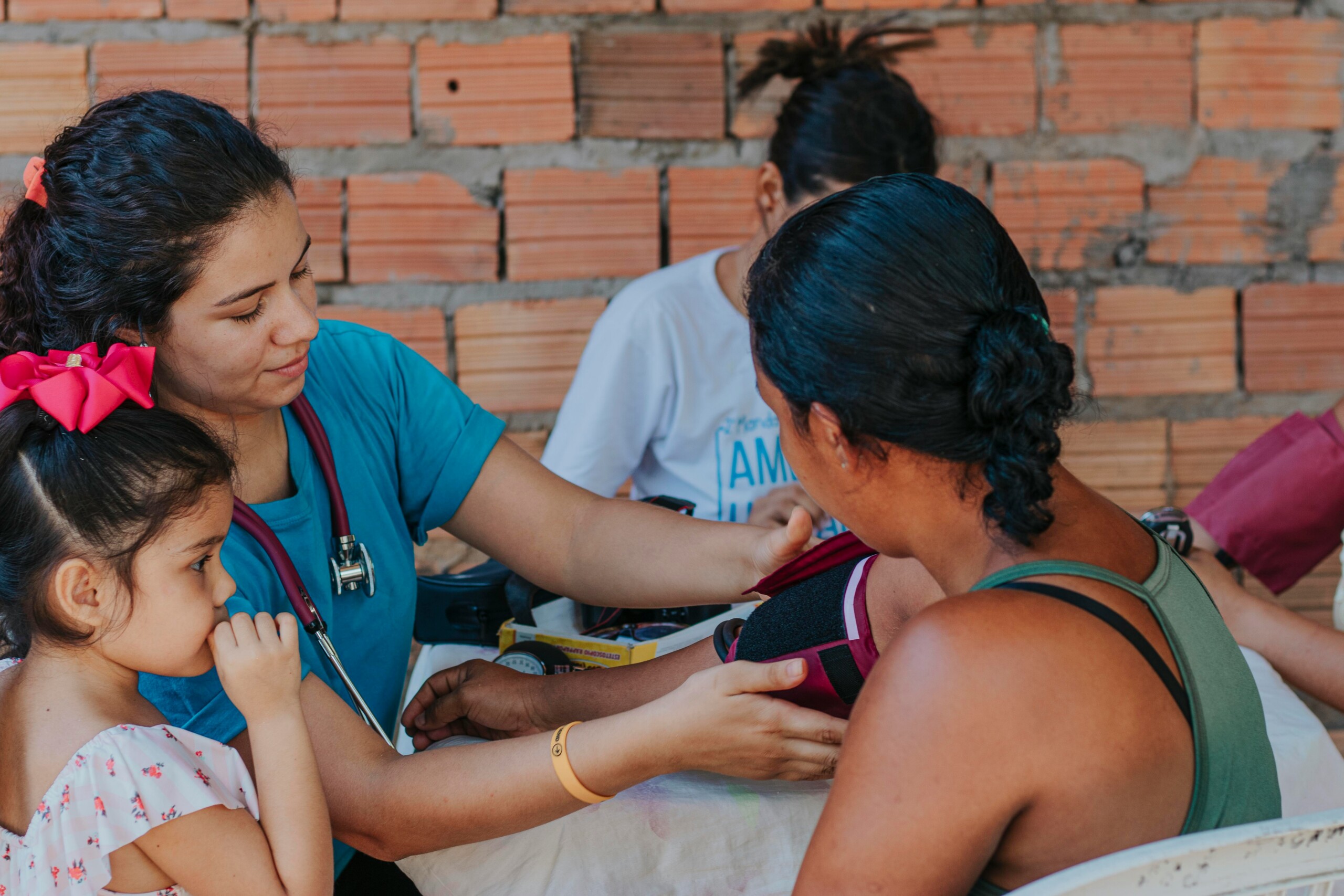
The School of Public Health at Samford University encompasses four departments: Public Health, Social Work, Nutrition and Dietetics, and Healthcare Administration and Informatics. The mission of the School of Public Health is to prepare students to become servant leaders by demonstrating the love of God through nurturing the emotional, intellectual, physical, and spiritual health of individuals and communities. While there are differences that encompass these disciplines, one of the main similarities is the focus on the health and well-being of others. We strive to love and care for others just as the Lord loves and cares for us; for the Lord created each of us in his image.
As a school, our theme verse is Ephesians 2:10, “For we are his workmanship, created in Christ Jesus for good works, which God prepared beforehand, that we should walk in them.”[1] Thus, the School of Public Health emphasizes the idea of calling or vocation, recognizing that God has equipped each of us with particular skills and knowledge sets that can be utilized to do good works to bless the world. This calling reflects our belief that each of us is created in the image of God. The image of God or imago Dei is a theological term that reminds us as humans of our unique relationship with God and our identity.
Human beings have mutually dependent spiritual and physical aspects, which distinguish us from other created beings such as animals (which do not have a soul, or at least not one that reflects divinity in the same way as humans) and angels (which do not have fleshly bodies like humans). This uniqueness is highlighted in verses from the Psalms quoted in Paul’s letter to the Hebrews: “Yet you have made him a little lower than the heavenly beings and crowned him with glory and honor. You have given him dominion over the works of your hands; you have put all things under his feet.”[2] This implies that we need to honor and care for both the spiritual and the physical needs of one another. Much of this is done in relationships within communities.
Humans are made to live in loving community with one another, just as God is an indivisible community of One God in three persons. In Genesis 1:26, “Then God said, ‘Let us make man in our image, after our likeness. And let them have dominion over the fish of the sea and over the birds of the heavens and over the livestock and over all the earth and over every creeping thing that creeps on the earth.’” Note the first person plural by which God refers to himself, which in Christian tradition is taken as a reference to the Trinitarian nature of God. Later, in Genesis 2:18, he states that “it is not good that the man should be alone,” presumably because as image-bearers we are designed to live in community/communion with others. This is further elaborated in Jesus’ prayer “that they all may be one, as You, Father, are in Me, and I in You; that they also may be one in Us.”[3]
Thus, our understanding of the image of God as the basis for our work in public health, social work, nutrition and dietetics, and healthcare administration and informatics, highlights these beliefs: that the uniquely physical and spiritual nature of all humans is to be honored and cared for, and that we live and flourish in community with one another and with God, and that God has equipped each of us with unique gifts with which to carry out this calling. These beliefs demonstrate the shared themes reflected among each discipline: human dignity and stewardship for human flourishing, community and interdependence, and justice and equity.
In the following sections, we highlight how these theological principles underpin the work of each of the disciplines in the School of Public Health.
Public Health
Public health, which may be thought of as the organized effort to protect and promote the health of populations (which could be, for instance, groups sharing a geographical, behavioral, or social characteristic), has deep roots in Christian spirituality, which recognizes in every person the imago Dei and the duty of Christians to care for one another both materially and spiritually. Historically, Christian institutions contributed to teachings on public health practices like sanitation, quarantine, and care for the sick.[4] Although in the 19th and 20th centuries public health functions became more associated with secular government responsibilities, the field has maintained several areas of emphasis that echo the Christian teaching of imago Dei and serve as an important way of framing the study of public health for students at Samford University.
Here, we examine how the following public health principles offer opportunities to honor the image of God through the practice of public health:
Health equity and justice
Addressing social determinants of health
Prevention and human flourishing
Participation and empowerment
Interdependence and mutual responsibility
Health Equity and Justice
Health equity, meaning that “everyone has the opportunity to attain their highest level of health,” has been identified as both a guiding priority and core value of the American Public Health Association.[5] This value is given a deeper meaning in light of the Christian belief in the inherence of the image of God in every human being. As St. Paul reminded us, “There is neither Jew nor Greek, there is neither slave nor free, there is no male and female, for you are all one in Christ Jesus.”[6] Love for our fellow humans demands that we strive for the well-being of others, whatever their background or previous actions. The ideal of health equity is closely related to that of justice—nobody should suffer from less-than-optimal health because of systems or actions that unfairly privilege some and harm others. Of course, this idea is also deeply rooted in Judeo-Christian calls for justice, such as Isaiah 1:17: “Learn to do right; seek justice. Defend the oppressed. Take up the cause of the fatherless; plead the case of the widow.”[7]
Public health offers tools to examine the structures and systems that create health inequities. Through the methods of biostatistics and epidemiology, we can identify systematic disparities in health outcomes that point to injustices. Furthermore, we seek to transform those structures through advocacy, policy change, and mobilizing communities. These activities require skills that are developed in public health programs, such as policy analysis, communication, and community engagement.
What, then, is distinctive about a Christian public health program? In her introduction to the edited volume Religion as a Social Determinant of Health,[8] Ellen Idler, the director of Emory University’s Religion and Public Health Collaborative, noted that religions (not just Christianity) play a role in reducing economic inequality—and thus health inequities—by evoking charitable impulses toward the less fortunate. Yet it is Christianity that provides the vision of humans united by their bearing the image of God, which became visible through the Incarnation of Jesus Christ when God took on human form and nature and became a man, while also remaining fully divine. Thus, humans are not only image bearers because of the form of their creation described in Genesis, but also because we share the human nature that was united with the divine nature in the person of Jesus Christ. This vision moves the practice of public health beyond a simple concern with justice and compassion to a response to the cosmic reality of the Incarnation. We not only desire health equity, but we are also compelled to advocate for our fellow image-bearers wherever we find them in need. In a Christian university such as Samford, we can address such metaphysical questions directly. For example, a course entitled Cultural Competence and Spirituality in Public Health offers opportunities through class discussions, weekly reflections, and service-learning experience to practice skills in self-awareness, compassionate communication, and equity-driven systems thinking, while framing these discussions around the Beatitude verses (Matthew 5) rather than a simple secular context.
Addressing Social Determinants of Health
A core tenet of public health is that social determinants of health—those structural, environmental, and social conditions in which people live, work, and play—shape health outcomes far more powerfully than individual choices or genetics alone. Health inequities, discussed in the section above, arise from differences in social determinants. Examples of social determinants of health include income, wealth, education, and immigrant status. Race is also a social determinant of health because it is a concept created by historically and socially inferred distinctions rather than true biological differences between groups of people, yet it has significant health impacts because of the ways that people of different races are treated in society.[9] The Christian concept of imago Dei insists that all humans, regardless of race or social standing, are made in the image of God and are therefore to be treated with the utmost dignity, care, and compassion. By seeking to address the social determinants of health through such actions as promoting inequity-reducing policies, education, and advocating for culturally sensitive care, Christian public health students and professionals are honoring and seeking justice for image-bearers.
Prevention and Human Flourishing
Prevention lies at the heart of public health. Rather than focusing solely on treating illness once it appears, public health seeks to identify and address the conditions that give rise to disease in the first place. These conditions include environmental exposures, social and economic barriers, unsafe housing, or limited access to nutritious food and healthcare. This preventive orientation reflects the conviction that health is shaped not only by individual behavior but by the broader structures in which people live. By working to create environments that reduce risk and support wellbeing, public health aims to cultivate the conditions in which communities can thrive.
This focus on prevention aligns with a Christian understanding of human flourishing: if every person bears the image of God, then caring for the physical, social, and environmental conditions that allow people to live well becomes a moral responsibility. Flourishing is of course more than prevention of physical maladies: the mental health dimensions have been extensively highlighted in the work of Harvard University’s Human Flourishing Program, which also includes a global Spirituality and Flourishing Interest Group.[10] And while the Gospels are replete with stories of miraculous physical healings for those who were already sick and even dead, Christians are by no means expected to wait for people to become deathly sick before caring for their health. The works of mercy—feeding the hungry, clothing the poor, giving drink to the thirsty, and sheltering the homeless (Matthew 25:35–37)—all help to provide the conditions in which humans can flourish and have the greatest opportunities to be healthy. We care for the physical needs of our fellow humans because a physical nature is part of the image of God that we bear. We also address mental health needs and strengthen communities to create mutually supportive social connections and confront unjust power relationships. These actions reflect the Christian understanding of image-bearers as social and communal beings. In short, prevention is not only a public health priority but a theological imperative rooted in the call to honor God’s image in every person.
Participation and Empowerment
Another core value of public health is community participation: ensuring that the people most affected by health decisions have a substantive voice in shaping them. Research and practice both show that lasting improvements in health rarely come from external experts imposing ready-made solutions. Instead, they emerge when we listen carefully, build trust, and work alongside communities as collaborative partners. When individuals are invited to articulate their own needs, priorities, and aspirations, the resulting interventions are more culturally appropriate, more effective, and more equitable.
Christianity has always prioritized working with and in communities for their mutual well-being. This reflects Christians’ belief in the Incarnation as well as the communal nature of God, and therefore of humans who bear God’s image. The Incarnation reveals that God does not remain distant from human suffering but enters fully into our condition, dignifying the whole of human life and labor. Christians understand that we are all called to actively participate in God’s work of healing and restoration. Furthermore, because we reflect the communal nature of God through his image, this work is not undertaken by individuals acting alone but by engaging communities as active partners. This shapes a distinctly Christian approach to public health: if God draws near through embodied presence, then we, too, are invited to draw near to one another through concrete involvement in the wellbeing of our communities.
Interdependence and Mutual Responsibility
As beings living in communion with one another and with God, our needs and actions are intimately intertwined with one another. This perspective is relevant to everybody, not just those aspiring to be public health and healthcare professionals. For this reason, we have embedded the public health perspective and the teaching of imago Dei in our signature course of the General Education curriculum at Samford, Concepts of Health and Wellness. In this course, we emphasize the biblical and ethical responsibility of all people to demonstrate concern for their fellow humans, and to care for the impact of their actions on others’ opportunities to enjoy health and wellness.
Throughout the Concepts of Health and Wellness course, we emphasize both the spiritual and communal dimensions of health. We invite students to reflect on health topics through a biblical lens and consider their own responsibilities as members of a community. For example, we discuss ways to encourage fellow students who may be struggling with stress and mental health concerns. A module on environmental wellness looks at environmental justice and how our own actions—or lack thereof—have a direct impact on others’ health by affecting the quality of the environment they live in. Another module explicitly addresses the concepts of imago Dei and invites students to reflect on the fundamental goodness of their bodies and its implications for how we treat our own bodies and one another.
In sum, public health at Samford is rooted in the conviction that every person bears the image of God. This belief shapes our commitment to health equity, addressing social determinants, prevention, empowerment, and interdependence. By framing these principles through the lens of imago Dei, we prepare students not only to promote health but to honor human dignity and foster flourishing communities. This same theological foundation also informs the work of the other disciplines represented in Samford’s School of Public Health—namely, social work, nutrition and dietetics, and healthcare administration and informatics.
Social Work
Social workers work directly with vulnerable and marginalized populations—people who may be stereotyped, ostracized, or on the outskirts of society. As Christian social workers, we value our clients not simply because our code of ethics says to do so, but because we believe that we are serving people who, like us, are made in God’s very image. That includes clients who may look like us, as well as refugees, migrants, people of other faiths, people living in poverty, and those who may have committed a heinous crime. The Social Work Department’s mission statement is “to be a distinctively Christian learning community that prepares graduates for lives of service as advanced social worker practitioners.”
As outlined in the social work code of ethics, our values as social workers include service, social justice, dignity and worth of the person, importance of human relationships, integrity, and competence.[11] (Code of Ethics, Principles, 2021). Each of these values also align with Christian values.[12] Below, we outline how some of the values emphasized in the social work code of ethics are achieved in Samford’s Social Work Department.
Service (Philippians 2:3)
Christians are charged to be humble, not to pursue anything from selfish ambition or conceit but to think of others as more important than themselves. As social work professors, we work hard to model service to others to our students, first, in the way we serve them, and second, in the way we serve others. Some of our service takes place at the local/community level, while other service-involvement reaches around the globe. We invite our students to be part of our ongoing service.
Seeking Justice (Micah 6:8)
Scripture makes it clear that God expects His followers to seek justice. Micah 6:8 says, “he has shown you, what is good and what the Lord requires of you: to do justly, to love mercy, and to walk humbly with your God.”[13] It is telling that doing justly is the first in the list of God’s requirements. Social work is a profession that embodies that command. The code of ethics is clear on the importance of social workers being involved in seeking justice through challenging unjust systems that may perpetuate poverty, discrimination, or oppression. In practice, we do this through advocacy and political action, but also through developing interventions that change and challenge unjust systems.
At Samford, we model this by teaching students how to contact their legislators and advocate, conducting case studies that have justice components, and giving students opportunities to pursue justice-oriented solutions through service-learning. As in every social work program, students are required to intern at a field site throughout the year, where they learn to seek justice as part of their social work practice. We also have a class that focuses on human rights and social justice, where students learn that justice is more than punishing people for the things they have done wrong, but it is also giving people what they are due—rights, punishment, or care, and living in right relationship with God and people.[14] Students also learn that justice is exercising power rightly, meaning that when they have power, they should use it to bless others.[15] In addition, one of our competencies is for students to understand how they can ethically integrate their faith as they learn to do so.
Upholding the Dignity and Worth of the Person by Pursuing Human Flourishing (Ephesians 2:10)
We do not have to understand our client’s worldview or agree with their beliefs to offer grace, dignity, and respect them as individuals with self-determination and agency. Whether our students end up working at the macro (community or policy) or micro (individual or family) level, or somewhere in between, we want them to be working with their clients towards human flourishing. One of the core classes that all of our students take is a faith-integration class. This class teaches the concept of human flourishing and has students wrestle with concepts such as common grace, toxic faith (where faith becomes harmful), and how to healthily integrate their faith into practice while respecting their clients’ faith. This reinforces the value of upholding our client’s dignity and worth and respecting their self-determination.
In his essay on the promotion of human flourishing, Tyler VanderWeele, the director of the Human Flourishing Program at Harvard University, argues that human flourishing requires doing well or being well in five areas of life: 1) being happy or satisfied in life; 2) mental and physical health; 3) feeling like life has meaning and purpose; 4) obtaining character and virtue; 5) fostering relationships that are close and meaningful.[16]
As social workers, we consider our clients in their environment. In working towards flourishing, we come alongside to help clients think about the support they need as individuals, in their families, places of worship, workplaces, and all the way up to the government and society levels.
Importance of Human Relationships (Matthew 22:37–39; Ephesians 4:32)
We were made for community. In the fallenness of our world, community can help people grow and become the people they were created to be, but one’s community can also do harm. Matthew 22:37–39 instructs us that we must first love the Lord with our whole being and second, love our neighbors as we love ourselves. Social work’s code of ethics also recognizes the value of human relationships.
One of the ways we value human relationships is by modeling this to our students. As professors, we welcome students into our offices, invite them to coffee, celebrate their accomplishments, and remain approachable. We offer opportunities for community in our classrooms by creating time for students to get to know each other and us. Our cohort model also helps support this as students take most of the same classes together. By the end of our two-year program, they have studied together, created interventions together, cried together, and some have traveled internationally together.
Integrity (Proverbs 10:9, 11:3; 2 Corinthians 8:21)
Social workers strive for integrity; this includes doing what we are capable of doing and not working outside of our area of practice. This also includes referring people to others when we do not have the expertise. In 2 Corinthians 8:21, we are called not only to be honorable in the Lord’s sight, but also in the sight of men and women. Thus, we want to be above reproach in all that we do. We teach our students how to work with other professions through simulation experiences, service-learning opportunities, and interprofessional collaboration.
Competence (Colossians 3:23)
While the code of ethics mandates that social workers strive to competently practice within their area of expertise, Christians should be compelled to do so with excellence. Colossians 3:23 reminds us that we are doing our work unto the Lord, and not for anyone else. Because of this, our faculty participate in continuing education and do our own research and training, so that we can continually improve and grow in our knowledge and skills.
Nutrition and Dietetics
Dietitians study the science and art of applying the principles of food and nutrition to health. They are trained to consider evidence-based recommendations and nutrition knowledge to conduct an assessment, calculate needs, create a care plan, develop interventions, provide education, and interpret nutrition research. While these are foundational skills in the profession of dietetics, it is important to us as nutrition faculty at Samford to encourage our students to consider something even more foundational: the way we see people. Every client, every patient, and every community we serve is more than a set of symptoms or numbers. They are people with inherent dignity and worth, created in the image of God. One question we ask of our students during their time in our programs is, “What does the Bible have to say about our bodies?”
Created with a Purpose
In Genesis, “God said, ‘Let us make man in our image, after our likeness. And let them have dominion over the fish of the sea and over the birds of the heavens and over the livestock and over all the earth and over every creeping thing that creeps on the earth.’ So God created man in his own image, in the image of God he created him; male and female he created them.”[17] Then, “God saw everything that he had made, and behold, it was very good.” We see that the Lord created people in his image and for a specific purpose.[18] The physical bodies he gave Adam and Eve were not consequences of sin; they were not punishments. Genesis 2:25 (ESV) says, “And the man and his wife were both naked and were not ashamed.” We see that there was no shame in the bodies God created. Before sin, the physicality of man was very good: the physical body itself, the interaction with others, and the need for food/nourishment. The idea that we are created in the image of God should guide how we view our bodies, with dignity, value, and respect. We were not accidentally created; we were created with purpose and in God’s image.[19] Part of this incredible design includes a plan for healthy eating, physical activity, and rest.[20]
Sin and Brokenness
We read in Genesis 3 that after Adam and Eve chose to sin, they experienced shame in the bodies that were so masterfully created for them. The bodies that walked and talked with God were covered up. Author Jess Connolly writes, “We know that God made our bodies good (Genesis 1:31). Our enemy (the devil) tempted humans with the intent to allow sin to enter our world, and thus, cause us to experience brokenness in these good bodies (Genesis 3:1–7).”[21] Why do we have to teach the Dietary Guidelines for Americans? Because “Each stage of life is distinct and has unique needs that affect health and disease risk.”[22] Sin and brokenness in the world not only can impact how people view and experience their bodies, but also lead to chronic disease, dietary confusion, and shame around food.
Redemption
While we live in a broken world, Genesis 3 reminds us that right after humans chose sin, God made a promise that one day, a savior would come from the offspring of a woman and bring redemption and restoration to our bodies. As we teach nutrition, we can point our students to what the Bible is all about. A story of how God redeems His people, including their physical bodies. Sam Allberry writes, “Our bodies are not yet finished. One day, Jesus will transform our lowly bodies to be like his glorious body. As believers, we can honor our physical bodies by seeing ourselves through a gospel lens, remembering that one day, God will make us new.”[23]
Christian author, Kendall Vanderslice, puts it so well in how we can encourage our students to “understand that we always eat within the tension of a world that was created good but is marred by brokenness and yearning for redemption.”[24] She encourages us to consider the interactions we have with food as ways to know God better. This applies to the study of the body and how individuals have varying nutritional needs during different life stages to thrive. God made our bodies with such detail and intricacy;[25] there are numerous complexities to our bodies, such as digestion, absorption, and how we obtain the energy from the foods that we eat.[26] These are all a part of how he made us with great intentionality and thoughtfulness. When we recognize the body as created good, then broken by sin and in need of redemption, our nutrition care can move beyond physical metrics to include emotional, social, and spiritual dimensions related to nutrition.
Fueling for Calling
The Christian understanding of our bodies from Scripture obligates us to be good stewards of the bodies that God has given each of us. 1 Corinthians 6:19–20 (ESV) states, “Or do you not know that your body is a temple of the Holy Spirit within you, whom you have from God? You are not your own, for you were bought with a price. So glorify God in your body.” Our bodies are the temple of God, a dwelling place for his Spirit, and are instruments that can help point others to God. We are called to care for our bodies. As dietitians, we are also called to care for others so that we can speak God’s truth into their lives. Pursuing health and wellness through nutrition is valuable because it is very difficult to fulfill our calling when our physical bodies are falling apart or when we have low energy because of our eating habits or lack of physical activity. Research indicates that poor nutrition can lead to increased rates of chronic disease, nutrient deficiencies, and a decline in overall health that can result in poor quality of life, decreased productivity, and ultimately shortened life expectancy.[27]
People spend a large portion of their day talking about food, buying food, preparing food, and eating food. This makes nutrition a topic to which most people can relate and connect. At Samford we strive to create an environment where students’ faith will be fostered and integrated into discussions related to the physical and spiritual needs of individuals and communities. The goal is to show students how when we approach nutrition through the lens of imago Dei, it can be used to build relationships, open doors for conversations about faith, and extend God’s care on campus and around the world. For example, as our students work through the Nutrition Care Process,[28] remembering that their clients’ value comes from being a person created in God’s image, they 1) assess each client as a whole person, not just a set of data points, 2) diagnose problems, while recognizing that both broken systems and personal struggles may present challenges, 3) develop interventions and provide care that restores dignity, encourages agency, and promotes flourishing, and 4) in monitoring/evaluation they can help clients look for signs of hope and progress, not just numbers. As nutrition faculty, our aim is to encourage our students to not only meet key learning objectives but to approach their work by viewing themselves and others in the image of God. We also hope that our students will seek to nourish their bodies and souls as God intended and made provision for and care for others, as well as be good stewards of nature.[29]
Healthcare Administration and Informatics
The Department of Healthcare Administration and Informatics teaches business techniques and strategies for the management, leadership, and sustainability of healthcare organizations.
Our purpose can be summed up by our department’s mission statement:
The mission of the Department of Healthcare Administration and Informatics is to prepare service-minded leaders and health professionals in a Christ-centered environment through competency-based, interprofessional education that is committed to excellence.
Because our mission is Christ-centered, there is more emphasis on issues like servant leadership, stewardship, and the individual’s gifts and talents.
Servant Leadership
Leadership is a basic tenet of any business school, and multiple styles and theories may be best, based upon the situation. We spend a lot of resources expounding on the benefits and drawbacks associated with each of style and theory. The intent is to help the individual student assemble a collection of tools that they can use in their career to vary their approach to management and leadership issues to affect a harmonious as well as an efficient strategy or solution. Servant leadership[30] is just one of the management/leadership models that we discuss, but because of 1) our mission to prepare service minded leaders, and 2) the fact that servant leadership is not always taught in “less service-minded” venues than ours,[31] the conversation always comes back to why servant leadership could or should always be our default model for our business management and dealings with our employees, patients (customers?), and other stakeholders.
Stewardship
Stewardship is a mission that we try to foster and encourage within our studies. A typical definition of stewardship in a non-religious setting could be, “the act of taking care of or managing something, for example property, an organization, money or valuable objects.”[32] But, for our purposes as a Christ-centered organization our definition of stewardship looks more like, “a steward is someone entrusted with the management of something valuable that belongs to another.” In our (Christian) context, we are called to be faithful stewards of the resources God has given us. This includes our time, talents, finances, and even the opportunities we encounter.[33] It is not a stretch to apply this same definition to our leadership, management, and strategies for the provision of healthcare and the sustainability of our mission(s).
Respect for the Unique Gifts of Individuals
Respect for the work, tools, and talents of individuals (diversity) is an important factor in any business school curriculum concerning learning and development, but it is especially valuable in the delivery of healthcare. Healthcare is the ultimate example of diversity in action. Where else can you find an industry that is more closely connected to the influences of all cultures, ethnicities, nationalities, and socio-economic groups? Our program teaches that it’s impossible to know and/or understand all the complexities and issues associated with an organization’s environment, but that growth and service can only occur when we are open to the differences and make an effort to understand them.
Conclusion
Across the four disciplines represented in Samford’s School of Public Health—Public Health, Social Work, Nutrition and Dietetics, and Healthcare Administration and Informatics—a shared theological foundation emerges: the conviction that every person is created in the image of God. This belief shapes a unified vision expressed through four interwoven themes: human dignity, which calls us to honor and respect each individual; community and interdependence, reflecting our design for relationships and mutual responsibility; justice and equity, compelling us to challenge systems that perpetuate harm and advocate for fairness; and stewardship for human flourishing, urging us to care for bodies, resources, and communities with excellence and purpose. While each discipline applies these principles in distinct ways—through advocacy, education, leadership, and care—they converge in preparing students not only for professional competence but for a vocation rooted in love, service, and restoration. In doing so, we affirm that health is more than the absence of disease; it is a holistic expression of God’s image in individuals and communities, flourishing together for his glory.
[1]. Ephesians 2:10, ESV. All Scripture references from ESV unless otherwise noted.
[2]. Psalm 8:4–6, quoted in Hebrews 2:7–9.
[3]. John 17:21, NKJV.
[4]. Virginia Berridge, Public Health: A Very Short Introduction (Oxford University Press, 2016).
[5]. “Health Equity,” American Public Health Association, accessed April 1, 2026, https://www.apha.org/topics-and-issues/health-equity.
[6]. Galatians 3:28.
[7]. Isaiah 1:17, NIV.
[8]. Ellen L. Idler, “Religion: The Invisible Social Determinant,” in Religion as a Social Determinant of Public Health, ed. Ellen L. Idler (Oxford University Press, 2015), 1–17.
[9]. Zinzi D. Bailey et al., “Structural Racism and Health Inequities in the USA: Evidence and Interventions,” The Lancet 389, no. 10077 (2017): 1453–63, https://doi.org/10.1016/S0140-6736(17)30569-X.
[10]. “Mental Health Playbook: The Human Flourishing Program, Harvard University,” Philanthropy Roundtable, accessed April 2, 2026, https://www.philanthropyroundtable.org/resource/the-human-flourishing-program-harvard-university/; “Spirituality & Flourishing Interest Group (SFIG),” Harvard University Human Flourishing Program, accessed April 2, 2026, https://hfh.fas.harvard.edu/spirituality-flourishing-interest-group-sfig.
[11]. “Read the Code of Ethics,” National Association of Social Workers, accessed April 2, 2026, https://www.socialworkers.org/About/Ethics/Code-of-Ethics/Code-of-Ethics-English.
[12]. Mary Anne Poe, “Good News for the Poor: Christian Influences on Social Welfare,” in Christianity and Social Work, 7th ed. (North American Association of Christians in Social Work, 2025).
[13]. Micah 6:8, NKJV.
[14]. Timothy Keller, Generous Justice: How God’s Grace Makes Us Just (Penguin Books, 2012).
[15]. Gary A. Haugen, Good News About Injustice: A Witness of Courage in a Hurting World (InterVarsity Press, 2009).
[16]. Tyler J. VanderWeele, “On the Promotion of Human Flourishing,” Proceedings of the National Academy of Sciences 114, no. 31 (2017): 8148–56, https://doi.org/10.1073/pnas.1702996114.
[17]. Genesis 1:26–27, ESV.
[18]. Genesis 1:31, ESV.
[19]. Sara Barratt, “Why Christian Teens Have an Identity Crisis,” The Gospel Coalition, July 12, 2022, https://www.thegospelcoalition.org/article/teens-identity-crisis/; Sam Allberry, “God Cares About Your Body,” The Gospel Coalition, November 4, 2022, https://www.thegospelcoalition.org/podcasts/tgc-podcast/god-cares-body/.
[20]. Patricia Terry, Made for Paradise (New Hope Publishers, 2007).
[21]. Jess Connolly, Breaking Free from Body Shame: Dare to Reclaim What God Has Named Good (Zondervan, 2021).
[22]. US Department of Agriculture and US Department of Health and Human Services, Dietary Guidelines for Americans, 9th ed. (December 29, 2020), dietaryguidelines.gov.
[23]. Allberry, “God Cares About Your Body.”
[24]. Kendall Vanderslice, “Where Do We Go from Here?,” Edible Theology (Substack newsletter), January 26, 2025, https://edibletheology.substack.com/p/where-do-we-go-from-here.
[25]. Shannon McBride, “Redeeming the Body,” Redeemer University, March 22, 2023, https://www.redeemer.ca/resound/redeeming-the-body/.
[26]. Madeline Coxwell Matthewman and Rahul Costa-Pinto, “Macronutrients, Minerals, Vitamins and Energy,” Anaesthesia & Intensive Care Medicine 24, no. 2 (2023): 134–38, https://doi.org/10.1016/j.mpaic.2022.12.009.
[27]. Sareen S. Gropper et al., Advanced Nutrition and Metabolism, 8th ed. (Cengage Learning, 2021); H. M. Roche et al., Nutrition and Metabolism, 3rd ed. (Wiley-Blackwell, 2024).
[28]. “The Nutrition Care Process (NCP),” Academy of Nutrition and Dietetics, accessed November 21, 2025, https://www.ncpro.org/nutrition-care-process.
[29]. Terry, Made for Paradise, 251.
[30]. Robert K. Greenleaf, Servant Leadership: A Journey into the Nature of Legitimate Power and Greatness (Paulist Press, 1977); J. Martin Hays, “Teacher as Servant Applications of Greenleaf’s Servant Leadership in Higher Education,” The Journal of Global Business Issues 2, no. 1 (2017): 113–34; Dirk van Dierendonck, “Servant Leadership: A Review and Synthesis,” Journal of Management 37, no. 4 (2011): 1228–61.
[31]. Salih Usum, “The Need for Awareness of Servant Leadership in Business Schools,” Academic Leadership: The Online Journal 8, no. 2 (2010); Shabnam Banerjee-McFarland, “What Took so Long for Servant Leadership to Grab the Headlines?,” Berrett-Koehler Publishers, November 7, 2018, https://ideas.bkconnection.com/what-took-so-long-for-servant-leadership-to-grab-the-headlines.
[32]. “Stewardship,” Oxford Advanced Learner’s Dictionary, accessed December 3, 2025, https://www.oxfordlearnersdictionaries.com/us/definition/english/stewardship.
[33]. “Christian Youth Conferences 2025,” Momentum Ministry Partners, accessed December 3, 2025, https://buildmomentum.org/.