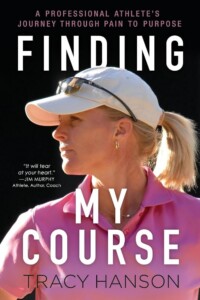
Finding My Course: A Professional Athlete’s Journey through Pain to Purpose
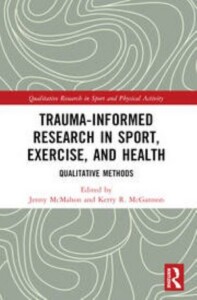
Trauma-Informed Research in Sport, Exercise, and Health: Qualitative Methods
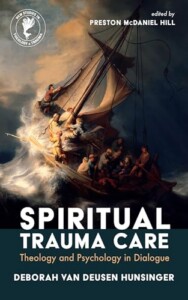
Spiritual Trauma Care: Theology and Psychology in Dialogue
After sixteen years of ups and downs on the LPGA Tour, I decided to retire . . . and with the help of a few trusted women, I started down the journey of speaking honest words about the trauma I had experienced on and off the course. . . . As I speak about the truth and feel the pain in my story (including the emotional abandonment of my dad), my heart is becoming more available to God, others, and myself.
Tracy Hanson, LPGA Golfer and sexual abuse survivor[1]
Christian faith addresses the human plight of sin and suffering. In its own way, it has always known about trauma. Indeed, one might say that traumatic loss lies at the very heart of the Christian imagination [consider Gethsemane and Golgotha]. . . . All ministry is God’s ministry, in which we are privileged to participate. Our spiritual care needs to be trauma-informed. (1–2)
Deborah van Deusen Hunsinger, pastoral theologian[2]
We live in an age of trauma, an era in which trauma has been recognized as a diagnosable medical condition, a “global health crisis,” and a leading cause of death and morbidity worldwide.[3] We also live in an age in which sports are arguably the most popular global cultural pastime, surpassing other dominant cultural expressions of the pre-modern age, such as the arts, dance, and music. In a population of over 341 million, 63% of Americans watch sports on a variety of media platforms, and over 45 million children and adolescents in the United States participate in sports every week.[4] Sports are a natural obsession and are embedded in all our institutions—school, family, business, religion, the digital landscape, and government. Sports matter.
Reflecting this, during the past two decades theologians (and scholars from other disciplines) have recognised the cultural significance of sports, resulting in a flood of publications[5] and initiatives, such as the Global Congress on Sports and Christianity. The Congress is a triennial meeting that celebrated its fourth iteration in 2025 at Baylor University and had a dedicated sport-trauma panel session, including a presentation by the author of one of the three books reviewed, Tracy Hanson, who is also the founder of the Tracy Hanson Initiative,[6] which provides support to athletes who have experienced abuse and are struggling with trauma.
As Hanson’s biography powerfully narrates, sports are an environment in which athletes (and coaches, support staff, etc.) of all ages and performance levels may experience trauma, and/or carry the burden of their existing trauma into sporting spaces. In short, trauma both “in” and “from” sport. A recent narrative review indicated that 13–15% of elite athletes experience post-traumatic stress disorders (PTSD) and other trauma-related disorders, at a scale that surpasses that recorded for the general population, which is 4–5%[7]; while of course, there are many people who go through their life-course with trauma that is neither acknowledged nor reported. The NFL, NBA, WNBA, and MLB all now have policies and practices that incorporate trauma-informed practice into their mental-healthcare plans and player safety initiatives—while not always explicitly labelled as such. This is encouraging, and yet, presently there are no institutional mandates that stipulate that sports, at any level, must be trauma-informed, though many sports organizations now require coaches to train in various aspects of trauma-informed practice. Both preventing abuse and trauma in sports and acknowledging and addressing that many individuals carry the burden of existing trauma into sporting spaces is what Lilah Drafts-Johnson has called the next step in safeguarding within youth sports.[8]
Rachael Denhollander’s deeply personal and compelling story of the emotional and physical impact of sexual abuse, enacted upon her (and 250 others) by the former United States gymnastics team doctor, Larry Nassar, is the most widely known story of abuse and trauma in sports.[9] More recently, LPGA golfer Tracy Hanson wrote an equally challenging biography, Finding My Course,[10] which is one of three books that we review in this essay in order to shed light on the relationship between theology, trauma, and sports. Rather than systematically review this biography, we use it to complement our narrative. Aside from biographical sport-trauma narratives, to date, two distinct and presently isolated trauma literatures exist—the theology and psychology of trauma and a social-scientific (secular) understanding of trauma in sports. In the process of reviewing the three books noted above, our aim is twofold: (i) synthesise these disparate literatures, providing a starting point for sport-trauma research and practice from a Christian perspective, and (ii) provide recommendations for athletes, sports coaches, sport psychologists, sports ministry practitioners, qualitative trauma researchers, physical educators, chaplains in sports, and college athletic directors.
To this end, our first task is to review Jenny McMahon and Kerry McGannon’s book, Trauma-Informed Research in Sport, Exercise and Health, providing readers with background social scientific and methodological information regarding the sports-trauma nexus, before deploying a theological and psychological lens to more holistically comprehend the topic by reviewing Deborah Hunsinger’s Spiritual Trauma Care. Prefacing this substantive content, we present some basic information about trauma and trauma in sports for readers who may be unfamiliar with the topic.
Trauma Synopsis: Types, Definitions, and Adverse Childhood Experiences
In short, trauma is “an inescapable stressful event that overwhelms people’s coping mechanisms,”[11] often leading to one or more of the following: feelings of hopelessness and despair, depression, anxiety, the threat of annihilation, flashbacks, nightmares, hyper-arousal-and-avoidance symptoms, intense fear, helplessness, emotional dysregulation, insomnia, perceived loss of control, and physical health problems. If these feelings persist for more than one month, PTSD is the accepted medical diagnosis. As Hunsinger notes, the experience of being “overwhelmed” uniquely characterizes trauma and differentiates it from other extremely stressful situations and mental health diagnoses. To elaborate, Hunsinger cites Peter Levine, who explains that
traumatized people . . . are unable to overcome the anxiety of their experience. They remain overwhelmed by the event, defeated and terrified [for years or even decades after the incident]. Virtually imprisoned by their fear, they are unable to re-engage in life. No matter how frightening an event may seem, not everyone who experiences it will be traumatized.[12]
This means that two people may experience the exact same event (e.g., military veterans or athletes), resulting in one person being traumatized while the other individual suffers no long-standing psychological harm. And so, an event, however horrific, is not trauma, while the individual’s subjective response to it is. Several different forms of trauma exist, and it is worth listing the main types as we start to think about trauma in sporting contexts: acute trauma (a single incident); chronic complex trauma (repeated prolonged events, like bullying and domestic violence); collective trauma (from genocide, war, slavery, mass acts of violence, terrorism, or disasters); intergenerational trauma; racial trauma; vicarious/secondary trauma (experienced from exposure to others’ suffering); complex trauma (exposure to multiple and varied and severe traumatic events, often within interpersonal relationships, for example, refugees and survivors of long-term abuse); and developmental trauma (harmful and abusive experiences encountered during childhood). Exposure to events in the sports domain that may lead to individual and shared trauma for athletes, coaches, or spectators, include:[13]
- Physical, emotional, and sexual abuse enacted by significant others, such as coaches, team managers, teammates, support staff, parents, etc. Research shows that emotional abuse in sports is perhaps the most salient form of abuse.[14]
- Experiencing or witnessing severe injuries, fatalities (e.g., sudden cardiac death), and/or violence.
- Disfiguring musculoskeletal injuries.
- Identity issues from experience of career-ending injuries, public failure, retirement, team deselection, etc.
- Abusive/toxic team dynamics or leadership, particularly within young or vulnerable populations.
- Sport “cultures” that determine that athletes should have low bodyweight and/or a certain body shape or appearance—e.g., gymnastics, swimming, ballet, horse-racing, and boxing—can lead to both physical and psychological trauma through extreme dieting, excessive exercise behaviours, sometimes leading to serious eating disorders, such as anorexia nervosa and bulimia.
- Brain trauma from participation in violent sports, such as American football, boxing, mixed-martial arts, and soccer (due to repeated heading of the ball), that may lead to psychological trauma, mental health issues, and cognitive decline (e.g., dementia).[15]
- Experiencing racial and/or intergenerational trauma, for example, oppression, discrimination, and abuse directed toward Black athletes and indigenous peoples, such as Native American Indians or Australian aborigines.
- Sports-related disasters. I (Nick) have a friend who was deeply traumatised by witnessing the Hillsborough Football Stadium Disaster in 1989 (Sheffield, England), where 97 people died (and 776 were injured) in a crowd crush, during the FA Cup semi-final between Liverpool and Nottingham Forest.
Individuals of any age (including a foetus in the womb), from any familial, cultural, or social background, or comparative level of individual psychological resilience, can experience trauma. That said, some are more vulnerable than others to toxic stress and trauma, for instance, children (especially those in the care system), persons with disabilities, refugees, asylum seekers, and youth in the criminal justice system. Since the 1990s, “adverse childhood experiences” (ACEs) has been the most well-used framework for categorizing and understanding trauma in childhood and adolescence and its deleterious impact on physical and mental health outcomes and social issues.
The significant body of research that has emerged from a seminal study[16] in which 17,000 participants were asked about seven different categories of childhood adversity, eventually led to a government-endorsed public health movement and a trauma-informed understanding of human well-being in the United States, and now globally. Typically, ACEs are categorized into three main groups, while are often inter-linked: (i) abuse—sexual, physical, and emotional; (ii) neglect—physical and emotional; and (iii) household dysfunction—parental separation, substance misuse, domestic violence, parental mental illness, and incarceration.
Exposure to chronic stress from ACEs often leads to what has been termed as “toxic stress,” a state that detrimentally impacts child brain development and overall physical health. While exposure to one ACE may lead to trauma, if four or more ACEs are experienced, the risk of negative outcomes across multiple categories is exponentially increased; for example: poor physical and mental health, reduced educational and employment opportunities, and involvement in negative and/or criminal behaviour. Several of the chapters in the anthology, Trauma-Informed Research in Sport, Exercise and Health, to which we now turn, utilize the ACEs framework to study trauma in a variety of sport situations.
[1]. “Tracy Hanson’s Story,” Tracy Hanson Initiative, accessed September 26, 2025, https://tracyhanson.com/story/.
[2]. Deborah van Deusen Hunsinger, Spiritual Trauma Care: Theology and Psychology in Dialogue, New Studies in Theology and Trauma (Cascade Books, 2025).
[3]. “Post Traumatic Stress Disorder (PTSD),” World Health Organization, accessed September 6, 2025, https://www.who.int/news-room/fact-sheets/detail/post-traumatic-stress-disorder.
[4]. John B. White, “Do Not be Conformed to the World of Sports: Relearning How we Think About, Feel, and Do Sports as Christians,” Christian Scholar’s Review (blog), April 24, 2023, https://christianscholars.com/do-not-be-conformed-to-the-world-of-sports-relearning-how-we-think-about-feel-and-do-sports-as-christians/.
[5]. For example, see Paul Putz, The Spirit of the Game: American Christianity and Big-Time Sports (Oxford University Press, 2024); Matt Hoven, J. J. Carney, and Max T. Engel, On the 8th Day: A Catholic Theology of Sport (Cascade Books, 2022).
[6]. Tracy Hanson Initiative, accessed September 7, 2025, https://tracyhanson.com/.
[7]. Cindy M. Aron et al., “Post-traumatic Stress Disorder (PTSD) and other Trauma-Related Mental Disorders in Elite Athletes: A Narrative Review,” British Journal of Sports Medicine 53, no. 12 (2019): 779–84.
[8]. Lilah Drafts-Johnson, “The Next Step in Youth Sport Safeguarding? Trauma-Informed Approaches to Sport,” Campaign for Trauma-Informed Policy and Practice, September 3, 2024, https://www.ctipp.org/post/the-next-step-in-youth-sport-safeguarding-trauma-informed-approaches-to-sport.
[9]. Rachael Denhollander, What is a Girl Worth? My Story of Breaking the Silence and Exposing the Truth about Larry Nassar and USA Gymnastics (Tyndale House, 2019).
[10]. Tracy Hanson, Finding My Course: A Professional Athlete’s Journey through Pain to Purpose (Do Good Books, 2025).
[11]. Bessell Van der Kolk, Alexander C. McFarlane, and Lars Weisaeth, eds., Traumatic Stress: The Effects of Overwhelming Experience on the Mind (Guilford Press, 2012), 279.
[12]. Peter Levine, Waking the Tiger: Healing Trauma (North Atlantic, 1997), 28.
[13]. Some of the information in this list is adapted from Carla D. Edwards, “The Psychological Impact of Traumatic Events in Sports,” British Journal of Sports Medicine (blog), April 10 2023, https://blogs.bmj.com/bjsm/2023/04/10/the-psychological-impact-of-traumatic-events-in-sports/.
[14]. Katherine N. Alexander, Kat V. Adams, and Travis E. Dorsch, “Exploring the Impact of Coaches’ Emotional Abuse on Intercollegiate Student-Athletes’ Experiences,” Journal of Aggression, Maltreatment and Trauma 32, no. 9 (2023): 1285–1303.
[15]. Jane L. Mathias et al., “Contribution of Psychological Trauma to Outcomes after Traumatic Brain Injury: Assaults Versus Sporting Injuries,” Journal of Neurotrauma 1, no. 31 (2014): 658–69.
[16]. Vincent J. Felitti et al., “Relationship of Childhood Abuse and Household Dysfunction to Many of the Leading Causes of Death in Adults, The Adverse Childhood Experiences (ACE) Study,” American Journal of Preventative Medicine 14, no. 4 (1998): 245–58.