

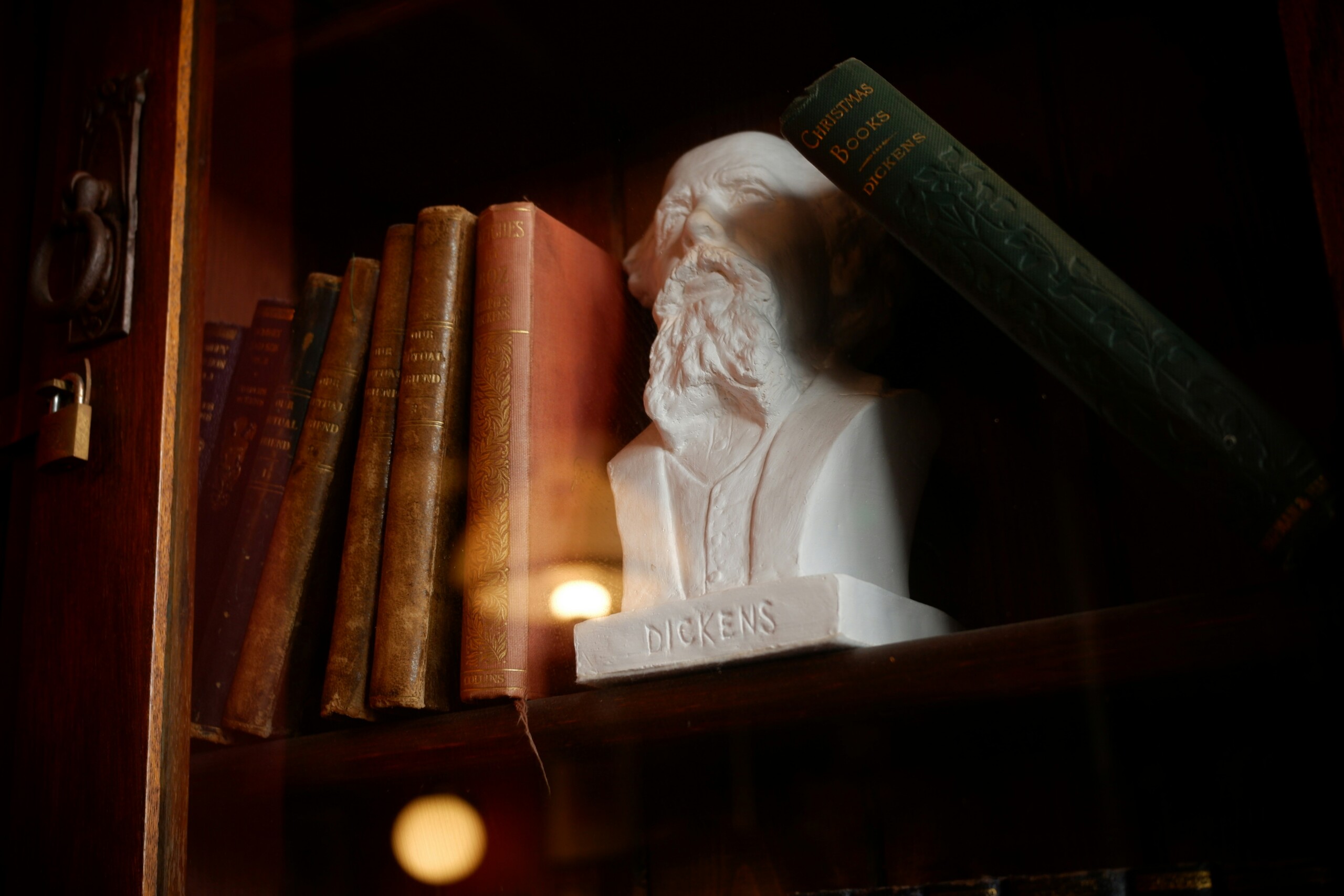
In these times of acute social, political, and economic tensions at home and abroad, it is not uncommon to hear calls for ‘prophetic’ voices who can offer substantive critique of injustice and bring expectations of change to marginalized communities of despair, if not to the broader society. In the United States, Martin Luther King, Jr. is the best-known example of this courageous (and costly) stance.[1] This yearning for the prophetic, though, is not new.[2]
Many of these figures have found inspiration in the prophetic literature of the Old Testament whose demands continue to resonate across the centuries for those who seek a word from God. How extensively do these individuals (or communities) draw from these books? The answer to that question, of course, would vary. In today’s instantaneous social media culture, citing only a few favorite texts sometimes suffices. Appeals to these books for ethical guidance often are limited to general principles (“God loves the poor and hates injustice”) based on a few transcendent verses like Amos 5:24 and Micah 6:8.
The challenge of more fully engaging these books for their potential social value, however, is to read them well, with a strong appreciation for their force as literature in order to better plumb the significance of their words of denunciation and hope. The truth, in other words, is in the details. This essay argues that reading certain classic works that focus on social critique can fine tune the appropriation of the prophets. They can help readers be more attuned to the literary features of the divine message.[3]
Innumerable works from across the centuries and around the globe could serve to demonstrate this.[4] I have chosen the premier English novelist of the nineteenth century, Charles Dickens, particularly his novel Bleak House, which is widely considered to be his most significant social commentary and one of his most “mature” works.[5]
Bleak House was published in 1853 (he began writing it in 1851) and was Dickens’s eleventh novel. It targets the English judiciary (the High Court of Chancery), the unsanitary conditions of London’s slums, the terrible plight of poor children (as he so often did),[6] and hypocritical religion. The key to what I propose to demonstrate in this essay lies in its title: How Dickens’s Bleak House might help us read the Old Testament prophets. Importantly, I do not equate Dickens’s novel to the prophetic literature. Each represents a different genre (the nineteenth-century Victorian novel and ancient Hebrew poetry and divine speech) from different historical periods. Instead, I muse on the contribution reading Dickens can have on reading the prophets—in particular, how reading Bleak House well can alert us to literary aspects of the socio-ethical messages of prophetic texts and thus contribute to cultivating ethical sensibilities. The prophetic books are powerful literature, not simply a fund of ethical principles or a collection of socially biting passages. They communicate their messages literarily, so to grow in literary skills can bring a deeper appreciation and better-informed appropriation of their words.
Some might wonder about an appeal to Dickens for looking at the prophetic literature, since his Christian faith has been a topic of some debate. I will return to that issue in due course, but the ambivalence of his beliefs actually makes Bleak House a fitting avenue into the biblical text.
Dickens and the Prophets
I do not offer an analysis of the politics of the novelist, though elements of his social commitments are pertinent. Nor is this an attempt to locate Dickens within the history of the English novel. I will, though, have cause to quote a Marxist literary critic, Terry Eagleton, whose work on the English novel has a wonderful chapter on Dickens that is at once characteristically insightful and witty. An older, famous essay by George Orwell (a democratic socialist) also will prove useful, as will the works of other literary critics.
I divide my discussion into two parts. First, I suggest that reading Dickens can sharpen methodological issues in engaging the prophet books. Second, I explore how Dickens’s treatment of two topics (injustice and religion) in Bleak House can bring greater awareness of the literary power of the prophetic critiques of these perennial maladies, using the Book of Amos as an example.
Dickens and Method
Among the many issues in literary theory, I focus on two related topics: the mimetic power of literature and the challenges of reference.
1. The Mimetic Power of Literature
A. Charles Dickens Robert Coles, a medical doctor and professor at Harvard Medical School and literary critic, exemplifies this essay’s strategy. He would use novels to inculcate ethical sensitivity in his students. In The Call of Stories: Teaching and the Moral Imagination, Coles chronicles the interactions of medical students with novels in a course called “Literature of Social Reflection.” He states,
Novels and stories are renderings of life; they can not only keep us company, but admonish us, point us in new directions, or give us the courage to stay a given course. They can offer us kinsmen, kinswomen, comrades, and advisors—offer us other eyes through which we might see, other ears with which we might make soundings.[7]
The novels he chose present people in all sorts of quandaries who become, through reading, moral imperatives to respond to human need. In Handing One Another Along: Literature and Social Reflection, Coles explores the works and reflective practices of several writers and artists in order to exhort his readers to greater care in reading, so that their character might be shaped with wisdom and compassion.[8]
Of course, the notion that literature affects how we see the world and inhabit it is not unique to Coles. Well-known texts with apropos titles are Wayne Booth’s The Company We Keep: An Ethics of Fiction; another is Martha Nussbaum’s Poetic Justice: The Literary Imagination and Public Life. These authors, and many others, recognize the mimetic power of the novel (and other genres)—that is, how literary representations of reality impact our often unexamined or potentially inadequate understanding of life, its meaning, coherence, and purpose. Literature can powerfully reorient all of these as it draws in readers to inhabit the worlds within its pages. Ideally, reading can become a schooling in the virtues.
Dickens’s works are, if anything, strongly moralistic. His novels are sharp, ironically humorous depictions of the intricacies, idiosyncrasies, confusion, cruelty, repulsiveness, and loneliness of mid-nineteenth century London and its environs. His attention to detail was phenomenal. The descriptions of people, streets, houses, and public spaces are hyperbolic in their abnormalities, but it is his attention to detail and the amazing turns of phrase that make for compelling reading . . . and, amid the chuckles, sadness, and horror, for moral reflection.
Dickens’s portraits are famously binary. By that I mean that it is often clear who are good and who are evil. In the portrayal of his characters the reader is treated to an exhaustive picture of facial features and clothing, and to the peculiarities, cadence, and accent of their speech—all of which colorfully incarnate their morality.[9] In other words, what you see (and hear) is what you get. The reader must choose between the attractiveness of the virtuous and the ugliness of the bad; the starkness of those differences makes moral decision obligatory. Dickens’s characters can be exaggerated caricatures of ethical types, especially those who are of base morals.[10] As Eagleton states:
. . . his imagination is inherently biased and partisan, seizing on a few salient features of a situation rather than giving us a rounded portrait. His very perceptions are skewed, incapable of neutrality or disinterestedness. The life of the novels lies in their nooks and crevices—in sadistic dwarfs, drunken midwives and narcoleptic servants rather than in their relatively conventional story lines. Dickens’ imagination, with its extraordinary brio and exuberance, is wayward, lavish, perverse, unenthralled by the average or orthodox. It has a pathological, death-obsessed streak. It delights in material clutter and revels in the off-beat detail.[11]
All of Dickens’s literary skill is manifest in Bleak House. The story is communicated with impressive intricacy through the two distinct voices of an omniscient third-person narrator and the self-deprecating musings of Esther Summerson. The former, Storey says, can be “impersonal, detached; but it has behind it Dickens’s own indignation . . . savagely satirical. . . . It can deploy a quiet, but generally deadly irony. . . . Or it can ring all the changes in comic effect.”[12] The latter are the impressions of a young woman, who evaluates events, others, and her own life through a maturing point of view. Thus, readers experience the story from multiple perspectives, yielding potentially more complex moral considerations.[13]
In the acclaimed opening paragraphs of chapter one we read, “Fog everywhere. Fog up the river, where it flows among green aits and meadows; fog down the river, where it rolls defiled among the tiers of shipping, and the waterside pollution of a great (and dirty) city” (BH 1).[14] This fog literally and symbolically infests all of London, drowning and blinding its inhabitants,[15] who are caught in its morass of misfortune. The Court of the Chancery personifies this cancerous reality:[16] “Never can there come fog too thick, never can there come mud and mire too deep, to assort with the groping and floundering condition which this High Court of Chancery, most pestilent of hoary sinners, holds, this day, in the sight of heaven and earth” (BH 2).[17] This grim setting is juxtaposed in chapter two with rain-soaked and lifeless Chesney Wold, the manor of Sir Leicester and Lady Dedlock. The interminable legal case of Jarndyce and Jarndyce concerning a contested will is introduced in these two chapters and holds its grip on the rest of the novel. It epitomizes the Chancery’s legal labyrinth, which “gives to monied might, the means abundantly of wearying out the right; which so exhausts the finance, patience, courage, hope; so overthrows the brain and breaks the heart” (BH 3). Jarndyce and Jarndyce is an inexorable poisonous force that dooms all caught up in its web, sucking life out of some and driving others mad.
The remarkable cast of characters begins to make its appearance in these chapters. Presented in meticulous detail, they personify—indeed they typify—diverse social classes and occupations with their virtues or vices and are the vehicles of Dickens’s moral tale, a tragedy laced with humor, romance, and idealistic paragons of virtue.
George Orwell and Terry Eagleton, perhaps because of their self-conscious ideological stances, underscore the compelling censure of wrong in the plot lines and character portraits of Dickens’s novels. They also point out, however, the inadequacies of his moral vision. Dickens’s critiques tend more toward emotive impact than systemic scrutiny; his solutions regularly come in the form of charitable and honorable wealthy benefactors, exemplified in Bleak House particularly in the person of John Jarndyce. In this novel, however, there is an inchoate awakening to the “monstrous system” that is the Chancery (BH 215). Moreover, Dickens was very involved personally in various social reform efforts, so he did have at least some grasp of the social complexities of the time. Nevertheless, in the main, Orwell’s words are correct:
His radicalism is of the vaguest kind, and yet one always knows it is there. That is the difference between being a moralist and a politician. He has no constructive suggestions, not even a clear grasp of the society he is attacking, only an emotional perception that something is wrong.[18]
Eagleton agrees:
Dickens was no revolutionary, though he was an ardent, tireless reformer. . . . His views on education were fuzzily libertarian, and he disliked both patrician hauteur and middle-class pomposity. Yet he also feared the kinds of social forces which might have helped to transform nineteenth-century England into the place of common responsibility he pleads for so eloquently in Bleak House. It is, even so, a familiar truth that an artist’s imaginative vision may be more radical than his or her real-life options.[19]
Thomas Jackson, a working-class intellectual of the early twentieth-century and founding member of the Socialist and Communist parties of Great Britain, admits Dickens’s ideological limitations but nonetheless speaks to why Dickens was appreciated by the Left:
He is so full of the sense that the common, working-people ought not to be discriminated against either by law, by convention, or by economic circumstance, that he is driven continually and by instinct to champion the cause of the common people against each and every one of their enemies. It is this championship of the “lower-orders” which endears him to the common people and forms the basis of his abiding popularity.[20]
Jackson ends his volume with these words: “The common people loved him living, and mourned him dead, and in these matters the common people are always right.”[21] In Dickens, the exploited found their advocate. His uniquely powerful rhetoric helped shape the conscience of a nation and spark social change. His masterful exposé of the brutal injustice and stifling filth dominating the slums and factories being birthed in the Industrial Revolution put the lie to the nationalistic myth of Britain’s triumphant march to a brave new world of discovery, innovation, and consumption.[22] Although the Dickensian take on society may be overly sentimental and for some not analytic enough, his vision cuts like a sword to the heart of the matter. Not long after the publication of Bleak House he wrote:
To interest and affect the general mind in behalf of anything that is clearly wrong—to stimulate and rouse the public soul to a compassionate and indignant feeling that it must not be—without obtruding any pet theory of cause or cure, and so throwing off allies as they spring up—I believe to be one of Fiction’s highest uses. And this is the use to which I try to turn it.[23]
There are occasions in the novel where Dickens directly addresses his readers. Nowhere is this communicated more forcefully than at the poor boy Jo’s passing:
Dead, your Majesty. Dead, my lords and gentlemen. Dead, Right Reverends and Wrong Reverends of every order. Dead, men and women, born with Heavenly compassion in your hearts. And dying thus around us every day. (BH 649)
That Bleak House struck an ethical chord was demonstrated by its mixed reception. Even his close friend and biographer, John Forster, tempered his praise of Bleak House by claiming that its “didactic” force was of “sterner stuff, too little relieved, and all pervading.”[24] Dickens had begun to take a turn to more strident social commentary, with less comedic entertainment. But Forster did appreciate the positive lessons to be drawn from several characters and the pathos of the characterization of Jo. Chesterton sensed Dickens’s impassioned appeal to moral scruples through the novel. Reading for enjoyment was not enough. He concludes that Chancery was the “symbol of oppression. . . . This tyranny, Dickens said, shall not be lifted by the light subterfuge of a fiction. This tyranny shall never be lifted till all Englishmen lift it together.”[25]
The shortcomings of Dickens’s ethical convictions, of whatever sort, cannot negate the ongoing impact of his novels, and of Bleak House.[26] He was a man of his time, but so are all writers. Booth wisely comments, “The fact that no narrative will be good or bad for all readers in all circumstances need not hinder us in our effort to discover what is good and bad for us in our condition here and now.”[27] The particularities, details, and portraits of Bleak House live on as archetypes of good and evil, of social complexity and quandaries, and of the inequitable tragedies of life, where the good must have a presence. And, for the purposes of this essay, appreciating these literary features of Bleak House can serve to raise readerly awareness of the rhetorical force of the prophetic literature.
B. The Prophetic Literature Dickens alerts us to the fact that well-crafted language can stagger the mind and indict the soul. This is true of the prophets. There is more to their socioreligious, economic, and political critique, in other words, than a limited assortment of isolated passages and phrases, which is how they are commonly understood. To read the prophetic books as literature is to more fully grasp the power of their condemnations and hopes.
An Old Testament scholar who has been attentive to biblical rhetoric is Walter Brueggemann. The title of his most classic work says it all: The Prophetic Imagination.[28] Here and elsewhere he articulates how prophetic diction disrupts and disquiets, even as it offers an alternative vision of a future of justice and abundance beyond divine judgment on sin. Additionally, reading the prophets well means more than simply capturing the literariness of that literature; it requires reading responsibly with a commitment to respond to the demands of the prophets’ moral vision; this cannot be merely an exercise in aesthetic pleasure.[29] Here again, Dickens offers an impressive example: he sought a moral reaction from his readers. His works were meant to be more than entertaining stories.
The literary features of each prophetic book (visible especially in the Hebrew text),[30] include its unique style, structure, wordplays, imagery, and rich lexicon. We witness different literary tools than what are present in Bleak House, but the rhetorical features of that novel can attune readers of biblical texts to be on the lookout for their literary strategies. In their own way, the words of the prophets challenge in no uncertain terms the mimesis of ancient Israel as it is represented within those pages. The people of God’s social construction of reality, with its attendant sociopolitical and religious plausibility structures and exploitive institutions, was unacceptable. Their self-deluding, destructive understanding of the world (and of God) warranted judgment.
It should come as no surprise that the message of prophetic literature also can be binary, in that it too can be hyperbolic, generalizing, and shocking. Many of the guilty are character types described by their actions (often in participial form in Hebrew): “Woe to those who . . .” No names, just behaviors (Isaiah 5:8–23; 10:1; Jeremiah 22:13; Ezekiel 13:18; Amos 5:18–20; 6:1–7; Micah 2:1). That is, the wicked (usually elites, priests, kings, and certain prophets) often are presented in anonymous fashion. Like in Dickens, the impact is communicated through detail, here of unacceptable deeds. Unlike in Dickens, however, there are no extravagant, protracted descriptions of the dress and facial features of particular people; there is simply a weighty presentation of cruel attitudes and actions (Isaiah 3:18–23; 28:7–8; Amos 2:6–8; Micah 3:1–3). Also, as in Dickens, evil ones condemn themselves through their self-condemning speech (e.g., Isaiah 10:12–14; Jeremiah 5:1–2; Amos 4:1; 5:18; 7:13; Micah 2:6).
The abstraction of the arrogant allows the prophetic message to speak across the centuries and diverse contexts. What the evil do and say is immortalized, and these unnamed archetypes live on in all human societies, as do Dickens’s striking characters through his inimitable characterizations. Readers are able to connect the biblical text to names and faces of similar people and actions in their own settings.
The prophets also address their readers, through the continuous use of second person plural verbal forms (e.g., Amos 2:10–12; 3:1–2; 4:4–13; 5:21–27). That is, the prophetic indictment of those in its world with whom readers claim relationship—the people of God—now also draws them into that divine censure. Affecting the reader was Dickens’s goal, too, howbeit with his own literary strategy and from his own perspective.
The prophets do not offer a different political solution to the unjust structures of ancient Judah and Israel. Their critiques were not informed by sociological research. They were motivated by passionate moral conviction.[31] They recommend even less to their original audiences by way of concrete solutions than Dickens, except to demand repentance. Reflecting their context, they did not envisage an alternative system to monarchy. Their hope lay in a Spirit-filled messianic king, who one day would establish a global reign of justice and abundance. The prophets, in their role as Scripture, and as literature, continue to open the eyes of readers of faith to the glaring contrast between that glorious future and the intolerable present that their own world legitimates and promotes.
2. Sorting Out Referents in Texts
Inseparably related to mimesis is the nature of the relationship between the descriptions in the text and the world outside its pages that it depicts (and condemns). This topic is an important issue within Old Testament scholarship but let us begin with Dickens.
A. Charles Dickens The relationship between Victorian England and the worlds of Dickens’s publications functions on at least three levels. The first would be the sociohistorical realities that are the context for his realist fiction. Dickens’s talent for communicating the details of diverse scenes, locations, and events created stories that resonated with his reading public. In his novels they could see themselves, their friends and families, their neighborhoods, and the villains they encountered. The author’s portrayals, because they were generated in his imagination by real people and places, graphically brought their world to life. Several characters in Bleak House are drawn from individuals Dickens knew personally, most famously, his friend the essayist Leigh Hunt, personified in Harold Skimpole, and police-detective Inspector Charles Field as Mr. Inspector Bucket. The well-publicized crime and execution (which Dickens witnessed) of the Swiss maid Maria Manning influenced the creation of Mademoiselle Hortense, the dismissed French woman-in-waiting of Lady Dedlock and murderer of Mr. Tulkinghorn.[32]
Not a few characters and descriptions grew out of Dickens’s journalistic work:
In round figures, Dickens published some 350 self-contained papers in magazines and newspapers (not including collaborations), which, for want of a more comprehensive definition, may be constructively considered as journalism. As a conservative estimate, this is well over a million words, and substantial enough as an oeuvre to be assessed in its own right.[33]
Many of his reports concentrated on social problems, such as living conditions in the workhouses, the welfare of poor children, political corruption, beggars, prostitution, sanitation, and prison reform.[34] As a novelist, Dickens occasionally would put on the hat of an investigative reporter, accompanying policemen on their night rounds and even disguising himself to wander the haunts of the down-and-out. Accounts of these jaunts appeared in Sketches by Boz and the two weekly magazines that he edited, Household Words (1850–1859) and All the Year Round (1859–1870).[35] Much of what he engaged populates his novels.[36] In other words, Dickens’s fictional worlds correspond in large measure to the “real world” of nineteenth-century England.
But his world was in the midst of change. Eagleton explains:
Dickens began his career in a Pickwickian age of stagecoaches and country inns, and ended it in a Victorian England of heavy industry, state bureaucracy, trade unions, large-scale banking, state education and burgeoning railway system. He lived, in other words, through the transition from laissez-faire individualism to a more corporate, integrated kind of capitalist order; and the change is reflected in his writing.[37]
A second level of referentiality moves beyond historically rooted scenery and life-like characters to the realm of specific historical moments. Dickens wrote two historical novels. The first was Barnaby Rudge (1841). The subtitle of this novel is A Tale of the Riots of ’Eighty, a reference to the anti-Catholic Gordon Riots of 1780. The other was A Tale of Two Cities (1859), which is set in the French Revolution of 1789–1799. Although both technically focused on the previous century, they contain echoes of contemporary social topics and events. Other novels mention or allude to specific events and movements. Bleak House can make more sense when set against the backdrop of efforts to reform the Chancery in the 1850s and the cholera outbreaks in London in 1848–49 and 1853–54, which were connected to pollution, the lack of sanitation, and overcrowding. In 1850 and 1851 he gave speeches to the Metropolitan Sanitary Association and wrote articles in Household Words for that cause; in the 1840s and 1850s Dickens worked with his wealthy philanthropist friend Angela Burdett Coutts on a home for homeless women and a project to renew a slum. In other words, concrete involvements inform Bleak House.[38]
An awareness of what Dickens does with history at general and particular levels is important vis-à-vis his social commentary. Hence, the third point related to referentiality: Whatever the historical accuracy of his descriptions or the literary license in his allusions, his descriptions can be said to be morally true in their censure, as well as morally significant for the lives of his readers and potential social impact. It is helpful methodologically to differentiate between truth defined as historical precision and truth in an ethical sense. This distinction allows fiction through its referentiality to speak “truth” in its realistic portraits of the human condition. It is not that truth is stranger than fiction. Rather, in ethics, literature can be a door into truth, moral truth.
B. The Prophetic Literature In recent Old Testament studies, there has been much debate about the historicity of biblical texts and what that entails. In the case of the prophetic literature, some research concentrates on identifying historical particulars mentioned in texts (battles, individuals, places, cultural practices and realia, and the like) through archaeology and the study of comparative ancient literature. Another realm of study employs the social sciences to reconstruct the socioeconomic structures and mechanics within ancient Israel that the prophets denounce.[39] In both kinds of historical work, scholars make decisions about the historical reliability of the Old Testament. Recent research appeals to memory studies to sort out what kind of historical material might be recoverable from prophetic literature.[40]
Some scholars attempt to sort out the possible history of composition of each prophetic book. Referents are assigned to diverse historical settings that correlate with a scholar’s hypothetical redactional layers. A newer trend dates the production of most of the Old Testament to sixth or fifth-century Persian Yehud after the return from the Babylonian exile. This stance questions how much scribal authors at that time might know about the eighth-century and if, say the book of Amos, is about the eighth-century at all.[41] Interpreting passages from that later time changes the significance of the message: Was Amos an historical prophet who warned the northern kingdom of impending judgment (to be fulfilled in first instance by an earthquake and decades later by an Assyrian invasion),[42] or is the book a literary creation of scribal elites that was produced to help construct a national identity after the exile?
The aforementioned distinctions in Dickens help sort out what is being discussed in Old Testament scholarship and what can be bracketed out appropriately at certain moments. For example, even if one does not agree with another scholar’s stance on the historical reliability of details in the book of Amos, its moral message still stands as a realistic, or “true,” presentation of injustice. These are distinct matters. While my personal convictions on the prophetic books’ trustworthiness see these issues as interrelated, methodologically I can distinguish the data and redactional discussions from ethical discourse. Dickens’s work can help readers of prophetic texts distinguish ethical relevance from historical background debates.
Dickens’s Social Commentary
From thoughts on literary method that reading Dickens can sharpen and clarify, I move to two foundational themes to the social vision of Bleak House that intersect with the prophetic literature: socioeconomic injustice and unacceptable religion.[43] There is much in the novel regarding both, so this discussion is selective.
1. Injustice
A. Charles Dickens The culprits of the injustice in Bleak House are the legal morass at Chancery and individuals of the legal profession who are connected in some way to that institution or to the Jarndyce and Jarndyce case.[44] The primary characters of the latter are Mr. Tulkinghorn, Mr. Smallweed, and Mr. Vholes.
As the novel opens, the case of Jarndyce and Jarndyce has been going on for years. Its complexities are beyond comprehension, but it keeps Chancery occupied and its minions employed. The case destroys all with whom it comes into contact: Tom Jarndyce commits suicide; Miss Flite is half-crazy;[45] Nemo (Captain Hawdon) dies from an opium overdose (or perhaps suicide); the trooper George Rouncewell is blackmailed; and the homeless orphan Jo is embroiled against his will in the plots of various characters and at great cost. Mr. Gridley recounts the loss of his property and how he became consumed by defiant anger (BH 3, 214–17); he dies hopeless, when Mr. Bucket comes to arrest him (BH 351–53). The most unfortunate transformation of character is Richard Carstone’s. This buoyant young man is an orphan, but he is a ward of the legal suit who is taken under John Jarndyce’s patronage. At the beginning of the novel Richard is full of possibilities, but he is transformed progressively into a despondent shell of his former self. He becomes irrationally consumed by the case, convinced that he will inherit a fortune. He dies a tragic death at the news that the case’s resolution leaves him and his pregnant wife Ada nothing (BH 867–71).
Chancery’s malevolent reach extends beyond the personal to parts of the city. The slum Tom-all-Alone’s derives its name perhaps (no one can remember for sure) from someone named Tom, whose case is buried in the system (BH 220). The area is made up of crumbling tenements that “. . . have bred a crowd of foul existence that crawls in and out of gaps in walls and boards; and coils itself to sleep, in maggot numbers, where the rain drips in; and comes and goes, fetching and carrying fever, and sowing more evil.” (BH 220). One of its soiled residents is the hapless Jo. What Chancery has wrought socially is terrifying to behold. As Mr. Snagsby ventures into Tom-all-Alone’s in the search for Jo, he
passes along a villainous street, undrained, unventilated, deep in black mud and corrupt water—though the roads are dry elsewhere—and reeking with such smells and sights that he, who has lived in London all his life, can scarce believe his senses . . . Mr. Snagsby feels as if he were going, every moment deeper down, into the infernal gulf. (BH 310)
The established Court of Chancery has its sinister counterpart in the close-by store and lodging owned by Mr. Krook. This forbidding shop is crammed full of old law books, discarded legal documents, letters, rusted keys, and rags; his lodgers are a plaintiff of the case (Miss Flite) and two whose occupation is linked to the case (Nemo at the novel’s start; later Tony Jobling, also known as Weevle). The description of the illiterate collector is foreboding, almost demonic: “He was short, cadaverous, and withered; with his head sunk sideways between his shoulders, and the breath issuing in visible smoke from his mouth, as if he were on fire within” (BH 50). Krook’s ironic nickname is “Lord Chancellor” and his shop’s “Chancery,” as nothing there ever leaves or changes, even as it absorbs everything. The shop “had, in several particulars, the air of being in a legal neighborhood, and of being, as it were, a dirty hanger-on and disowned relation of the law” (BH 50). His companion is a large secretive grey cat, Lady Jane, that in its first appearance menacingly rips a “bundle of rags” (BH 52) and lingers as an evil presence on the premises after her master’s demise.
The legal villains likewise are strikingly portrayed. Mr. Tulkinghorn, lawyer to the Dedlocks and other social noteworthies, is aloof, with “an impenetrable face” (BH 140), “his usual expressionless mask” (BH 163). He knows his clients’ secrets and uses them as a weapon against Lady Dedlock, whom he dislikes (BH 576–82). Mr. Smallweed is a nasty shriveled-up old man, a bag of bones, who must be shaken in his chair into some semblance of human form or “collapse into a shapeless bundle” (BH 371). Mr. Vholes, tall, thin, and wearing unnerving black gloves, is cannibalistic (BH 535, 550, 867), akin to a vampire (BH 820). In a memorable scene that communicates so well his intentions, we read, “Mr. Vholes, after glancing at the official cat who is patiently watching a mouse’s hole, fixes his charmed gaze on his young client . . .” (BH 551). He, too, sees Richard as prey.
Is there any final reckoning on wickedness, any poetic justice, within Bleak House? There is, but its outworking is complex. To begin with, the novel bristles with unexpected connections between characters: Esther is Lady Dedlock’s daughter; Mrs. Chadband is Rachel, previously the maid of Miss Barbary, Lady Dedlock’s sister; George is the son of Mrs. Rouncewell, the old housekeeper of the Dedlocks; Mrs. Smallweed is Krook’s sister.[46] More broadly, there is the inescapable link between the sickly, suffering marginalized people of London and the better-off, who live securely in safer quarters with better sanitation. In Dickens’s day this interrelationship was evident in the cholera outbreaks that spread across London, but in the novel the viral infection is smallpox. Jo infects Esther (and Charley), and the disease leaves her face scarred (how much we are never told). All of society pays for shunning the poor, who can be noble, industrious, and kind for those who have eyes to see (BH 109; 629; cf. Caddy, Peepy, the bricklayers’ wives, and Charley).[47] The judgment on the sins that victimize the needy is collective and indiscriminate. Tom-all-Alone’s is not truly alone . . . not a distant, disconnected, isolated ghetto.
But he has his revenge. Even the winds are his messengers, and they serve him in these hours of darkness. There is not a drop of Tom’s corrupted blood but propagates infection and contagion somewhere. . . . There is not an atom of Tom’s slime, not a cubic inch of any pestilential gas in which he lives, not one obscenity or degradation about him, not an ignorance, not a wickedness, not a brutality of his committing, but shall work its retribution, through every order of society, up to the proudest of the proud, and to the highest of the high. Verily, what with tainting, plundering, and spoiling, Tom has his revenge. (BH 627–28)
At the same time, some judgment is targeted. Krook famously is eliminated by spontaneous combustion (BH 454–56).[48] This surprising death of the shadow “Lord Chancellor” comes at “The Appointed Time” (the title of chapter 32) and seems a fitting end to the spectral wiles of the drunken collector. Tulkinghorn is killed by Miss Hortense, who felt manipulated by him. In Krook’s shop Mr. Smallweed finds the latest version of the will that solves the legal quagmire but he, along with the Chadbands, gains no financial reward.
That things end well for John Jarndyce, Esther and Allan Woodcourt (they marry and have two children), Ada (and her child), Charley (married) and her siblings, and Caddy suggests that good can triumph (BH 877–80). They escape being drawn like moths into the destructive flame of Chancery. For some (Esther, Allan Woodcourt, and Charley), their peace and prosperity come outside of London;[49] others are happy in the metropolis, although their lives are more complicated.[50] This favorable turn of affairs is a judgment on the limitations of evil. Yet, the novel closes with Mr. Vholes walking away unscathed and Chancery still in existence. Judgment, then, upon some of the wicked and wickedness is inevitable, but frustratingly and sadly only partial, and the innocent victims many. Perhaps this is not surprising in the darkness of Dickens’s vision. Miss Flite repeatedly speaks of an imminent ‘Judgment’ (for her case), sometimes in allusion to the sixth seal of Revelation 6 (BH 33, 55, 198, 497–98). There is something of “divine justice” in how things work out, but these are the predictions of a half-crazed woman. Once more, Dickens’s literary skill in these scenes is powerful, but in the end the reader is left saddened by the ongoing tragedies of life that allow for but glimpses of a different, even redeemed, future.
B. The Prophet Amos Bleak House bristles with indignation, and many are the moral asides. The vivid depictions of its pages push the reader to engage London’s unfairness, suffering, and squalor. These portraits are designed to generate like-minded anger at injustice and spark a clamor that justice be done. Herein also is an important lesson for reading the prophetic literature: God and his prophets are angry, and this anger also is expressed literarily in creative and emotive ways. What is important to recognize is that these indictments are directed at those who claim to believe in Yahweh, the God of Israel. Other nations will have their day of judgment (1:3–2:3), but it is the people of God who are the special object of prophetic invective (2:4–9:10). And remember that the readers are implicated in these indictments.
The powerful manipulate legal proceedings for profit (2:6; 5:10–13; 8:4–6); they have no concern for the suffering around them, as they enjoy rich food and wine, stretched out on comfortable couches (6:4–6). Wealthy women are as guilty as their well-placed husbands; they are “fat cows” clamoring for more drink (4:1). In a powerful image, the heads of the innocent poor are ground into the dust (2:7). As leaders, the political and religious leaders are responsible for the fate of the nation (7:9–11, 17). These penetrating descriptions could be multiplied.
However, unlike in Bleak House, the prophetic word of divine judgment is sure and comprehensive. The refrain “Thus says Yahweh” appears over and over again. God’s oath forcefully secures that judgment (Amos 4:2; 6:8), and the “woes” underscore its finality (5:18; 6:1). Retribution will come upon these individuals, but it will also fall on the entire nation as everything is systemically related. For example, the wealthy women, the lounging rich, and Amaziah the priest will go into exile (Amos 4:2–3; 6:7; 7:16–17), but so will all Israel (5:27). Historical judgments are never neat and tidy. Those who support the deplorable state of affairs are not limited to certain social elites; they cross all lines and occupations . . . as do their victims.[51] All Israel is ill. Hence, judgments will be sweeping. Dickens and the prophets agree that there must be judgment on a society that is infirm and self-destructive.
Where the message of Amos (and all the prophets) differs from Bleak House is that justice will be fully served and peace established. Though helped to read the indictments more closely and with greater profit, readers now can direct their literary sensitivities in a direction not countenanced in Dickens’s novel. There indeed will be judgment, but that is not the final word of the sovereign God. A future Davidic king, not a corrupt monarch, will rule in righteousness over the people of God and all nations (9:11–12). Nature and the land of Israel will be restored in all of its bounty. Literarily, these hope passages are lexical and thematic reversals of the current sinful state of affairs. Instead of hunger and thirst (4:6–8), military defeat (2:14–16; 3:11; 6:8, 14), widespread lament for the dead (5:16–17), destruction of their homes (6:9–11), and forced deportation (5:27), there will be food and wine beyond their imagination, the rebuilding of their cities, the renewal of their farms, and the assurance of never being taken away again (9:13–15). That is, the promised future is the negation of the present: things will not continue as they now are. The literary power of the language of that hope is evident in the literary details.
This is the trusted, comprehensive hope that Dickens does not offer. For Amos, this truth is grounded in the person of God. Dickens can only long for that society (and fate) that will bring an appropriate ending. From Dickens, we learn the emotive force of literature’s social critique. This is his most important contribution to reading the prophets. His is no disembodied, theoretical discourse. His novels are works of solidarity, advocacy, and denunciation expressed at their literary best. And such are the prophets. The fundamental difference is that they present assurance of final comprehensive justice and restoration. In other words, the literary skills one learns from Dickens continues, even if not in ways he envisaged. His contribution is to reading, even if the outcomes are different.
2. Religion
A. Charles Dickens Scholars disagree about the depth and orthodoxy of Dickens’s Christian faith. At minimum, he was a cultural Anglican. He was scathingly critical of the beliefs, religious practices, and personal life of establishment clergy and certain manifestations of evangelical belief. Some argue that serious Christian conviction was the source of his censure.[52] Others are less sanguine in their appreciation of his religious fiber.[53] Other important novelists of that time, most notably George Eliot, moved away from orthodox Christianity in part because of the emerging critical ideas regarding the Bible and science,[54] but Dickens did maintain some connections to the faith and left a Christian tone in his last will and testament. How appropriate then is Dickens to connecting to the prophetic literature on this topic? The point is not to define or defend whatever was the substance of his Christian faith. For the purposes of this essay, it is how the critique is expressed that is important, however authentic Dickens’s beliefs. His observations are perceptive, his portrayals biting. It is this literary evaluation of religious life that is of interest here.
All agree that Dickens upheld as his ideal the Christ-like virtues of compassion and self-sacrifice and that he lived in an age when biblical language and stories and Christian song and liturgies permeated the air.[55] His ruthless parodies of ministers and their devotees targeted a piety unmoved by the wretchedness of the unfortunate. Dickens was not interested in the finer points of theology or promoting global outreach, when so many were suffering from horrid conditions in his native England.
The first religious person the reader encounters in Bleak House is Miss Barbary, who Esther believes is her godmother but who later is revealed to be her maternal aunt. Miss Barbary is incredibly pious: “She went to church three times every Sunday, and to morning prayers on Wednesdays and Fridays, and to lectures whenever there were lectures; and never missed” (BH 15). Pious, but cruel. She never smiles and treats the young Esther with disdain, constantly holding over her the sin of her illegitimate birth. Ironically—and fittingly—she suffers a stroke, as Esther reads to her the account in the fourth Gospel (John 8:1–11) of Jesus’s encounter with the woman caught in adultery (BH 19).
The second religious eccentric is Mrs. Jellyby, who is absorbed with an African mission project for Borrioboola-Gha along the Niger River. She surfaces in chapter 4, aptly titled “Telescopic Philanthropy,” because her distracted gaze always is fixed on that far-off land (BH 36, 38, 331, 419). Shabbily dressed, she is oblivious to the shocking disarray of her home. Her children are poorly clothed, dirty, and ill-fed (a neglect exemplified in Peepy); her daughter Caddy exploited (now exhausted and resentful) to transcribe thousands of fundraising letters, her children of no personal significance, and her husband ignored in his march to bankruptcy. Mrs. Jellyby cannot see the squalor and unhappiness all around her.
The third is Mrs. Pardiggle, who appears in a chapter with the cheeky title, “Covering a Multitude of Sins.” Once again, the children of a religious fanatic are involved, but theirs is the misery (and anger!) of being dragged unwillingly into their mother’s religious activities. Mrs. Pardiggle’s obliviousness to the bricklayer’s family’s rejection of her presence in their hovel and her “great show of moral determination” (BH 106) to impose a spiritual lesson are astounding:
Mrs. Pardiggle, who had been regarding [the bricklayer] through her spectacles with a forcible composure, calculated, I could not help thinking, to increase his antagonism, pulled out a good book, as if it were a constable’s staff, and took the whole family into custody. I mean into religious custody, of course; but she really did it, as if she were an inexorable moral Policeman carrying them off to a station-house.” (BH 107)
Her unawareness of the child dying in the lap of its mother is at once heartbreaking and maddening. It is Ada and Esther, once Mrs. Pardiggle leaves, who comfort the weeping mother and, in true Christian charity, “whispered to her what Our Saviour said of children” (BH 109).
The fourth religious character is a “large yellow man, with a fat smile” (BH 261), the sweaty Reverend Chadband, a self-proclaimed “vessel” of the Lord. He goes on long pontifications, while he takes advantage of the hospitality of a new follower, Mrs. Snagsby. Once again, self-absorbed insensitivity coupled with prideful posturing is the order of the day. Chadband lectures Jo on his being in “a state of darkness . . . a state of obscurity . . . a state of sinfulness . . . a state of bondage” (BH 269–70). Forced to listen to this obnoxious schooling, Jo cowers before this tormenting proclaimer of “Terewth” [i.e., truth] (BH 357–60).[56]
In sharp contrast to these failing purveyors of tactless, coldhearted Christianity stand exemplars of selfless assistance to the needy. As Esther watches Mrs. Pardiggle’s actions, she observes that John Jarndyce once had said to her that “there were two classes of charitable people; one, the people who did a little and made a great deal of noise; the other, the people who did a great deal and made no noise at all” (BH 100). Esther defines her faith accordingly: “I thought it best to be as useful as I could, and to render what kind services I could to those immediate about me; and to try to let that circle of duty gradually and naturally expand itself” (BH 104). Immediate, useful, dutiful—these are the features of faith that Dickens respects, and that Esther personifies. This is no “distorted religion” (BH 237), whose churches smell like graves (BH 249, 401) and which distresses the innocent with projections of crippling, misplaced guilt (BH 17, 19, 237, 514, 516). The offensive inappropriateness of irrelevant religion is dramatically pictured in the scene of Jo’s eating his meagre breakfast on the doorstep of the Society for the Propagation of the Gospel in Foreign Parts: “He admires the size of the edifice, and wonders what it’s all about” (BH 221). Later, after he “moves on” after the trauma of Chadband’s sermonizing
he sits, munching and gnawing, and looking up at the great Cross on the summit of St. Paul’s Cathedral, glittering above a red and violet-tinted cloud of smoke. From the boy’s face one might suppose that sacred emblem to be, in his eyes, the crowning confusion of that great city; so golden, so high up, so far out of his reach. (BH 271)
In Jo’s dying moments, the kind doctor, Allan Woodcourt, well-meaningly tries to have him repeat the Lord’s Prayer, but even this gesture is fruitless. “Hallowed be—thy—” are Jo’s last words (BH 649).
Not all about Christian faith is negative, however. Jesus’ love of children is mentioned several times (BH 109, 111, 312), as is trust in divine providence (BH 180, 238, 509, 871); Charley speaks of hope in the resurrection (BH 439–40). Esther most embodies the virtuous Christianity that Dickens championed and at the novel’s close with Ada’s restoration “felt a new sense of the goodness and tenderness of God” (BH 876).[57] At the same time, the greatest example of noble benevolence in Bleak House is John Jarndyce, who does not openly confess faith in God or pray. Perhaps, in Dickens’s mind, express Christian faith is not needful, as long as its virtues are lived out for the sake of others. What is clear, is that Dickens did not tolerate religiosity devoid of ethical commitment. His caricatures of Miss Barbary, Mrs. Jellyby, Mrs. Pardiggle, and Reverend Chadband are merciless in their condemnatory portrayals. Dickens’s memorable descriptions of these individuals’ appearances, attitudes, and actions render them unacceptable. Each, in their own way, violates the defenseless. In them, Dickens denounces institutional violence of organized religion and of the self-congratulatory pious through exquisitely engaging language.
B. The Prophet Amos The acerbic Dickensian mockery of religion finds an echo in the prophetic literature, even if the targets are necessarily distinct because of historical and cultural context.[58] The emotional intensity of the Dickens’s derisive evaluation of the hypocrisy of clergy and celebrants primes readers to the literary features and force of the prophetic critiques of religion. His novels are textbooks of religious ridicule that alert us to watch for the presence of prophetic parody and the censure of unacceptable religion. Reading Dickens can help us recognize the rhetorical bite of these prophetic texts. The prophets denounced the religion of Judah and Israel, because it had degenerated into a civil religion that sanctified the status quo and celebrated a God of blessing, even as it ignored Yahweh’s social demands and was oblivious to imminent judgment.
In the book of Amos, we are told that the central worship center—Bethel for Israel—was now the “king’s sanctuary . . . and temple of the kingdom” (7:13). This was a nationalistic religion that celebrated Israel’s victories and trusted foolishly in what the country believed was steadfast divine blessing and protection (5:18–20; 6:13). In the people’s minds, going to the holy places with multiple offerings was proof of faith. But, God taunts them: “Come to Bethel and transgress; to Gilgal and multiply your transgression” (4:4). Their worship was so much sin! They loved this religion of their own creation (4:5), a religion of celebration of all the good things they received from God. God, though, had not brought them good things, but instead a series of unheeded disasters as warnings (note the five-fold “yet you did not return to me” in 4:6–11). Now, they would truly encounter God: “Prepare to meet your God, O Israel!” (4:12). The incomparably powerful God of creation was coming to judge them (4:13; cf. 5:8–9). The high priest Amaziah and his family are singled out for particular punishment. He, more than anyone else, was responsible for presenting to the people a false faith and leading them in unacceptable worship that was leading them to destruction and exile (7:16–17).
The prophet Amos declares the Lord’s absolute rejection of this religious construct and the destruction of the sanctuaries. The disavowal is scathing: “I hate, I despise” God says of their prayers, songs, and ceremonies (5:21–23). This is profound divine contempt! The Lord calls the people to “seek good, not evil . . . hate evil and love good and establish justice in the gate” (5:14–15), demanding that “justice roll down like waters, and righteousness like an ever-flowing stream” (5:24). To miss the visceral nature of this rhetoric is to soften a critique that will not countenance half-hearted calls for reform of religious practice. The religious sin had become so intolerable that God announces the destruction of Israel’s holy places and the end of religion as the people knew it (3:14; 5:5; 7:9; 8:3; 9:1). Only after the judgment would there be a restoration of life as it should be with God (9:11–15). Readers attuned to this literary dismantling of hollow religion, schooled by Dickens, can comprehend (and feel!) afresh the depths of the divine disdain.
Conclusion
Dickens is an entertaining novelist, who can make us laugh and bring us to tears. He also is a biting social critic. By carefully attending to his work, we begin to appreciate that it can contribute to our moral formation. Dickens’s novels help us, too, be better readers of the prophetic literature. It can encourage us to hone our methodological skills and sharpen our awareness of the emotive force of prophetic language, of its images of the ungodly, exploitation, and false religion. In other words, we become better readers of Scripture by reading it as literature.
The commitment to more excellent reading for a robust moral vision is an interpretive virtue that appreciates literary approaches as a vocational tool for growing in ethical sensibilities. Literature—and Dickens!—teaches us that moral awareness and conviction can grow out of reading, reading that shapes our way of looking at the world and fuels indignation at injustice and hope for a different future.
Dickens was not simply a man of words. Even as he was writing Bleak House, Dickens was speaking and writing on social matters and actively involved in projects of charity. His interpretation of mid-nineteenth century England was deeply connected to concrete action. He carried on his literary shoulders “the burden of the world.”[59] At some level the biblical prophets would have been pleased, but they also would have exhorted Dickens to believe and trust more fully in the God of Israel, redirecting and reenergizing his literary genius. Even so, we can be grateful for his contributions to enriching our reading of the prophets.
[1]. See, e.g., David L. Chappell, A Stone of Hope: Prophetic Religion and the Death of Jim Crow (University of North Carolina Press, 2004). From a Latino/a perspective, see Robert Chao Romero, Brown Church: Five Centuries of Latina/o Social Justice, Theology, and Identity (IVP Academic, 2020).
[2]. M. Daniel Carroll R., The Lord Roars: Recovering the Prophetic Voice for Today (Baker Academic, 2022), 4–9.
[3]. Literary approaches, with the application of literary theories, to the Old Testament are not new. Note, recently, Tremper Longman III, The Old Testament as Literature: Foundations for Christian Interpretation, Approaching the Old Testament (Baker Academic, 2024). What is different about this essay is the consideration of the contributions of a particular author to training literary sensibilities.
[4]. I am half-Guatemalan and taught for many years in Guatemala during the time of the civil wars in Latin America. In that context I considered the relevance of Latin American novels for reading the social critique of the prophetic literature: “The Prophetic Text and the Literature of Dissent in Latin America: Amos, García Márquez, and Cabrera Infante Dismantle Militarism,” Biblical Interpretation 4, no. 1 (1996): 76–100.
[5]. “Bleak House is not certainly Dickens’s best book; but perhaps it is his best novel. Such a distinction is not a mere verbal trick; it has to be remembered rather constantly with his work. This particular story represents the highest point of his intellectual maturity.” G. K. Chesterton, Appreciations and Criticisms of the Works of Charles Dickens (BiblioBAZAAR, 2007 [1911]), 141.
[6]. Memories of his childhood traumatized Dickens throughout his life, and the plight of indigent children is central to much of his work. He kept that part of his life hidden, revealing it only to his biographer and friend John Forster. Forster quotes Dickens: “My whole nature was so penetrated with the grief and humiliation of such considerations, that even now, I often forget in my dreams that I have a dear wife and children; even that I am a man; and wander desolately back to that time of my life” (The Life of Charles Dickens: The Illustrated Edition, ed. Holly Furneaux [Sterling, 2011], 33–34).
[7]. Robert Coles, The Call of Stories: Teaching and the Moral Imagination (Houghton Mifflin, 1989), 159–60.
[8]. Robert Coles, Handing One Another Along: Literature and Social Reflection, eds. T. Hall and V. Kennedy (Random House, 2010).
[9]. This quality facilitated Dickens’s public readings of his work. Terry Eagleton calls this stylistic trait of Dickens “a fetishism of appearances” (The English Novel: An Introduction [Blackwell, 2005], 146). This is not to say that there are no nuance or surprises in his novels, but this is a fitting generalization of his work.
[10]. Dickens’s characters have been criticized as overly simplistic, but see David Paroissien, “Characterization,” in Oxford Reader’s Companion to Dickens, ed. P. Schlicke (Oxford University Press, 1999), 74–80 (esp. 79–80); cf. Chesterton, Appreciations and Criticisms of the Works of Charles Dickens, 145–49.
[11]. Eagleton, The English Novel, 149–50.
[12]. Graham Storey, Charles Dickens—Bleak House, Landmarks of World Literature (Cambridge University Press, 1987), 20–21.
[13]. Within the framework of a larger argument, Rowan Williams remarks that the multiple ways of telling the story in Bleak House reminds readers that life does not unfold in straightforward, logical, simplistic fashion—a fundamental lesson in recognizing our human limitations (The Edge of Words: God and the Habits of Language [Bloomsbury, 2014], 136–39).
[14]. All references are from Charles Dickens, Bleak House, Everyman’s Library 8 (Alfred A. Knopf, 1991), henceforth, BH.
[15]. For London’s polluted fog at the time, see Judith Flanders, The Victorian City: Everyday Life in Dickens’ London (St. Martin’s Press, 2012), 203–6.
[16]. For the Court of Chancery, note David Sugerman, “Chancery,” in Schlicke, Oxford Reader’s Companion to Dickens, 70.
[17]. Chesterton says, “Dickens begins with the Chancery fog because he means to end in the Chancery fog. . . . In this Bleak House beginning we have the feeling that it is not only a beginning; we have the feeling that the author sees the conclusion and the whole. The beginning is alpha and omega: the beginning and the end. He means that all the characters and all the events should be read through the smoky colours of that sinister and unnatural vapor” (Appreciations and Criticisms of the Works of Charles Dickens, 144).
[18]. George Orwell, “Charles Dickens,” in A Collection of Essays (Harcourt, 1981 [1946]), 101 [48–104]. This observation is not limited to Marxist critiques. Ackroyd observes, “That is why those readers who looked for social ‘solutions’ to social ‘problems’ in this novel have not been successful, since at this early stage in the Victorian comprehension of ‘system’ there is no special language to analyze it; there is no clear distinction between the powers of society and the nature of free individual and moral choice” (Dickens, 676).
[19]. Eagleton, The English Novel, 162.
[20]. T. A. Jackson, Charles Dickens: The Progress of a Radical (International Publishers, 1938), 12. For Bleak House, see 129–43.
[21]. Jackson, Charles Dickens, 303.
[22]. E.g., Dickens was upset by the juxtaposition of the celebratory Great Exhibition in Hyde Park during the summer of 1851 amidst the sobering realities of large swaths of London.
[23]. Quoted in Paul Schlicke, “Bleak House,” in Schlicke, Oxford Reader’s Companion to Dickens, 48 [46–52].
[24]. Forster, The Life of Charles Dickens, 324. Claire Tomalin comments, “There will be almost none of the high-spirited comedy of the early novels: most of the jokes in Bleak House are edged with horror” (Charles Dickens: A Life [Penguin, 2011], 240). It is the first of his truly dark novels.
[25]. Chesterton, Appreciations and Criticisms of the Works of Charles Dickens, 149.
[26]. Alan Jacobs discusses the mimetic contribution of Bleak House as injecting justice with charity in A Theology of Reading: The Hermeneutics of Love (Westview, 2001), 123–44.
[27]. Wayne Booth, The Company We Keep: An Ethics of Fiction (University of California Press, 1988), 489.
[28]. Walter Brueggemann, The Prophetic Imagination, 40th anniversary ed. (Fortress, 2018).
[29]. In addition to Brueggemann’s many works, see Carroll R., The Lord Roars.
[30]. For literary features of prophetic texts, see, e.g., Robert Alter, The Art of Biblical Poetry, rev. ed. (Basic Books, 2011), 171–204; Julia O’Brien, “Metaphorization and Other Tropes in the Prophets,” in The Oxford Handbook of the Prophets, ed. C. J. Sharp (Oxford University Press, 2016), 241–57.
[31]. It needs to be mentioned that some now question the ideology of the prophets. See, e.g., Julia M. O’Brien, Prophets Beyond Activism: Rethinking the Prophetic Roots of Social Justice (Westminster John Knox, 2024).
[32]. The biographies of Dickens detail the personal and social influences on Bleak House. Note especially, Peter Ackroyd, Dickens (HarperCollins, 1990), 639–76; Peter Ackroyd, Introduction to Dickens (Ballantine, 1991), 122–28; Michael Slater, Charles Dickens (Yale University Press, 2009), 340–59.
[33]. John Drew, “Journalist, Dickens as,” in Schlicke, Oxford Reader’s Companion to Dickens, 305 (304–8).
[34]. Note the relevant entries in Schlicke, Oxford Reader’s Companion to Dickens; Flanders, The Victorian City; Myron Magnet, Dickens and the Social Order (ISI Books, 2004). From that time period (1851), see Henry Mayhew, London Labour and the London Poor, ed. Rosemary O’Day and David Englander (Wordsworth, 2008).
[35]. For a sampling of Dickens’s essays, see Neil Philip and Victor Neuburg, eds., Charles Dickens: A December Vision and Other Thoughtful Writings (Continuum, 1987); Peter Orford, ed., Charles Dickens on Poverty (Hesperus Press, 2013).
[36]. Of Bleak House, Ackroyd says, “Indeed the novel can itself be read almost like a symbolic report on the period within which it was written, a newspaper of the imagination where the most startling public issues were given the wraith-like resonance of that ‘Shadow World’ from which Dickens’s fictions emerged” (Introduction to Dickens, 123).
[37]. Eagleton, The English Novel, 155.
[38]. The novel is dedicated to “My Companions in the Guild of Literature and Art.” The Guild was a charitable effort to fund the retirement for unfortunate writers, actors, and artists.
[39]. E.g., M. Daniel Carroll R., “Social Science Approaches,” in Dictionary of the Old Testament Prophets, eds. M. Boda and J. G. McConville (IVP Academic, 2012), 734–47.
[40]. Although I grant more historical credibility to the prophetic material, H. G. M. Williamson introduces the topic in “History and Memory in the Prophets,” in Carol Dempsey, ed., The Oxford Handbook of the Prophets (Oxford University Press, 2023), 132–48.
[41]. A recent commentary locating the book of Amos in the post-exilic period is Göran Eidevall, Amos, Anchor Yale Bible Commentaries 24G (Yale University Press, 2017).
[42]. I argue for this in my The Book of Amos, New International Commentary on the Old Testament (Eerdmans, 2020), 37–69.
[43]. Other targets of Bleak House include the socially useless well-to-do who live in and gather at Chesney Wold (the Dedlocks, their kin and ilk) and others who live by pretense (Harold Skimpole, Mr. Turveydrop). They represent what Dickens calls “Dandyism” (BH 159–62). Another object of mockery are corrupt politicians, whom he names Boodle, Coodle, Doodle, Goodle; Buffy, Cuffy, Duffy, Guffy, Huffy, Muffy (BH 160–61, passim).
[44]. For the power of legal documents in the novel, see Suzanne Daly, “Belligerent Instruments: The Documentary Violence of Bleak House,” Studies in the Novel 47, no. 1 (2015): 20–42.
[45]. The names of her caged birds are telling in their progressive negative nature: Hope, Joy, Youth, Peace, Rest, Life, Dust, Ashes, Waste, Want, Ruin, Despair, Madness, Death, Cunning, Folly, Words, Wigs, Rags, Sheepskin, Plunder, Precedent, Jargon, Gammon Spinach (BH 819). As they die, they are replaced. They are released at the legal verdict (BH 871).
[46]. “But what connexion can there have been between many people in the innumerable histories of the world, who, from opposite sides of great gulfs, have, nevertheless, been very curiously brought together!” (BH 219)
[47]. Yet, Dickens does not idealize the poor. Dickens was too realistic for that, so acquainted was he with the dark side of their existence. The bricklayers’ treatment of their wives and the state of their families are a case in point in Bleak House.
[48]. This scene was the target of criticism at the novel’s publication, but Dickens energetically defended the concept. See the Author’s Preface (BH xlviii-xlix); cf. Ackroyd, Dickens, 661–65.
[49]. Sir Leicester Dedlock at Chesney Wold in Lincolnshire, infirm since his stroke at the departure of Lady Dedlock, is cared for by the trooper George (BH 872).
[50]. Caddy Jellyby’s husband is lame, and his live-in father, Mr. Turveydrop, “still exhibits his Deportment about town” (BH 878). Mr. Jellyby continues to find refuge in his daughter’s home.
[51]. M. Daniel Carroll R., “‘I will send fire’: Reflections on the Violence of God in Amos,” in M. Daniel Carroll R. and J. B. Wilgus, eds., Wrestling with the Violence of God: Soundings in the Old Testament, Bulletin for Biblical Research Supplement Series 10 (Eisenbrauns, 2015), 113–32.
[52]. E.g., Gary L. Colledge, God and Charles Dickens: Recovering the Christian Voice of a Classic Author (Brazos, 2012). For Bleak House, see 8–13, 168–69; Christine A. Colon, “Finding Hope in the ‘Radical Ordinary’: Charles Dickens’ Perspectives on Christianity in Bleak House and Little Dorrit,” Literature Interpretation Theory 32, no. 1 (2021): 24–40.
[53]. Janet L. Larson, Dickens and the Broken Scripture (University of Georgia Press, 1985), 1–44 (on Bleak House, 123–76); cf. Ackroyd, Dickens, 504–8; R. Newsom, “Religion,” in Schlicke, Oxford Reader’s Companion to Dickens, 490–94.
[54]. Norman Vance, Bible & Novel: Narrative Authority & The Death of God (Oxford University Press, 2013), 92–113. Note a counter narrative in Timothy Larsen, Crisis of Doubt: Honest Faith in Nineteenth-Century England (Oxford University Press, 2009).
[55]. Timothy Larsen, A People of One Book: The Bible and the Victorians (Oxford University Press, 2011).
[56]. Eagleton comments in relationship to characters like the Reverend Chadband that Dickens “has an uncanny ear for Evangelical unctuousness and cant, and a quick eye for the sadistic violence it conceals” (The English Novel, 152).
[57]. Larson, I believe, confuses Esther’s wrestling with her faith (characteristic of all believers) with the idea that Esther (and Dickens) begins to recognize the inadequacy, and ultimately the inability, of her orthodox faith to deal with the world (Dickens and the Broken Scripture, 123–76). Examples of Esther’s faith are found, e.g., in BH 109, 439, 495, 502, 504, 516.
[58]. For more details, see Carroll R., The Lord Roars, 53–86.
[59]. Peter Ackroyd’s phrase, the title of a chapter in Dickens: Public Life and Passion (Hydra, 2002), 134. On Bleak House, see 141–44.


















2 Comments