The Moffett & Sanders School of Nursing (MSSON) was built on a foundation of excellence in nursing education and a mission to meet the needs of people through Christ-centered service. Started by the Birmingham Baptist Association in 1922, the school’s name honors the nurse leader, Ida V. Moffett. Moffett helped transition the nursing program to Samford University in 1973. In 2020, the school was renamed to recognize the leadership and legacy of Dr. Nena Sanders. As Vice Provost over the Ida V. Moffett School of Nursing and the McWhorter School of Pharmacy, Sanders championed the vision for and led the development of the College of Health Sciences (CHS). Working alongside administrators and faculty, she helped establish the Schools of Health Professions and Public Health and guided the launch of more than 20 new healthcare degree programs.
Moffett was known for her profound faith in Christ, manifested through her compassionate approach to patient care and her unwavering dedication to academic rigor. She emphasized that caring is the shining thread of gold that holds together the tapestry of life and significantly shaped Sanders’s enduring commitment to the integration of faith with learning as CHS was designed. Sanders believes that some nurses are called to nursing, choosing to answer God’s call to ministry to care for the sick and afflicted as Jesus did. Called nurses care for patients holistically through a combined spiritual, physical, and emotional lens. The MSSON purposes to weave together the caring threads of faith, compassion, and nursing excellence to form a tapestry of Christ-centered service in all aspects of the classroom, clinical setting, and throughout the community.
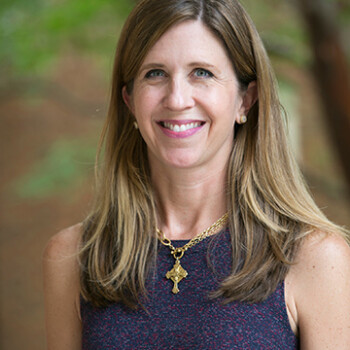
The MSSON currently offers a broad range of accredited nursing programs and is led by Melondie Carter, Ralph W. Beeson Dean and professor. Carter has been recognized at the state and university level for her outstanding commitment to nursing education. Her favorite Bible verse is Proverbs 17:22, “A merry heart doeth good like a medicine.”[1] She believes there is no better representation of this scripture than nurses embracing happiness during difficult challenges to bring joy and hope to the patients served.
Today, MSSON programs include traditional, transfer, second-degree, and online registered nurse-bachelor of science in nursing (RN-BSN) options. Graduate programs include a master of science in nursing option as well as doctor of nursing practice (DNP) with specialties such as nurse anesthesia, family nurse practitioner, nurse leadership, and psychiatric mental health. Enrollment is at maximum capacity in many programs and continues to grow in others.
Across MSSON, many faculty speak of nursing as a vocation rather than simply a profession—a calling that reflects Christ’s compassionate presence during the most sacred moments like births, deaths, traumas, and times of healing. Access to these intimate aspects of others’ lives is a privilege that bears spiritual responsibility. Faculty also recognize the privilege of preparing learners to deliver excellent, compassionate care through a Christ-centered perspective and embrace nursing as a continuation of his love and healing ministry.
In recent years, the MSSON was asked to reflect upon scripture and pray over the declaration of a verse confirming the collective identity and shared values of the school. Hebrews 6:10 was chosen: “He will not forget your work and the love you have shown Him as you have helped His people and continue to help them.”[2] These words serve as a reminder that faithful service does not go unnoticed by God. The calling of an MSSON nurse is to faithfully love as Christ loved, motivated by his example of sacrifice versus simply completing necessary tasks to solve problems. Hebrews 6:10 reminds us that preparing nurses who see work as worship and service as an expression of God’s love for his people is remembered by the Father.
Whether meeting together as an entire school or in individual departments, faith is a principal component of interactions with each other. Meetings begin with prayer, asking God to provide wisdom to accomplish his work with his strength. Faculty seek the empowerment of the Holy Spirit to guide students in applying their extensive classroom knowledge to deliver excellent patient care. Yet care goes beyond knowledge, and students are encouraged to love patients with a kindness and compassion that reflects Christ. As faculty, we model how to engage with patients in a way that reflects El Roi, the God who sees.
From the first semester in the undergraduate program to the last of the doctoral program, whether in physical classrooms or online, an observer will see faith exemplified. Classes often begin with devotion and prayer, so students learn that faithfully following Christ in our work is possible, and our outward expression of faith is not relegated to just home or church.
In alignment with the Christian mission of Samford University and the MSSON, faculty uphold biblical principles by intentionally integrating a Christ-centered worldview into teaching, mentoring, and clinical practice. The inherent dignity and worth of every person is affirmed by cultivating learning environments marked by respect, grace, and compassion, recognizing students, patients, and colleagues as created in the image of God. Servant leadership is not merely discussed but embodied within the faculty community. Professors intentionally invest in students’ academic achievement, professional identity, and personal formation. Viewed as an act of faithful stewardship, this work is carried out through rigorous, evidence-based instruction, ongoing scholarly growth, office and electronic conversations, and the modeling of ethical practice distinguished by integrity and accountability.
Faculty also share biblical principles through demonstrated compassion and the promotion of holistic care for those they serve. Authentic Christian community is fostered through prayer, mutual support, and encouragement, creating a culture of belonging and shared purpose. Beyond the classroom, faculty engage in service, missions involvement, and professional leadership that advance health equity and advocate for vulnerable populations, reflecting the biblical call to act justly, love mercy, and walk humbly in service to others. The daily work of faculty becomes both an expression of faith and a tangible witness to the integration of Christian commitment and nursing education. While never perfect, this collective goal is what the faculty and staff of the MSSON intentionally pursue.
Students are taught how to effectively advocate for all patients, especially the most vulnerable who cannot advocate for themselves. Whether the patient is a child, lives on the streets of our community, is a prisoner, or simply has no voice during general anesthesia, Christ implores us to care for the least of these. Nurses at every degree level in the MSSON are encouraged through lecture, discussion, and role modeling to value people as Christ does—not as a project to be changed, but a person to be seen and provided with excellent care.
Encouraging students to recognize all persons as image bearers requires both speaking the truth in love and modeling humility in word and action. Faculty desire that nurses be formed not only as individuals who uphold standards, but as professionals who embody grace-filled accountability in their interactions with others. Expectations are communicated clearly while care is taken to ensure that such expectations are enacted in ways that preserve dignity and foster belonging.
One tangible expression of this commitment is the creation of Ida’s Clothes Closet, an initiative designed by faculty to support students who need professional attire for presentations or interviews but may lack the financial means to obtain it. While the program maintains the standard that students present themselves in appropriate professional dress, faculty have intentionally paired this expectation with a Christ-centered response that removes potential barriers to success. Accessible, high-quality clothing is available for students to pick from at no cost in a manner that is discreet and stigma free. This resource promotes confidence, affirms students’ worth, and reflects a learning environment in which truth is consistently expressed through love.
Another initiative developed to support MSSON students is Thrive, a faculty-led program designed to promote student well-being through both formative resources and meaningful engagement. Thrive offers a series of online modules that address topics such as anxiety, depression, emotional intelligence, and internal narratives that shape students’ sense of identity and belonging. Each module approaches these concerns through a Christian perspective, integrating Scripture with trusted scholarly and clinical resources, including articles, podcasts, and videos, to encourage thoughtful reflection and growth.
In addition to its online content, Thrive hosts an annual gathering that invites new students’ family members and other significant supporters to campus for an evening of shared learning, fellowship, and prayer. The event includes a meal, a tour of the classrooms and simulation center, as well as testimonies from a current student and a program graduate who offer practical insight into the rigor of the program and ways loved ones can provide meaningful encouragement and support. Students and families consistently express deep appreciation for the opportunity to better understand one another’s experiences and to cultivate practices of Christ-centered care within their relationships. In these ways, Thrive serves as a formative expression of the school’s commitment to student flourishing, providing a gracious space in which truth is shared through Scripture, authentic dialogue, and carefully curated resources.
When faith permeates the classroom, students are taught how to provide evidence-based care without judging someone personally, which is a concept many patients have yet to experience. Faculty also help learners explore ways to care for the person, not just treat their current physical ailment. When students are in difficult situations or when their beliefs are challenged by patients’ different views, MSSON faculty are honored to journey alongside the student to reflect Christ in the process of the challenge.
Students are often asked to complete reflective journals after clinical experiences. Faculty help guide students through moments of questioning, providing feedback into a patient encounter that was uncomfortable for the student. These moments of insight into a student’s heart, especially when they have engaged with others from different backgrounds, are one of the greatest joys of teaching and a prime opportunity to affirm the God-given worth of each individual.
One of the clinical opportunities students have is to work with individuals experiencing homelessness. During a clinical day, a student shared with her faculty and classmate that she was afraid. This was her first time in a setting with someone who was experiencing homelessness, as her small, rural town had no unhoused people in the area. Looking in her eyes, the faculty knew she was truly overwhelmed. The student wanted to be brave, loves God, and loves people, but the newness of the situation scared her. The faculty member stopped right in the foyer of the church that serves the beautiful image bearers who might not have a home, shower, or food, and prayed with the student. Later, this student reflected on how this experience impacted her positively as she had conversations with people who had very different life experiences from her own. She realized through this experience that circumstances do not define an individual’s worth. All are made in God’s image.
Serving others transforms the servant, bringing God’s presence to places of pain, fear, and suffering. Students can bring light into the darkness with encouragement, prayer, being fully present, and investing in the lives of his people while caring for them. Many service opportunities throughout the community are provided, inviting students to challenge their perspectives in light of the Gospel. In nursing classes and clinicals, students are asked to consider and interact with patients who are walking through hard days. Nursing students see young moms lose babies, families lose the family’s matriarch, and men lose their independence due to dementia. This causes students to wrestle with truths: “Why does God allow bad things to happen to good people?” “If God is good, why didn’t He answer the family’s prayers?” As faculty, we take the truth of scripture and in love, help students navigate what they believe.
Examples of nursing students providing Christ-like, compassionate care are shared frequently amongst discussions in the MSSON. Four examples provide a glimpse of the beautiful love demonstrated by our students. While faculty acknowledge that the students’ choices to honor the Lord are their own, we cannot help but feel profound pride and thankfulness as we witness their obedience and growth.
One nursing student arrived early for the clinical day on a medical-surgical hospital unit while patient assignments were being made. Although a patient was deemed less than optimal for student assignment because she would not talk or provide important information that the student would need, the student began her learning experience by assessing the challenging patient and providing necessary care. The assessment and tasks were the same as what other nurses had completed. What differed was the way the student did these things. She was unhurried. She lingered. Her gentle touch and kind words were small but powerful. Other providers rushed in and out throughout the day, but the student was a consistent presence. Trust was formed between the student and the patient, and honest conversation began. The real reason the patient was hospitalized was due to the trauma inflicted upon her by others in her home. For days, healthcare providers focused on essential tasks, yet none had elicited this important information. No one stopped to really see the patient, and her injuries were assumed to be from other causes. The student talked with her, prayed with her, and pursued her beyond the surface. This patient was afforded a variety of safe options because of the selfless care provided by the compassionate student.
In a profound act of humble service, a nurse anesthesia student exemplified Christlike compassion by washing the hair of a postoperative patient being transferred back to the intensive care unit after surgery. The patient, who had endured two months in the intensive care unit, had not been able to have her hair properly cleaned. Recognizing both the physical and spiritual dimensions of care, the student gently tended to the patient’s needs—not merely as a clinical task, but as a sacred opportunity to honor the patient as a beloved child of God. This simple yet deeply meaningful gesture reflected the heart of nursing as ministry, where healing extends beyond treating the physical body to encompass dignity and love. The student’s willingness to go beyond the expected not only comforted the patient but also inspired and blessed the surrounding staff, who witnessed a tangible expression of the Gospel lived out through compassionate care.
The experience for one student related to the loss of her own mother at a young age as she remembered saying goodbye to her. She and her sister climbed into her mother’s hospital bed to love and comfort her during the final moments of life. Family members soon took the girls home, but her father stayed to be at her mother’s side as she took her last breaths. During a clinical experience, a patient on the student’s unit passed away. While providing postmortem care with other students and her faculty member, memories of her mother began flooding back. As silent tears fell, her faculty member gently encouraged her to take a break, knowing it is common for this type of care to be overwhelming. The student chose to stay to complete the process until there was nothing more to be done, quietly wiping away her tears as she worked.
At the end of each clinical day, faculty and students discuss the care provided during the day during a debriefing session. Connections are made between class and clinical content during this time, but faculty also encourage students to share how they feel about the care provided. On this day, the faculty member was especially sensitive to how students felt related to providing postmortem care. This student began to share about her mother and her memory of saying goodbye in the hospital. She acknowledged that until this point, her focus had been on her own grief without thought of her father being alone as her mother died. The student said that her tears this day were for her father as her eyes were opened to the grief he experienced on the day of her mother’s death. She was able to not only experience her pain and grief but became able to move towards experiencing the suffering of another. This experience occurred with the supporting guidance of a faculty member who not only valued the patient, but her grieving learner as well.
A group of students gathered at the bedside of an elderly woman anticipated to be in the final moments of life. This patient shared with the students about her hope and trust in Jesus, faith in a Savior that she was soon to meet. The patient began to quietly sing hymns. The students not only listened, but they also knew the words of these beloved hymns and sang with her. These beautiful words filled not only this hospital room, but it resounded through the hospital hallways and corridors bringing hope and peace to others.
Many MSSON students attend Samford because they are drawn to faith-integrated nursing. They have a strong faith in Jesus, putting their hope in him and his gift of eternal life. When asked to deliver devotions to the class before the start of a lecture, students quickly volunteer and share messages that are far from superficial. They reflect spiritual maturity and strong grounding in their lives of faith and purpose.
While many students are drawn to the Christian foundation of our programs, it is critical that faculty are sensitive to the various experiences and perspectives of students. A graduate student recently shared an unsolicited “thank you” note with her program. Shared with permission, her note reads:
You never know the baggage of a person who walks through the College of Health Science’s double doors. Someone who has experienced spiritual trauma may be drawn to a program’s excellent reputation and find themselves reluctantly applying to a Christian university’s nurse anesthesia program.
For myself in 2022, my relationship with Jesus had never been more sure, yet my relationship with the church was never more precarious. I began to struggle to find Jesus among familiar and once-trusted congregations. My soul was wounded and my mind was jaded against institutions who claimed my Christ’s family name. But it was the people at Samford who healed broken parts of me that they didn’t know existed and weren’t responsible for. You see, Jesus is in the air that Samford nurse anesthesia breathes, he’s not a criteria that we are expected to meet. His presence is palpable and radiant. He is warm and tender. He is excellent and fierce. He is a cool salve to a burned heart. And the gentle, open-handed authenticity that Samford nurse anesthesia exhibits leaves room for Jesus to move recklessly through the hearts of everyone it touches.
So what happens to students when the Bible isn’t necessarily part of the curriculum but Jesus himself is a part of the people? In my experience, healing begins.
This sincere note was sent at a time perfectly orchestrated by the Lord, confirming ways he is working through the MSSON as well as providing encouragement to spur each other on in love.
At all levels of the program, the feedback received about the MSSON students from nurse managers, preceptors, and other providers is overwhelmingly positive. Specific examples are shared related to the difference MSSON nursing students make in the lives of others, but often it is hard to put into words. While it takes much time and intentionality to teach students the science and art of nursing, the process is a gift from God that is tangibly experienced by others. The ripple effect impacts staff and other nurses who interact with students, as well as patients and families who are experiencing pain and suffering.
Walking with patients and families, seeing them as God sees them, allows students and faculty the opportunity to live out the great commandment through hands-on care to demonstrate God’s love through human action. This care is a reminder of Hebrews 6:10: “He will not forget your work and the love you have shown Him as you have helped His people and continue to help them.”[3] What a privilege it is to live out his calling at the Moffett & Sanders School of Nursing!
[1]. Proverbs 17:22, KJV.
[2]. Hebrew 6:10, NIV.
[3]. Hebrews 6:10, NIV.