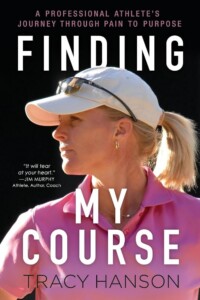
Finding My Course: A Professional Athlete’s Journey through Pain to Purpose
Trauma-Informed Research in Sport, Exercise, and Health: Qualitative Methods
Spiritual Trauma Care: Theology and Psychology in Dialogue
One of our goals in this essay was to synthesise three related books on trauma, from three distinct sources—pastoral theology, the social scientific (and secular) study of sports, and biographical material. We hope to have provided a starting point for others to research the sports-theology-trauma relationship and to think about how to support athletes holistically by adopting an evidence-based, trauma-informed approach—as articulated in Trauma-Informed Research in Sport, Exercise and Health—but which, as Hunsinger insists in Spiritual Trauma Care, should be biblically based and psychologically informed.
Trauma-Informed Research in Sport, Exercise and Health provides a wide-ranging introduction to the concept of trauma in the sports domain, specifically focused on undertaking qualitative research—an impressive and arguably seminal book but with the limitation of not addressing spirituality or religion. Spiritual Trauma Care: Theology and Psychology in Dialogue, is, we argue, a tour de force in pastoral theology, offering a clear, practical, and theologically rigorous analysis of trauma. Perhaps one limitation of the book is that occasionally, significant themes are introduced but not always unpacked, for instance, the “Dark Night of the Soul,” which the Christian psychiatrist Gerald May has extensively explored in relation to psychological struggles and trauma.[1] Finally, Hanson’s Finding My Course: A Professional Athlete’s Journey through Pain to Purpose, though not a book that we reviewed in the conventional sense of the word, has been invaluable in complementing the theological and social-scientific perspectives on trauma.
We hope the discussion of Hunsinger’s work, especially the theology-psychology nexus, has been helpful for Christian psychologists and psychiatrists working in sports and sport chaplains, while also being informative for sports coaches, sport ministry practitioners, and physical educators. An excellent example of a trauma-informed (and spiritually based) approach to sports coaching and physical education is the evidence-based Pla Like a Champion Today (PLACT) child educational program that was founded by Notre Dame professor of psychology and education Clark Power.[2] Over a period of 20 years, working in schools and with sport/coach organizations, PLACT has trained and resourced over 160,000 coaches and physical educators (and thousands of parents) from across the United States and Canada, in a holistic approach to coaching in which moral and spiritual development are front and centre.
The organization has a focus on working with disadvantaged children and offers many resources and several focussed educational programmes: for example, a Physical Education curriculum and a Catholic-based “Sport as Ministry” initiative, all of which are embedded with information as to how to be trauma-sensitive and -responsive. We recommend the PLACT programme and its related educational courses and resources (e.g., coach and administrator education clinics, parent workshops, etc.), as an excellent starting point to gain an understanding of a trauma-informed approach to working with children and young people in sports.[3] Regrettably, Tracy Hanson’s golf coach was the source of her complex and excruciatingly difficult trauma, while her redemptive story is now bringing hope to others.
The vulnerable biography of Hanson (and that of Rachael Denhollander) gives other abuse survivors hope and the permission and courage to share their story and seek healing. Hanson’s story is “testament to the power of naming truth, reckoning with our past, and stepping into a future marked by courage and hope. Hanson’s story is a gift to anyone longing to find meaning in their journey.”[4] I (Nick) was heartened to read toward the end of her biography, that while Hanson still struggles with the complex consequences of the abuse that she experienced decades ago, she is back playing on the senior professional women’s golf tour. Hanson comments that it “wasn’t my peers who had forgotten me—it was me who had forgotten myself. I am a golfer. In all the years that I had played on the LPGA Tour, my presence mattered. A more accurate question I need to face was . . . What do I love, and where do my gifts lie? Sports!” (241, 247). The psychiatrist Gerald May observes that it is often through our loves, our desires, that God works most powerfully for our good and healing—for he planted these in our hearts before we were born, before the creation of the world.[5]
We opened our musings on sport, theology and trauma with the very honest words of professional golfer, Tracy Hanson, and so we think it fitting to close with the very hopeful and realistic words of a professional pastoral theologian and caregiver, Deborah van Deusen Hunsinger:
Healing from trauma is a mystery. We can describe it, but we cannot prescribe it because faith itself is a gift, and it is the work of grace though faith that “sanctifies our deepest distress.” Healing from trauma in the context of Christian faith is more than simple “post-traumatic growth,” as wonderful as that is. The gospel understands this healing as the work of God’s Holy Spirit. Those who turn to God again and again in their need are given God’s miraculous gift of “the fruit of the Spirit” namely, “love, joy, peace, patience, kindness, goodness, gentleness, faithfulness, and self-control” (Galatians 5:22, RSV). May it be so as we learn to trust God and to care for one another in mutual love and compassion. (9)
[1]. Gerald G. May, The Dark Night of the Soul: A Psychiatrist Explores the Connection between Darkness and Spiritual Growth (Harper Collins, 2004).
[2]. Clark Power, “Playing Like a Champion Today: Youth Sport and Moral Development,” in Youth Sport and Spirituality: Catholic Perspectives, ed. Patrick Kelly (University of Notre Dame Press, 2015).
[3]. See the Play Like a Champion Today website for a host of trauma-informed resources and information, accessed 29 September, 2025, https://www.playlikeachampion.org/about.
[4]. Tracy Hanson, Finding My Course, from endorsements page, quote by Chuck DeGroat, professor and executive director in the clinical mental health counselling program at Western Theological Seminary.
[5]. May, Dark Night of the Soul.