Koreans really dislike waiting.
As I lead the 2.5-week study abroad program in Korea, travelling and learning with eleven American students from Seattle Pacific University, I am reminded of how fast-paced Korean culture is.
There is a widespread joke that the “close door” button inside Korean elevators is the most worn out among all the buttons, because passengers push it impatiently, sometimes in rapid succession, instead of waiting for the door to eventually close on its own.
This aversion to waiting is often discussed alongside 빨리빨리 (ppalli-ppalli) culture. 빨리 (Ppalli) translates to “quickly or hurriedly.” So when you tell someone to do something 빨리 빨리, you are telling them to rush, times two.
But in other ways, Koreans are accustomed to waiting (I won’t go as far as to state that they enjoy waiting). In fact, in this fast-paced country, my American students are getting an immersive experience in waiting.
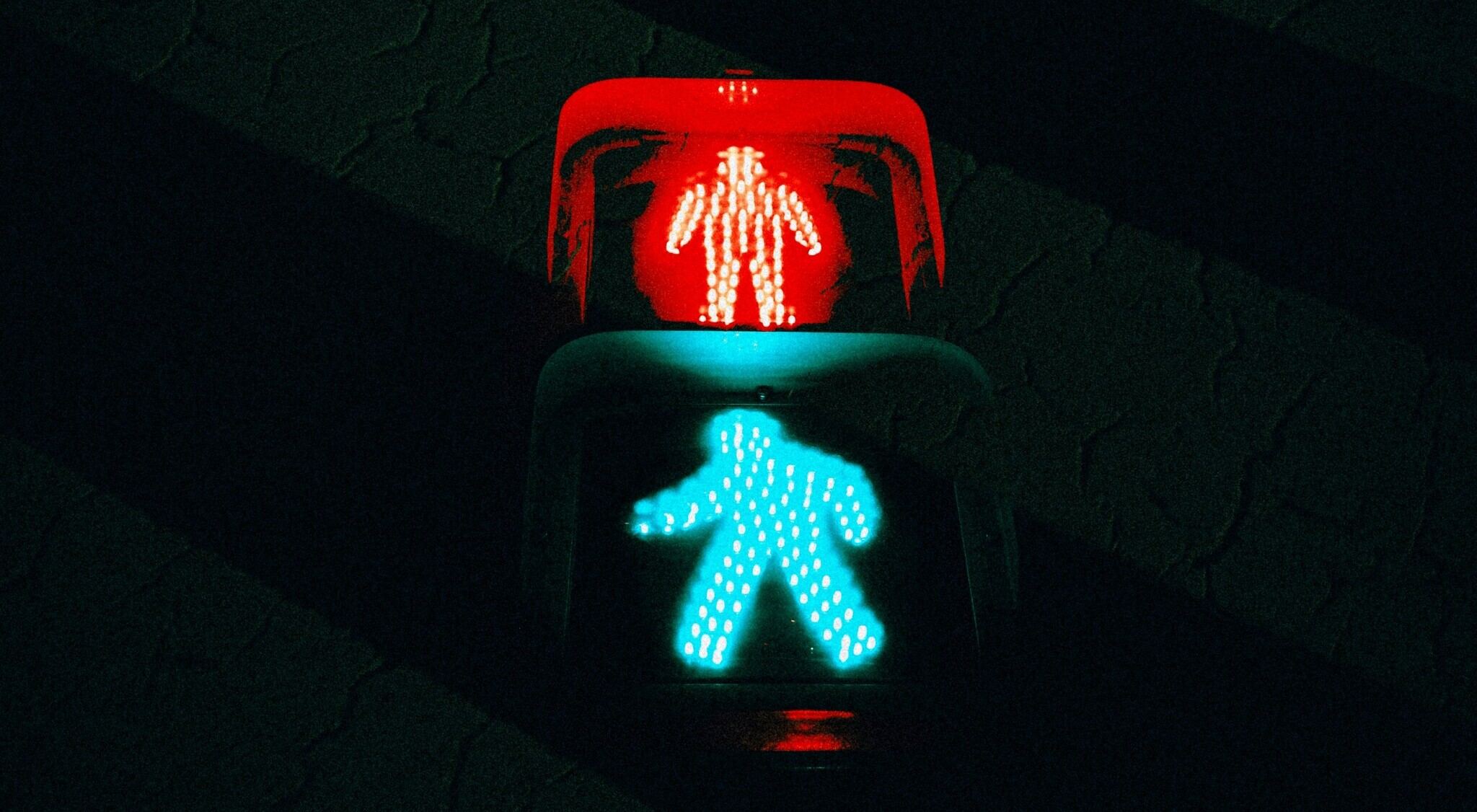
Our classroom is located about 200 meters away from our lodging. During the first few days in Korea, students were surprised as to how long this walk actually took. The pedestrian-friendly streets of Seoul—you can walk pretty much anywhere—come at a cost for both drivers and pedestrians: having to wait, and wait significantly, to cross the streets. Korean people are used to planning ahead for added time, and they wait patiently, accepting this lengthy pause in their brisk walks. No one frets about it. But for my American students, “I got caught at the light” became a common refrain whenever they were late to class.
These everyday observations have helped me to reflect on and organize some thoughts about waiting well. In my own life, a good portion of my Christian discipline involves waiting for God to move, while figuring out my role in that wait.
I have been praying about how I can share these thoughts with my students not only during a study abroad program, but across my mentoring and teaching of students in Christian higher education. After all, the Christian virtue of patience requires exercising patience with particularly Christian motivations.1 Thus, I share these thoughts here with you, with the prayer that you will find some of these thoughts useful for your own reflections and practices.
1. Waiting is not a passive undertaking. I am reminded of the parable in Matthew 25:14-20 of the rich master who gives money (talents) to three servants before embarking on a long trip. When the master returns, the “wicked, lazy” servant who decided to take on a passive posture (burying the money given to him) while waiting for the master is reprimanded, whereas the two servants who did something with the money are praised. Thus, I offer this Waiting Prayer.
Lord, I long for the day when you will “make all things new” (Revelation 21:5); in the meantime, I will strive to do my part in bringing about reconciliation and healing in the vocational roles that you have entrusted to me.
God, I wait upon you for guidance in this difficult decision. As I wait, I will seek the wisdom of trusted individuals that you have placed in my life.
2. Paradoxically, waiting requires total surrender. Especially in the North American context that prizes the individual’s ability to make a difference, it is good to be reminded of things that we truly have no control over. Whenever my family rides the subway train to get to various places in Seoul, my two children are fond of asking, “How many more stops?” as if they could hasten our arrival by doing so.
Like the obvious realization that the speed of the subway train is zero percent in our hands and one hundred percent dependent on external factors, there is value in surrendering to God’s timing—God, for whom “a day is like a thousand years, and a thousand years are like a day” (2 Peter 3:8) and who “made everything beautiful in its time” (Ecclesiastes 3:11). When impatience takes over, it is good to be reminded of this truth: “it is good to wait quietly for the salvation of the Lord” (Lamentations 3:26).
3. Waiting is less painful if done collectively. As relational creatures, we do better when we depend on our human connections during stressful times. Waiting on the Lord, in particular, is less challenging, and perhaps even enjoyable at times, when done communally. As a simple example, I found that waiting with students, such as at a bus stop or a train station, gave me a sense of belonging and helped me to occupy the time. In contrast, when I have to wait alone, I am sometimes distracted by my wandering negative thoughts and emotions.
And while we wait, there is a call to do things expectantly with one another: “And let us consider how we may spur one another on toward love and good deeds, not giving up meeting together, as some are in the habit of doing, but encouraging one another—and all the more as you see the Day approaching” (Hebrews 10:24-25).
4. Waiting is an exercise in lament and hope. “How long, O Lord” is a common refrain in the Bible (e.g., Psalm 13:1, ESV). Like my daughters asking about the number of train stops remaining, this refrain sometimes can have a grumbling tone. But other times, it is less about grumbling, and more about lament. About naming instances and asking God to restore justice. And “how long” should be understood alongside hope. Because of the hope that we have in God and his promises, we wait eagerly, and we wait expectantly.
I have visited the Demilitarized Zone (DMZ) several times now with American students. Each time that I visit this popular tourist destination in South Korea, it is remarkable how everything about the experience looks and feels the same. Young men fulfilling their mandatory military service hop onto our bus for a passport check; they look too young every time, and the rifles that they carry always appear out of place. We tour the same underground tunnel, peer into North Korea using the same observatories, and walk through the same souvenir stores that sell the same overpriced products. And it is not just the visible aspects; the division of the Korean peninsula and all the sociopolitical wounds that come out of that are still the same, felt at the emotional and yes, spiritual level. Koreans and global allies of Korea have been waiting for a long time for some kind of resolution in this geopolitical conflict that has persisted for a long time.
But strangely, in this place of grief, I also find hope. A reason for genuine hope is the promise of God’s reconciliation and restoration. But also, another reason for hope is seeing people doing good work, whether it is seeing faithful Christians ministering to North Korean defectors in South Korea, or learning about the ways that those with power and influence are actively working for reconciliation and restoration. Yet another reason for hope is seeing my American students “get it” as they tour the DMZ, and to not be sucked into the commercialism (e.g., souvenirs) and dehumanization (e.g., temptation to discuss North Korean people in belittling terms).
Allow me to close with one last everyday observation. While waiting at a crowded crosswalk for the light to change, I noticed a young girl standing next to me, talking excitedly on her phone. I soon gathered that she was talking with a friend who was waiting on the other side of the street. These two friends were completely at the mercy of the stoplight, in terms of when they will be united. Instead of waiting passively, they chose to talk on the phone, laugh together, and even wave their arms back and forth. The few minutes of waiting must have felt like hours for them. But they persevered in their waiting, because they had faith that the sweet union of being with each other would eventually come. And the way that they sprinted toward one another when the light finally turned green and the way they grabbed each other’s hands and hopped up and down brought a smile to my face. It felt like a glimpse into what it is like to wait for God’s restoration and healing of all things. To hold onto his promise of restoration and reconciliation, with the understanding that it is not yet fully realized. And to eagerly wait for that full realization, not alone, but with others who are also eagerly waiting.
*All Bible passages are from the New International Version (NIV) unless otherwise indicated.*
Footnotes
- Perry L. Glanzer, Jessica L. Martin, Theodore F. Cockle, Sarah E. Madsen, Karen K. Melton, and Sarah A. Schnitker, “Strategies for Practicing Patience among U.S. College Students: A Thematic Analysis,” International Journal of Positive Psychology, 11 (2026). https://doi.org/10.1007/s41042-026-00308-7