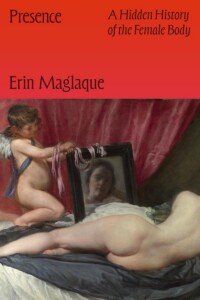
Presence: A Hidden History of the Female Body
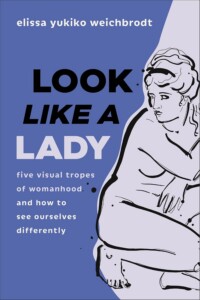
Look like a Lady
Editor’s Note: The following is the second part of Agnes Howard’s review essay of Erin Maglaque, Presence: A Hidden History of the Female Body, and Elissa Yukiko Weichbrodt, Look Like a Lady: Five Visual Tropes of Womanhood and How to See Ourselves Differently.
In Elissa Yukiko Weichbrodt’s Look Like a Lady, Weichbrodt does not puzzle over what women want. She answers the question handily. Women in the past did know what they wanted because they were told what to want. They were desired; they were taught to desire others’ desire. Weichbrodt’s witty title carries double valence. “Looking” like a lady echoes catcalls and primness, but the author claims the other sense of the verb to liberate women. “Looking” refers to appearance but also to vision, helping women see something in art that gives life. Gender is the major axis defining the argument, but race and culture tangle too in imperial histories that eroticize exotic strangers. The writer’s upbringing in evangelicalism in Hawaii with American-Japanese parentage left her as a young woman feeling left out of standard beauty categories. Readers will be grateful for the insight that position built.
The Five Visual Scripts
Like Presence, Look Like a Lady delivers scholarly heft to general readers, here specifically Christian ones. Weichbrodt critiques five visual scripts or “stories” that squeeze women’s behavior into distortive shapes. Venus stands in for female beauty, Vessel for men’s abstractions, Maiden for the victim in need of rescue, Mother for the self-sacrificing maternal ideal, and Monster for women’s excess or deficiency.
Weichbrodt’s deft sketches convict. These feminine ideals are incised so deeply in culture that we may not recognize ourselves as striking the poses they set. We become Venus in a selfie, Maiden in a prom dress,[1] Mother in a Christmas card photo, hardly conscious that we’re posing as that. But just unmasking the paper dolls of womanhood is not sufficient to set us free. For each narrow story, Weichbrodt gives a “counterstory,” using art to help women witness beauty together and partner with fellow pilgrims. The chapter titles are nouns, labels applied to women according to somebody else’s need, but counter-stories are verbs, conjugated in the present participle, not ascription but action.
Weichbrodt’s classifications are inventive and largely persuasive. The Venus chapter is a slam-dunk. Her chapter sequence lets readers wrangle with the “stories,” in her order. First, beauty desired, then abstracted, then ravished or rescued, and finally domesticated. I found myself wanting to shuffle the deck. What if the stories could give us beauty admired, then give us desire blooming into love that generates life and keeps those goods in fruitful tension? Motherhood does not have to be pictured as sappy or sucked dry–and Weichbrodt has a doozy of a sketch for that–but can be resilient, refreshing, abundant.
At points the categories strain. Seeing her chapter titles, “Vessel” and “Mother,” for example, I assumed the former would cover pregnancy and the latter would cover motherhood. On and off since antiquity, women were defined by the womb, a container for that empty space waiting for something to fill it, endangered and dangerous when not safely secured. Instead, in the book, vessel names men’s use of the feminine as abstraction, a symbol of some idea like liberty, virtue, or nature. For Weichbrodt, vessel describes not so much the empty space inside the female body as the supposed blankness of the surface, a mutability that makes woman interchangeable to cast in one vague role or another.
Pairing physical and conceptual emptiness would reinforce her case here, not distract from it. In the book, vessel as container for concepts rather than babies confuses still more because that chapter immediately follows pages depicting a medieval sculpture of the Visitation, pregnant bellies of Mary and Elizabeth hollowed out to house a fetal John and Jesus behind crystal windows.
Weichbrodt’s rebuff of the mother story shows spiritual motherhood outdoing the physical kind, depicted delightfully but a little uncannily by nuns. To be sure, nuns embody spiritual nurture, but I might cast religious sisters instead as the corrective to the maiden story. The opposite of fragile, helpless maidens needing rescue could be the strong, committed women who consecrate their singleness to God, often enabling deeds of heroic courage, service, or creativity by the vows they make.
Different Visions of Emancipation
Emancipation is the aim of both books, labors of love, gift-packaging academic treasures for the general audience. We can imagine both writers sorting through their sources, feeling for the hinge or clasp that might hold together the roles that still clang and rub in women’s lives instead of snapping neatly together: motherhood and work, the life of the mind and needs of the body (especially the needs of other people’s bodies), desire and duty. Something still felt stuck after I read both books. Pursuing desire, as the word is usually used, too readily pulls us into a come-hither Venus stance or maidenly shoulder shrug, whether we gesture toward new lovers or a notebook. Maglaque uses early modern history to suggest that women in the past “were making claims upon the present” (10). What might those claims be? Knowing about those women can neither emancipate them–“Their freedom still hangs in the balance” (10)–nor us.
Then what can deliver us? Feeding some kinds of desire, physical or intellectual, fattens what is false about human life, female or male. Weichbrodt’s counter to the maiden story pushes readers furthest in the right direction: moving. Moving is the verb she uses to counter the static, passive maiden. To illustrate movement, Weichbrodt gives us Mary Magdalene. Unlike many versions of Mary Magdalene, the wood sculpture featured here, made by Donatello about 1440, is not pretty. She is haggard. Coarse hair and rough clothes hang off of her, and her hands grasp at prayer. This might be the clearest answer to the secret of the female body, not what is hidden but what is manifest; not smooth, plush, or curvy but ragged. This Magdalene is moving, all right. She shows what it looks like to move through life as a real human, bearing the suffering and grief inescapable to mortal bodies, weathered by carrying that burden a long time. She desires, to be sure, though imagining what becomes an exercise in redirecting the viewers’ own wants: release from pain? Love of the One who loved her and brought her safe thus far? Desire in the direction of her raised hands has power to lead us, body and all, to satisfaction worthy of our movement.
[1] Part of what Weichbrodt is getting at is thinness as a standard for beauty: the model women with “sloped shoulders and hollowed chests,” a woman whose “body is exquisitely pliable… maybe even a bit consumptive” (100). As a teen Weichbrodt drew maiden models “with elegantly hunched shoulders, sharp, high cheekbones, and yearning expressions” or copies of fashion models from magazines, “a slumped Kate Moss swathed in a black, lace veil, a woman slouched in a chair wearing a Givenchy sequined gown” (99).