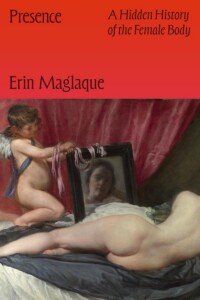
Presence: A Hidden History of the Female Body
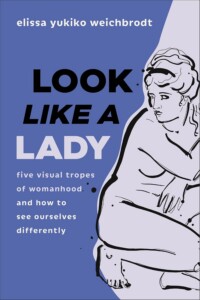
Look like a Lady
Book Review of Erin Maglaque, Presence: A Hidden History of the Female Body. Astra House (2026), 320 pp., and Elissa Yukiko Weichbrodt, Look Like a Lady: Five Visual Tropes of Womanhood and How to See Ourselves Differently. Brazos Press (2026), 256 pp.
Virginia Woolf named a paradox about women in the past. On the one hand, Woolf notes in A Room of One’s Own, women were omnipresent in poetry, where “women have burnt like beacons in all the works of the poets from the beginning of time.”[1] But unlike their ubiquity in art, in the record of real life, women were nearly invisible: “Imaginatively she is of the highest importance; practically she is completely insignificant. She pervades poetry from cover to cover; she is all but absent from history.”[2]
These two books, Look Like a Lady and Presence, divide between them the chasm Woolf maps. In the former, Covenant College art historian Elissa Yukiko Weichbrodt traces the female figures of Western art who furnish our mental galleries with heroines and hags. In the latter, historian Erin Maglaque uncovers material about women’s real lives to restore their physical experience to the pages of history.
The Commonalities
Both writers look to the early modern period in search of something to retrieve for the benefit of contemporary readers. Maglaque is eloquent in explaining the attractions of studying early modern Europe. Compelling is its long-running transitional mix, “the strangeness of the medieval past and the familiarity of the late modern…archaic rubbed up against the strikingly relatable” (6). Weichbrodt’s art mostly comes from this period too, though, as suits Renaissance art, many images have their origins in the classical past.
Both writers purport to deliver secrets. Weichbrodt uncovers something readers already know but may be unaware of: the hold old images have on body image for women today. She blames the past for some present problems. Maglaque uncovers fascinating manners and practices readers may never have heard before. For her, present experience helps us better understand the past.
Both writers explain their interest in these topics by way of belated curiosity about their own bodies. Both were habituated to prioritize the life of the mind until events made them reckon with female physiology. Ending a pregnancy, Maglaque recalls, “My body had asserted itself as the most urgent question of my life. That had not always been the case. Through my twenties, my body had been a kind of accessory to my intellect” (2). Though as a child Weichbrodt expected to be a mother, as a young adult she found herself pursuing an art history PhD, enjoying instead “the thrilling challenges of pulling together the threads of an argument…My brain feels utterly alive, like a plant flourishing under just the right conditions” (136), which made her wonder, and fear, if becoming a mother would make all that disappear. (N.B. She does become a mother, and it doesn’t.)
Both writers want to liberate women from burdensome desires others impose on them, desires that tend to lay claim to female sexuality, in order to free up women to…work? Both writers strain to value women’s work aptly when no apt measure exists, because women’s reproductive value long overshadowed their other capacities and activities, even as reproduction unevenly was counted as work.
Both writers use personal life not just as a prelude but as an interpretive tool. Maglaque asserts, “I wanted not only to write a history of the female body but a book that made the body into method” (9). She means first her own body, then new curiosities about bodies in the past, “not alien to my own….I see myself in it” (9). Weichbrodt makes the body a method too. She does this best through hand-drawn sketches of the art that her book references. It’s a compelling strategy. Art history books can be expensive, with color plates and permissions driving up prices and interrupting the text. Weichbrodt’s sketches are not just expedient but critical to her argument. Her drawings literally embody her point. The book need not show photographs of all the art because she knows readers already keep many of these images in their own visual storehouses. We have images of these bodies in mind’s eye and muscle memory, telling us how to hold our own bodies. Weichbrodt’s hand shows us what her body already knows, making readers aware of how these images have shaped their own behavior and sense of self.
The Differences
These are two very different books.
In Presence, chapters cover eating, pregnancy, abortion, birth, sleep, breastfeeding, desire, work, and death. They investigate medical texts, midwifery manuals, legal documents, pamphlets, diaries, and “objects of all kinds” (5). Maglaque gives sharp analysis. Some of the keenest comes in a chapter ironically subtitled, “A History of Drudgery,” since the author strives to honor the tasks entailed. “This book is as much a history of female work as it is a history of the female body” (203), Maglaque declares, almost to her own surprise. Much of early modern life was work, including “cooking, feeding, wiping, swaddling; women pulling babies free; women brewing beer, tending the fire, working in the fields” (203). Deftly tying threads together, Maglaque shows how much of the life cycle spun around textiles. The body goes dust to dust but also grass to grass. Women cultivated grass that yielded seed to be spun into linen and woven into cloth, fabric that wraps around infants at birth, corpses at death, and dresses households in between, fabric that must be washed, hung to dry, sewn, mended, used as rags and stuffing and paper (including the written pages in the archives Maglaque haunts), before it disintegrates back into the grass. Work overspills the drudgery chapter because women did so much: laboring while others slept, breastfeeding for wages.
Grounding history in personal details yields insight but also can obtrude. This dynamic is most conspicuous in Maglaque’s treatment of abortion. The writer’s deployment of evidence nudges readers’ response. The book opens with 1610 testimony of a woman in Bologna accused of aborting her child, rather than having delivered a baby stillborn, making readers regret the suffering imposed on this woman, who received blame and torture rather than sympathy at her loss. Emotional response also gets elicited by quotations from a midwife who reports tossing fetuses aborted early “in the latrine” (74) since they did not have souls yet, or from a woman working in the fields whose fetus “slipped out like a slice of ham” (85). The chapter aims to neutralize current judgments of abortion on the grounds that then it was a natural part of life, when views of reproductive biology blurred lines between pregnancy and “unpregnancy.” Maglaque interrupts this argument with an account of her own abortion, her vivid pain in the process and the self-absolution she administers alongside simultaneous proclamation that, “There is nothing to absolve” (73).
The strength of Presence is the stories Maglaque coaxes from the fragments she finds about women in the past. That lively evidence makes her choice to omit footnotes, endnotes, or a thorough bibliography all the more surprising. She might have meant it as kindness to readers, excusing them from cumbersome scholarly apparatus and disputes. However, her choice frustrates in a book that strives to make past voices accessible to present non-academic readers. Frustrating too is the book’s subtitle, touting the “hidden” character of this history. What is the meaning of that modifier? Hidden can mean that a thing was known but withheld, a secret kept. Or it could mean something once counted important then neglected, a truth forgotten. Or it could mean something never esteemed but now shown worthy, a reevaluation. She credits key sources. But this history isn’t hidden. In just about every category the book covers, scholars, in recent decades, have made great strides to help readers know quite a lot.
What do women want? Maglaque wonders, not idly, “what else would then have to change” (171) if female desire were taken seriously, implying that the historical record and our own experience have been distorted by the failure to do so. To be able to build an argument around female desire, women would need to let themselves experience it and then talk about it. Because they have not been able, the past itself is different, and accounts about the past must reflect this distortion.
Paradoxically, body-as-method sometimes distances Maglaque from early modern experience. Paying attention to the body provides the author fresh means to transcend her own, enabling the life of the mind through study of the bodies of women in the past. The effort to honor women’s work in the past is attenuated by the author’s desire not to have to do that kind of work. Maglaque writes that after she became a mother, “most desires fled, except the desire for sleep” (174). Pursuing what her body wants and her mind wants became a joint project, with “a tremendous urgency to these desires and they were not divisible” (174). To follow her desires, she narrates, “My partner and I separated. I bought a new notebook” (175).
Editor’s Note: The second part of this review will be posted tomorrow
[1] Virginia Woolf, A Room of One’s Own, Annotated with an introduction by Susan Gubar (Harcourt, 2005), 42.
[2] Woolf, A Room of One’s Own, 43.