


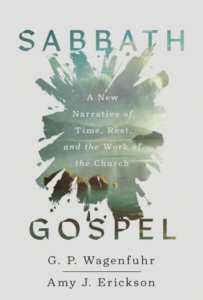
Sabbath Gospel: A New Narrative of Time, Rest, and the Work of the Church
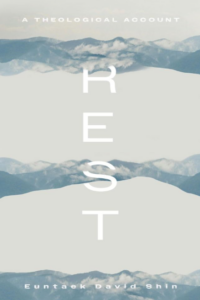
Rest: A Theological Account
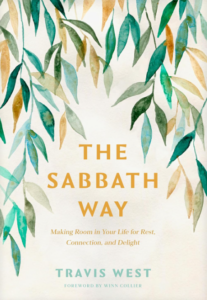
The Sabbath Way: Making Room in Your Life for Rest, Connection, and Delight
It is no secret that the western world’s relationship with time, work, and community is complicated, generally unhealthy, and does not lead to restful, delighted lives. We tend to continually desire more and perfection, and so tend not to stop, cease, rest, or enjoy community. Three recent books seek to reconstruct our theology and habits around Sabbath and rest: G. P. Wagenfuhr and Amy Erickson’s Sabbath Gospel: A New Narrative of Time, Rest, and the Work of the Church; Euntaek David Shin’s Rest: A Theological Account; and Travis West’s The Sabbath Way: Making Room in Your Life for Rest, Connection, and Delight. All three offer overarching theological ideas on rest that are intended to change our lives by orienting them toward rest, Sabbath, and joy.
Sabbath Gospel
Pastor G. P. Wagenfuhr and Professor Amy J. Erickson together write Sabbath Gospel: A New Narrative of Time, Rest, and the Work of the Church. This book puts Sabbath at the center of the gospel, reorienting the journey of the Bible and faith around Sabbath rest. Their “Sabbath Gospel” is that God is destroying human “dream home” constructions to create a community of people that respond to God’s discipline by pursuing maturity as members of the divine council in God’s household who give rest rather than take it. Primarily intended for scholars and students, Wagenfuhr and Erickson claim uniqueness in their approach, for they begin in the middle of things (Psalm 92), in the midst of our lives, starting with God relating to time and humanity, rather than at the beginning (Genesis), and with God outside time. In part one, they start from where we are—a people who center our lives on two things: first, a “dream home” of our own making that we believe will satisfy us, and second, aseity or self-sufficiency. Both are antithetical to Sabbath. They turn to Psalm 92 because Sabbath is mentioned in its superscription. This “Sabbath Psalm” displays Sabbath as “a matter of actively and gratefully receiving what God has already done and anticipating what God will do” (32), which is opposed to work, control, and independence, and is active, not a static structure like a dream home.
Part two’s journey through scripture is the longest portion of the book, where the authors return to the beginning and traverse the entire Bible, making several stops in the story. First, they see Genesis 1 as not about God creating order out of chaos, but rather about God filling a void and dwelling with wildness. As those in God’s image, then, humans are not intended to order chaos, but rather to act as royal advisors in the divine council, maturing children of the king at the palace where Sabbath is God’s enthronement and rest is received as a gift. Rather than receiving rest, however, humans sin and the results include distorted relationships, God’s discipline of loving exile, and two households—one that receives God’s discipline of wandering and moving toward maturity and rest (Seth’s) and another that does not (Cain’s). These two households are thematic as the authors repeatedly ask to which household our actions show we belong.
Wagenfuhr and Erickson develop the household theme through the Torah, showing how God dwells with a household of people who bear signs that point to God, like the rainbow, circumcision, and Sabbath. Sabbath shapes both economy and all time (around the daily sufficiency of manna), community (the decalogue commands to give rest to all), and identity (a sign of God’s covenant). For those in God’s household, God does not require a blood sacrifice for belonging, but rather kipper, an animal killed for dinner, with its blood as a sign of belonging and a detergent that cleanses people and places.
The authors pick up all these themes in the New Testament, when the Lord of the Sabbath arrives as the master who gives rest and proclaims Jubilee (Luke 4:16–21), creating an interdependent economy. Jesus receives the cup of human wrath on the cross, and like the kipper sacrifice, his blood “defeats the power of sin by cleansing or decontaminating God’s throne on earth, the center of God’s power” (163). The final stops on the biblical journey are Revelation and Hebrews. Revelation anticipates the Sabbath Psalm’s vanquishing of God’s enemies and establishment of the divine council where humans feast and enjoy God’s rest, while Hebrews reminds us that we are still at dusk between the sixth and seventh day, following faithful formation in the time that remains.
The last portion of the book is application, or “Sabbath Now,” where the authors explain “embassy ecclesiology” and Christians as ambassadors of rest. Sabbath people are a people of belonging with an economics of community sharing. Again, they claim a unique approach to both a theology of work and Sabbath, because they are promoting a big-picture way of communal being rather than individual spiritual disciplines. The Sabbath Gospel claims, “God is destroying the dream homes of the world in order to fashion a people of a renewed bloodline who inhabit a different economy, a household order of mature children ready to sit on his divine council and rule the world with him by giving rest rather than taking it” (243).
Rest: A Theological Account
Euntaek David Shin’s Rest: A Theological Account is similarly intended for scholars and students. Shin seeks to create a constructive theology of rest to combat the overall restlessness of the human experience. He describes the book’s content as “an evocation of our triune God, who frees us from restless enslavement to limitlessness and leads us to the enjoyment of finitude” (xiii). The book’s four longer chapters are a complex combination of philosophy, biblical exegesis, and theology. Like Wagenfuhr and Erickson, Shin does not begin with Genesis or a weekly discipline of Sabbath rest. His first chapter, “Divine Economy and Human Finitude” defines restfulness as “a concept that encompasses a physiological and psychological state characterized by a sense of peace and joy in the absence of fatigue and anxiety” (4). Its first component is dependence on God and it is subjective, momentary, and partial, especially if others are not also resting.
Using the stories of Noah and Ruth, Shin’s second chapter, “Our Created Home,” develops our relationship and responsibility to the created world and to one another. He writes, “Restfulness is achieved when we are satisfied with the fruit of our work and when those fruits are shared with others” (56). The next chapter, “Eat, Drink, Enjoy,” develops restfulness as “accepting one’s portion as God-given” (75), a portion that is unequally distributed and meant to be shared. Our restlessness comes from constant dissatisfaction and a desire for limitlessness. This is where Shin brings Sabbath into the conversation, for “accepting portions gives us the courage to cease from our work” (89).
Shin’s final two chapters, “Healing Memories” and “The Beatific Vision,” seek to create a somewhat practical picture of restfulness for Christians. Whereas memories of the past and future projections (what Shin calls memories of the future) can leave us restless, he proposes Psalm-singing to help us remember with God, thus consecrating memories and healing the pain associated with them. With healed memories, we practice restful living which gives God pleasure and therefore allows us to experience a more complete beatific vision; Shin proposes that seeing God makes us happy, and we are even happier because God is happy with us because of our restful living. His final pages are spent explaining the entirety of the text with one concept: Kierkegaard’s purity of heart. Shin concludes with the core logic of a theology of rest: “the priority of the triune God’s economy and our response to it as finite creatures with faith, love, hope, and charity” (183).
The Sabbath Way
Old Testament professor Travis West’s The Sabbath Way: Making Room in Your Life for Rest, Connection and Delight is quite different from the first two books, in part by its intention for a broad audience. Unlike the first two, West focuses not only on an overarching life perspective that he calls “the Sabbath way,” but also concludes each chapter with Sabbath practices. His book is beautifully organized in four parts: “Sabbath and Work,” “Sabbath and Time,” “Sabbath and Community,” and “Sabbath and Creation.” Each part contains three chapters, beginning with “orienting” or how culture forms us, “disorienting” or how the Sabbath is countercultural, and “reorienting” or how to pilgrimage toward Sabbath delight. West inspires and invites his audience to consider and practice the Sabbath Way through biblical exegesis, word studies, personal stories, embodiment, and an interesting personification of Sabbath as a compassionate friend. Like the centrality of Sabbath to the gospel in Sabbath Gospel, all of life centers on Sabbath for West; we don’t fit Sabbath into our lives, but our lives fit and grow around it.
West orients us to a typical experience of work in our culture, defining it as things done daily. We derive identity and value from work and yet work is disconnected from our bodies and neighbors. Sabbath disorients work-as-identity, honors our bodies and our limits, and helps us be fully ourselves. West writes that even though we are terrified that if we do nothing (rest) then we are nothing, Sabbath is a gift to remind us that we already matter, even if we do not produce. West reorients our perspective on work by inviting us to honor our limits, connect to delight, and embrace nonproductivity.
He then turns to time, asserting that we wear busyness as a badge of honor and have a scarcity relationship with time, often thinking of it economically as “we spend time, save time, use time, waste time, borrow time, can’t afford the time . . .” (86). Sabbath disorients this, and West characterizes time in multiple metaphors, including a flower centered on Sabbath and a rowboat where we look backward as we move forward and see time as more cyclical than linear. A reorientation of time shows it is love, presence, patience, and unearned play. For West, the purpose of time is encounter.
The third part of The Sabbath Way is about community, and West first orients the reader to our lack of community and the sources of our loneliness epidemic. He disorients our loneliness with belonging, stating that “the fundamental message of the Sabbath is that you are loved as you are; you are enough as you are; you belong as you are” (152). West’s reorientation is to the beloved community where Shalom, Justice, and Sabbath are the three-legged foundational stool. The realities of these values and the beloved community are incomplete now, but we “participate in and contribute to collapsing the distance between the already and the not yet” (171), in part through small acts like keeping Sabbath.
Orienting us to our culturally-formed relationship with creation in part four, West states, “No other generation in human history has so thoroughly ignored and overrun the inherent limits of both land and animals by denying their birthright to Sabbath rest” (181). We lead lives of scarcity that drive consumer greed, and we do not share well. To disorient this, West turns to part of Sabbath’s purpose, which is “to mitigate the human temptation to dominate and exploit the world” (191). Domination and exploitation are treated by the antidotes of wonder and gratitude. In the final reorientation, West invites us to a delightful and playful fictitious three-course sequence offered by the “Sabbath Institute of Grateful Living (or SIGL, which rhymes with giggle)” (206), and highlighted by professors like Annie Dillard, Rabbi Abraham Joshua Heschel, and Robin Wall Kimmerer. The reader finishes the book not only having read about Sabbath delight but having experienced it as well.
Genesis, Community, Time, and Work
Amidst their differences, all three texts have several strong similarities, including the desire to provide a theological paradigm, not simply a day off from work. They all spend time in Genesis, center on community, and explore time and work. They are also addressing related but nuanced problems. For Wagenfuhr and Erickson, the problem is that we trust in both our own self-sufficiency and our “dream homes,” idealized “structures” that we think will bring satisfaction and rest, rather than embracing belonging in God’s household and receiving God’s rest. For Shin, we are deeply restless due to our desire for limitlessness, constant dissatisfaction, lack of sharing, and challenging memories, rather than restful due to acceptance of and satisfaction with our portions, sharing, and reframing our memories with God. For West, we are busy, lonely, greedy, work-bound, and disconnected from others and creation, rather than restful, grateful, delighted, and connected to others and creation. Because West’s book is the most practical, it is also most granular and embodied.
An exploration of Genesis is a necessity for books addressing rest or Sabbath. Wagenfuhr and Erickson understand Sabbath in Genesis 1 as enthroning God, who lives with God’s image-bearing divine council members (humans) in a palace garden, Eden. When they sin, humans “move from community to domination, from receiving a home to desiring a dream house, from knowing and being known to projecting a mask of constructed selves” (69). For Shin, the first chapters of Genesis primarily show human failure to embrace God-given limits. In contrast, West delights in God’s delight in Genesis 1–2 where God grants rest to all creation, not as something earned, but a birthright, all of which is distorted by humans in Genesis 3. While these authors do not necessarily begin in Genesis, the first few chapters of the Bible are foundational to each book.
Community is also foundational to each book. Wagenfuhr and Erickson have two discussion questions at the end of each chapter and encourage reading the book with a group of people. They also encourage practicing Sabbath with a group who seeks to give rest to others, not take it. Shin agrees with Wagenfuhr and Erickson when he writes that “restfulness is achieved when we are satisfied with the fruit of our work and when those fruits are shared with others” (56). While he does not include discussion questions, he points out that our rest is only partial if others are restless. And for West, community is one of the four foundations of the Sabbath way—the Sabbath posture toward all of life—so he dedicates approximately a quarter of his book to the topic. The critique that Wagenfuhr and Erickson would offer West is that his reflection questions and practices tend to be individual in nature rather than always communal.
In addition to community, all authors address time, agreeing that humans do not have a healthy or Sabbath-oriented relationship with time. Wagenfuhr and Erickson see God uniting space and time to create place for Sabbath in the first chapters of Genesis. They write that Passover shows that “time begins with freedom” (124), and that all time is shaped around Sabbath and the daily sufficiency of manna. They devote three chapters to how Jesus transforms time through proclaiming the Jubilee (Luke 4:16–20a), recapitulating all time in himself, and inviting us to enter into God’s final rest. Shin’s perspective on time centers God’s time in his interpretation of Genesis 1, where God completes creation, ceases, and then blesses and sanctifies time. God also enters into time, so “God’s time permeates history, forming the grand narrative of God’s work among creation” (115). West again devotes a quarter of his book to time, reorienting us to time as love, presence, and play. His constant query to our actions is: “Is this the way of love?”—a way of living that orients to time differently.
West also devotes one quarter of his book to work, a topic all authors address with nuance. Wagenfuhr and Erickson group work with control and independence, all three of which oppose Sabbath. They do not see work as necessarily negative but understand working the land in Genesis 3 as God’s discipline to bring us to maturity in God’s household. Working the land reflects one of multiple distorted relationships resulting from human sin; it is supposed to discipline us and bring us to maturity in God’s household, but we distort it even more by creating competition. Shin characterizes work differently, connecting our work to our portions. If we accept our portions, even the portion of energy and ability we’ve received, then it is possible for each day to be complete. We do the work we are able to do based on our portions, and then can stop working and rest, having our desires met and our daily work finished. West’s perspective on work is that we often trust work to define us, make us meaningful, and earn our rest. “The Sabbath wants to remind us every week that our lives already matter, and more than we could possibly imagine! . . . The gift of the Sabbath is to burst our belief in limiting lies, and to remind us that rest and delight are birthrights we cannot earn” (55). Thus, none of the authors oppose work, but they do oppose earning rest by it and placing our trust in it.
All the authors seem to be from Reformed traditions, but only two of the books spend time discussing sovereignty and providence: Sabbath Gospel and Rest. Indeed, Wagenfuhr and Erickson see sovereignty as one of the key terms of their book. They nuance sovereignty, however, and see it as “more of a story and a question in the Bible than [as] a theological first principle” (27). When God freely provides food, it symbolizes God’s sovereignty, God’s free and abundant provision. “Sabbath shows the character of God’s sovereignty over his creation and the means of that sovereignty—presence” (61). Life after Genesis 3 is the “absence of Sabbath and its restful, provisioned sovereignty” (74). As we mature in response to God’s discipline, however, Wagenfuhr and Erickson believe we practice signs like circumcision and the Lord’s Supper, and thereby become signs of God’s sovereignty and rest.
As for providence, Wagenfuhr and Erickson nuance the concept significantly. They challenge a doctrine of God’s providence that emphasizes “God’s ongoing governance and direction of the structures of creation” (222) and the misinterpretation that all events are God’s will. Rather, they argue, “History is not the realm of God’s providence; it is the arena of God’s patience” (222). They see the work and worship literature, most of which they critique, as leaning toward the misinterpretation of providence. It is likely they would see Shin’s work leaning in that direction as well. Shin defines providence as the “proactive activity of the creative God who cares for creation” (52–53), involving conservation, concursus, and governance. He mentions providence throughout the text, joining sovereignty and providence when he states that “God is the one who is sovereign over all events, appointing things at their appropriate time” (85). Shin does state that we should push back against evil and distinguishes between “accepting-one’s-portion-as-God-granted and accepting-one’s-portion-as-God-desired-for-our-flourishing” (109). Shin seems to be for justice, but he does not write directly against injustice; it is unlikely he would say trauma is part of God’s providence, but he seems not to take into account traumatic memories in his healing memories chapter. Still, the regular repetition of providence and sovereignty narrow the audience for both texts.
In contrast, West’s book is for everyone, and he makes this repeatedly clear by mentioning people from all different walks of life; this seems both unique and intentional. Wagenfuhr and Erickson’s book is for scholars and students, so it seems odd that they would think their audience might skip the more technical chapter on Leviticus (120), “Life in God’s Household: Lifeblood of the Old Covenant,” which I found to be one of the most intriguing chapters of the book. Shin’s book is also for scholars and students who enjoy philosophy. His illustrations tend to be limited to academic experiences, which further narrows his audience.
Strengths and Critique
Overall, Wagenfuhr and Erickson’s Sabbath Gospel is interesting and cohesive. Their purpose is clear and connected throughout the book and the reader walks away with a new understanding of the gospel centered on Sabbath. Not only do they nuance sovereignty and providence as noted above, but they also have nuanced perspectives on sin and atonement. Rather than only understanding sin as an act, they bring out the animality of sin: “It ‘lurks’; it even ‘desires.’ Whatever ‘it’ is remains opaque . . . it appears to possess a will of its own” (75). They associate it with principalities and powers and understand its foundation as discontentment with God’s gifts and its expression in self-justification. The force of sin animates household rivals to God’s household.
Wagenfuhr and Erickson also are clear that Jesus’ sacrificial death was kipper (cleansing), not a substitutionary sacrifice to assuage the wrath of God, nor a ransom paid to free humans from their captor. Jesus does not drink the cup of God’s wrath, but drinks “the cup of human wrath poured out on God” (159). His kipper sacrifice and his blood are a detergent that cleanses our sin; the blood is the life of Christ shared with us as we share with one another. They write that when we consider “Christ laid to rest on the Sabbath Day, we see in an acute way how Jesus gathers up—recapitulates—all time in himself, particularly the history and purpose of the Old Testament people of God. And the crux of that history is on an inconspicuous day when nothing eventful seems to occur” (157). They conclude that humans cleansed by Jesus’s blood share in the life of Christ by maturing according to God’s discipline, giving rest, and acting as members of God’s divine council rather than building a dream home.
For all the interesting nuances and cohesive Sabbath Gospel offered by Wagenfuhr and Erickson, the reader may find some aspects of the book challenging. While they offer multiple citations for the theology of work with which they disagree, supporting citations for most other chapters of the book are very light. The book, like all three considered here, is rather revolutionary, and needs to show greater connection to other literature.
Wagenfuhr and Erickson’s tone can, at times, be a bit confrontational and risk alienating the reader. The opening paragraph states all the ways Christians are tired, and the extensive list of sources for the fatigue makes the initial tone more frustrated than inviting. It seems to be a broad critique of all Christianity. They also do not mince words when describing ideas with which they disagree. Perhaps the hyperbolic language is intentional, but using “concentration camps” to describe how we care for animals we eat (123), calling God “bloodthirsty” when referring to penal substitutionary atonement (125), emphasizing the feasting in our eternal rest by stating, “God did not create people to be court musicians who do nothing but assuage the fragile self-image of a ruler” (173), stating that much current theology of work “is an opium that inures people to their exploitation and misery with promises of divine blessings unrealized in this life” (218), and asserting that pursuing human flourishing “is not the task of theology but of humanistic speculation couched in theological terms” (63), seems less than charitable. The reader may not disagree with what they say but may become uncomfortable with how they say it.
Finally, Wagenfuhr and Erickson have several bothersome references to gender. First, they choose to use masculine language for God, referring to Amy Peeler’s Women and the Gender of God which they understand as encouraging masculine language for God in order to not diminish Mary’s motherly role (43, footnote 1). However, when they discuss Jesus’ origins, they make Mary’s role no more than biological (145). When referring to the relational distortion between humans that is caused by sin in Genesis 3, they have several good ideas. And yet, the idea that childbearing means the mother decreases to allow for others to increase, and the statement “in marriage and motherhood, a woman loses sovereignty over her own flesh” (71) are puzzling, especially given that sovereignty is a key word in their book. Further, their explanation that the sign of circumcision is not only for males because all seed that joins with an egg to become a human pass through the sign of circumcision, is not only graphic but also unnecessary and unlikely how a prescientific culture would have understood circumcision (104). In the end, they agree with cultural masculine and feminine stereotypes when they characterize the works commended by Ecclesiastes as maternal “works not of domination and expansion but of raising new generations, works not of systems or processes, but of relationships . . .” (219).
Shin’s Rest: a Theological Account is impressive in its breadth and depth of interaction with both philosophical and theological literature. He need not explain human restlessness because it is clear in each of our lives, even as he connects the concept to St. Augustine. The strongest and most memorable part of his book is the third chapter, “Eat, Drink, Enjoy,” in which he exhorts the reader to receive their God-given portions in order that they might be satisfied each day and therefore able to rest. He states, “Quotidian affairs like eating, drinking, working, and sleeping are received as portions, limited gifts of God granted to us each day. Receiving them and not transgressing such limits leads to a life of contentment and joy” (84). Shin’s desire, like West’s movement toward delight, is to offer us a joyful life of rest.
Often, however, Shin’s work leaves the reader with even more questions, much of them related to a practical outplay of his paradigm. With regard to portions, he states they are unequally distributed and meant to be shared. But what happens when they are not shared? He also celebrates the possibility of sleep yet as someone who suffers from insomnia, should I receive my very few hours of sleep as my portion? Also, as stated above, readers may have questions about justice due to his lack of clarity.
Shin’s work is intentionally theological but also touches on psychological themes and would benefit from psychological sourcing. He states that Augustine gives meaning to memories through rearrangement (135) but neglects to connect this to the psychological concept of reframing. He mentions embodiment several times but does not connect his chapter on healing memories to how some memories, especially those of trauma, are stored in the body. He knows embodiment is important but does not explore its implications. Further, he mentions anxiety multiple times but does not seem to have a deep psychological understanding of it and tends toward popular Christian conceptions that connect it with sin. He cites Bonhoeffer as showing “how resting-in-oneself causes anxiety, that is, restlessness” (18). He also associates insomnia with anxiety and suggests that the Psalms and resting in God may calm it (127). Two distinctions are necessary here: not all insomnia is anxiety-related and working through anxiety is often not only a matter of focusing on God. It is also unclear whether Shin supports or opposes counseling as a means of finding rest for Christians (115, footnote 9). Overall, his work is theologically and philosophically heavy and would benefit from additional psychological heft.
As stated above, Shin brings together all concepts of his book under Kierkegaard’s purity of heart. While his intention is to simplify, in reality, he complicates the reader’s understanding by this move. Yes, moving away from restlessness and toward restfulness is a lifelong journey, and his book offers complex ideas with far-reaching implications. And yet, allowing the complexity to constitute steps along the restful journey would have been a better choice than adding purity of heart.
While Shin’s work and Wagenfuhr and Erickson’s work shy away from practicality, West’s The Sabbath Way is a delightful combination of theological and exegetical depth and practical application. From the very beginning, West draws the reader into his personal story like a fun, wise brother who recognizes and has experienced deep pain and challenge with regard to Sabbath, practices the Sabbath way, and still skips and giggles alongside us in our journey. He writes early in the book that a Sabbath posture
is like having a mini-Sabbath sitting on your shoulder throughout the week reminding you of Sabbath truths: that you are not what you do; that your life is bigger than the challenge you are facing; that you are the beloved of God; that this moment, whatever it holds, does not define you—for better or for worse. It’s the voice inviting you to move slower between meetings and feedings, to look—really look—at the people around you, to see them in their full humanity and complexity, and to love them for who they are, not who they could be. (23)
For West, Sabbath and rest are more about what we happily say yes to than what we say no to.
West recognizes embodiment like Shin but is able to consider its implications in a more complete manner. The book is intended to be read one chapter a week if its impact is to be truly felt, and many of the practices are embodied. West shows facility not only in his discipline (Old Testament), but also in current cultural understanding (each orienting chapter), as well as psychology, going as far as to adapt one of Kristin Neff’s self-compassion practices (143–144). West’s work is grounded in Hebrew words and Jewish practices. His reflection questions probe more deeply than Wagenfuhr and Erickson’s, inviting wholistic transformation should the reader choose to engage. West’s book is masterful—intelligent, interesting, practical, and fun. The reader smiles and laughs throughout the book as it enacts the final word of its subtitle, “Making Room in Your Life for Rest, Connection, and Delight.” Upon completion, readers feel like they have a new friend in the author.
All in all, these books have much to offer the reader and complement one another in multiple ways. Their diverse purposes and audiences offer variation on a common theme that deserves our attention. To receive the full benefit of the revolutionary ideas, the reader must walk slowly through the text with others and actively respond. For all the authors, Sabbath and rest are not simply another entry to check off on our to-do list. On the contrary, they offer radical life reorientation theologically and practically. The books are not meant to be read, pondered, and placed on a shelf, but enacted in community, step by step, over the long journey of life.




















One Comment