


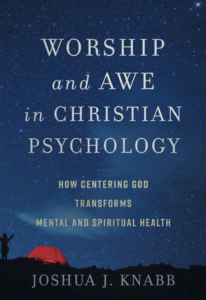
Worship and Awe in Christian Psychology: How Centering God Transforms Mental and Spiritual Health

Engaging in Counseling Research with Curiosity and Wisdom: A Christian Integrative Approach
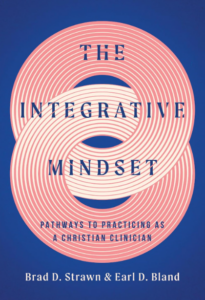
The Integrative Mindset: Pathways to Practicing as a Christian Clinician
There is a tension between psychology and Christianity. This is not because they are radically different or irreconcilable, but in some ways the opposite: they are too similar, and are so clearly related to each other that those who are not Christians feel perhaps they have to disentangle the psychological from the mystical, spiritual, or religious, and Christians, historically, have perhaps felt slighted by this, in some cases starting a new path altogether, leaving the field of psychology to the non-religious. In view of this tension, it is welcome to consider three recently released books that each touch on what Christianity looks like when it meets psychology.
Worship and Awe in Christian Psychology
Joshua Knabb’s Worship and Awe in Christian Psychology is manifestly concerned with Christianity and manifestly concerned with psychology. In terms of both theology and empirical research, the book considers the topics of awe and worship, as related to mental health and well-being. As such, it is very engaging and eminently practical. It constitutes an approachable guide directed at both Christian laypersons and clinical practitioners, especially in the Reformed tradition.
Knabb distinguishes clearly between notions of awe and worship held by Christian and non-Christian psychologists. “Awe” indicates an overall sense of wonder, associated with well-being, and “worship” entails giving all of oneself to something (a person or thing). Knabb argues that both typically involve turning outward, losing oneself, and are often tied to enchantment (i.e., seeing the spiritual or numinous in the everyday; wonder at the world and its mysteries; recognition that God is present not simply at church or in religious contexts, but everywhere). From a Christian perspective, theologically, awe and worshipfulness, in order to be Christian, must ultimately be directed Godward, otherwise they are misplaced and maladaptive. Knabb notes that much of the psychological literature, by contrast, normally considers “awe” only from a naturalistic perspective (e.g., awe of nature), without religious or theological considerations, while neglecting worship altogether from an empirical standpoint; if the literature does consider religious perspectives/practices related to awe and worship, it is curiously in the context of Eastern religion (e.g., Buddhist mindfulness and meditation) rather than Christianity.
While Knabb acknowledges the potential value of these non-Christian lines of research, he is careful to point out how not incorporating the God of the Bible in the research is going to limit the value of the findings for Christians and create potential pitfalls. He argues that Buddhist practices, while interesting, do not reflect an acknowledgement of the Creator, and therefore will not be sufficient in themselves from a Christian worldview. Knabb’s perspective is helpful, because it is not uncommon for religious or spiritual practices to be handled with a broad brush in psychological literature, without acknowledgement of the unique beliefs and nuance among faith traditions. This justifies and inspires more Christians to become actively involved in the research process, tackling uniquely Christian lines of research: if we don’t do this in psychology, it seems no one will.
Indeed, not simply theologically, but from an empirical and clinical perspective, Knabb argues (with evidence) that worship of anything other than God tends to have negative mental health implications. Specifically, worship of self (self-preoccupation), worship of others (particularly celebrity worship), or worship of things (e.g., nature, money, material possessions) each have psychological, and indeed, clinical implications. Worship of self, for instance, has been shown to be correlated with narcissism, with all its negative mental health associations; ironically, if one wishes to improve their mental health, the research suggests that less focus on oneself and one’s own needs is called for. By contrast, when proper Christian consideration is given to each of these domains (i.e., that the self, others, and things are not ends in themselves, but gifts, pointing us to the Giver), the research suggests that we tend to flourish.
It must be restated that Knabb is not so much making a biblical or theological point here, in the way many theologians have previously, but an empirical point: the research evidence supports the Christian theological belief that misguided worship and a lack of enchantment with the world are maladaptive. It was refreshing to read someone deep in the psychological literature consider these themes in light of recent findings. Knabb also manages to make his points without simply functioning as an apologetic for Christianity (i.e., “become a Christian for better mental health outcomes”), but instead shows how even Christians are prone to a disenchanted view of the world; it is hard to see God while sitting in traffic, easy to be inundated with the problems of one’s life, to turn inward, and to miss the inherent beauty, meaningfulness, and presence of the Spirit in the world unless it is given an explicit Christian veneer (Knabb points out that this tendency towards disenchantment and focus on self is to be expected in a fallen world).
With respect to the book’s Christian emphasis, it cannot be overstated how wonderful it is to read references to John Knox and the Westminster Confession in a book dealing with clinical psychology. The book succeeds at giving Christian theological information to psychologists; my minor qualm is that I might have liked for the book to give broader historical information about psychology to Christians. To qualify this, as just mentioned, the book certainly cites many theoretical, correlational, and experimental research studies (particularly from the last twenty years), although I think certain figures in psychology were neglected who would have been useful for Christian laypeople reading this book to be aware of.
Specifically, regarding “awe,” a brief historical presentation is provided in the book, with Knabb concluding that the topic of awe, apart from some early psychodynamic examples in the middle of the 20th century, was not handled in earnest by the psychological literature until 2003, with Dacher Keltner and Jonathan Haidt’s influential article on the subject. For lay Christian readers, this could have been an opportunity to discuss some central figures in the history of psychology who have addressed the topic of “awe” (or at least, related constructs). The most obvious example is Abraham Maslow and his emphasis on peak experiences (which have significant conceptual overlap with awe). This was a missed opportunity because Maslow is one of the great psychologists of all time: many Christians and non-psychologists have heard of his hierarchy of needs, and it is significant that such a major figure in psychology discussed something so salient for Christians, over half a century ago. The same could be said of Gordon Allport and Carl Jung, who wrote seriously about religious or spiritual experiences, or of the positive psychologist Mihaly Csikszentmihalyi’s concept of “flow.” Going further back in time, William James is a major pioneer in this regard; his Varieties of Religious Experience details numerous examples of religious wonder, from George Fox to Jonathan Edwards.[1] Even Sigmund Freud dealt with an adjacent topic in his study of The Uncanny, over a century ago.[2]
The list just presented includes some of the eminent figures in the history of psychology, many of whom are well known by non-psychologists, and I might have liked, for Christian laypeople reading it, for Knabb’s book to have given a sense that, even though psychology has a strong history of atheism and secularism, the numinous is difficult for sincere psychologists to avoid: the purview of psychology, after all, is the soul. These examples show that, despite psychology’s history of atheism/secularism (virtually none of the names just mentioned were Christians), there is much for Christians to appreciate about psychology as a science.
On that point, Knabb notes how striking it is that it took so long before psychologists really engaged such a relevant topic as “awe” on an empirical, rather than theoretical level. There are legitimate questions as to why most researchers in psychology have tended to ignore these religious/spiritual topics of clear and general importance to human beings. As previously mentioned, even when awe or worship are discussed among psychologists, it is typically in the context of Eastern religious traditions rather than Christianity, which in itself is fascinating: Why? Given that there are many more Christians in the United States and worldwide than Buddhists, why have Christian beliefs and practices been relatively neglected by American psychologists, whereas Buddhist beliefs and practices received more robust attention? Millions of people a week attend a Christian worship service in the United States, and it is amazing to reflect that there is almost no empirical data from psychologists on this topic. Indeed, it is precisely because psychology has this blind spot regarding Christianity that it is desirable for Christians to read works like Knabb’s and to change the culture of the profession.
On that point, the book is remarkably thorough in presenting Christian practices for inducing awe and worshipfulness, namely via relationships, thoughts/images, and behaviors (especially lectio divina, which Knabb has emphasized in his other published research). So often, theological books have many great ideas but leave us empty-handed with respect to practical, hands-on suggestions. Not so with Knabb’s book. That is to its credit, and overall, the book gives a wonderful example of what Christian psychology looks like when it engages the profession.
Engaging in Counseling Research with Curiosity and Wisdom
Engaging in Counseling Research with Curiosity and Wisdom by Kristen Kansiewicz and Paul Loosemore is an effort to integrate and ground statistics and research design in Christian theology. Oftentimes, this can be an area in which Christian integrationists struggle, and it is encouraging to see faithful resources address the subject. The book is written for Christian researchers, clinical practitioners, and especially students in the area of counseling research, and functions well for Christians familiar with the terminology of quantitative and qualitative research; the authors acknowledge it is not intended to be an “introduction” to research itself, instead utilized as a supplement in Christian college courses next to a primary text.
Early in the book, there is, once again, an emphasis on enchantment and wonder regarding creation: God’s impeccable, ordered, mathematical, measurable world is all around us, and the desire to learn more about and study it is a deeply Christian impulse. There is a recurring emphasis on not only keeping our “Christian hats” on while doing research, but a helpful reminder that we should also keep our “curiosity hats” on throughout the day as image-bearers (i.e., curiosity and inquisitiveness about creation are compatible with, and indeed called for, by a Christian worldview); we can and should be Christians (and researchers) at the grocery store, at the park, at home, and while driving.
Of great value is the book’s emphasis on the philosophical foundations of science and research, with discussion of both epistemology and ontology. There is sometimes an assumption in non-academic Christian circles that science is anti-Christian, or that Christianity is anti-science, and that is refuted by the authors. In a sense, all we need to do is look at the history of science to disprove this. A cursory glance at a list of many of the greatest scientists and their religious beliefs shatters any notion that Christianity and science are on a different page, or that one must be a secularist/naturalist to engage the scientific method: exactly the opposite is implied. The authors of this textbook argue for a critical realist approach, a balance between the stifling-ness of positivism and the excessive subjectivity of constructivism. This section is enormously helpful for students navigating these issues, wondering whether Christians are just doing research because secular researchers do.
The authors further provide a balanced perspective on quantitative and qualitative research methods as well. Both are compatible with a Christian perspective and have clear value, although qualitative methods (even in secular circles) tend to get neglected, due to being perceived as “less scientific.” The authors dedicate a whole chapter to the subject of qualitative research methods, grounding aspects of the interview process in Jesus’ own techniques in his dialogues recorded in the Gospels.
An important chapter in the book is focused on issues of multiculturalism and diversity, and how these are things we should deeply consider as believers holding that every tribe, tongue, and nation are filled with image-bearers. The authors accurately point out that virtually all of the founding figures in psychology (especially in the realm of clinical/counseling psychology) were American and European males (e.g., Freud, Jung, Adler, Rogers, Beck, Ellis, Frankl, Perls, Glasser). While there is value in addressing this, I think an especially salient demographic aspect of these men from a Christian perspective is that not a single one of them, not one, was a Christian. This is striking, given that 20th century Europe and the United States were largely Christian; statistically, it is remarkable that not a single major theorist in clinical circles (male or female, of any cultural or ethnic background) was a Christian. Even today, psychologists are disproportionately irreligious, in contrast with the general population.[3] It is important to recognize religion and spirituality as a multicultural factor, and how psychology as a science has a clear blind spot in this respect, which likely contributes to some of the friction between the two spheres.
In sum, this book is highly recommended for those wishing to have a nuanced and critical handling of statistics and research design from a Christian worldview. Especially for students, the ideas here are clearly explained and the tenor is inviting and sympathetic to the needs and priorities of early-career psychologists.
The Integrative Mindset
Brad Strawn and Earl Bland have attempted to answer a question which is on the mind of many Christians entering the field of clinical or counseling psychology: how and to what extent should my practice as a clinician be influenced or guided by my religious beliefs? For me, professionally and otherwise, this is the major question: can we function as clinical or counseling psychologists while keeping our “Christian hats” on the whole time? This question is of particular importance in the field of psychology, because we are of course dealing with humans, usually in their deep vulnerability, so it is vital for Christians who wish to be faithful while also engaging the world to be able to answer the central questions of integration. That is what Strawn and Bland strive for in their work, The Integrative Mindset: Pathways to Practicing as a Christian Clinician.
In my own experience, integration as a Christian is very difficult, conceptually and practically: because of the paucity of resources on the topic in graduate training, many students want an explicit guidebook or checklist about how they can integrate their faith in their clinical work, without betraying psychology’s multicultural sensibilities and without engaging in value imposition. The authors give a brief and informative history of the movement of Christian integration, and where the field stands today. Somewhat in contrast to the historic discussion, the deep wisdom of the authors (gleaned from decades of clinical experience) is found here: integration should not be conceptualized as a theory or a linear set of practices, but as emergent moments, elicited by an integrative mindset in the clinician.
The authors wish to emphasize that integration is what happens in the room, in the meeting of the unique clinician and unique client; that integration emerges in clinical interactions, especially those of a visceral or affective note. It is difficult to overstate how insightful this is, and I am convinced it could only come from the decades of experience of the authors and much trial and error. In my own clinical work, this is precisely what I have found when it comes to integration, intuitively and tacitly: that integration happens all the time in counseling, without any necessary prerequisites, interventions, workbooks, or “baptizing” of what is happening. This book gets beyond the common discussion of whether prayer is an appropriate intervention with clients in session, because, as the authors argue, it depends entirely on the two people in the room: there is no standardized model for what Christian integration should universally look like because we are all wonderfully unique. Christian integration is thus emergent, rather than a specific intervention/model/theory (with dos and don’ts), and is contextual, informed by the unique backgrounds and values of the client and counselor.
The authors are quite deliberate in their use of the term “mindset.” After presenting their model of integration as emergence, the authors suggest the integrative mindset is cultivated by a clinical posture of openness, expectancy, and curiosity: seeking enchantment in the clinical space. They divide the remaining chapters relative to that which informs the mindset: hermeneutics (the interpretative lens of client and counselor), tradition (backgrounds relative to religion, nationality, ethnicity, gender, sexuality, etc.), ethics (especially the ethical positions we take for granted), self-development (how the clinician’s own background will shape what is prioritized in the clinical space), and resilience (maintaining a sense of wonder and expectancy in one’s clinical work). They bolster most of these chapters with carefully crafted case study vignettes; the scenarios feel unusually vivid and real, especially in terms of their ambiguity and nuance. Finally, Strawn and Bland argue that the goal of therapy is developing theory of mind (self and other awareness) in the client, and that therapy should aspire towards “truth” (not in the propositional sense, but in the sense of “be true to yourself”); the authors note this broadening of the mind can be achieved by the clinician through reading widely, especially poetry, philosophy, and fiction.
However, given this emphasis on the individuals in relation to one another in the clinical space, and the supreme relevance of the intersubjective interaction of their backgrounds and experiences, it seems to me we inevitably run into the problem, addressed by Kansiewicz and Loosemore, of relativism. Strawn and Bland address this tension to some extent, but especially given their target audience (Christians, many of whom will be very sensitive to an emphasis on subjectivity over objectivity regarding truth claims of theology, morality, biblical interpretation, etc.), I think the authors could have spent more time on the topic.
The underlying concern here is simply this: while the authors acknowledge belief in the physical resurrection of Jesus (and I do not doubt that they believe this), do they believe it is “objectively true”? It does seem that their position is that all such “truths” are broadly related to our own backgrounds, hermeneutics, tradition, etc., and moreover, that if we are working with a client from a completely different background, Christian understandings of morality, the good life, theology, etc., are not “true” for that person. It is difficult to read their book and not conclude that the question of “objective truth” is itself flawed; although the authors grant the existence of “objective knowledge” (53), it seems there really can be no such thing as “objective truth,” as “truth” only exists on the subjective plane; we are subjects, not objects, as the authors note. To be sure, this is not unusual for a textbook in the realm of clinical or counseling psychology (especially in multicultural circles), but it at the very least evokes tension among Christians; C. S. Lewis ardently argued against this kind of relativism[4] (beauty is not simply in the eye of the beholder, nor is evil, God, etc.). Based on the work presented by Strawn and Bland, I am genuinely unsure exactly where they land on this and I wish it was fleshed out more, again, given how sensitive many Christian readers will be to it.
It is important to note, however, that the authors posit the book itself as a conversation: that we should note these instances of pushback, and that it is totally compatible with their intention in emphasizing our humanity and diverse perspectives. I do not wish to imply that the authors were unaware of these concerns I have noted, but simply that if I were to give the book to a conservative Christian friend without context, they might dismiss the book outright because of a perception of too much subjectivity (admittedly, to their loss, due to the great clinical insights of the authors). The book is “thick” (150) in the way suggested by the authors, and requires much of the reader (as any dialogue should), but it is worth the effort for Christians who take integration seriously.
The Specter of Biblical Counseling
Reading these books together, and considering their joint accomplishment, some ideas come to mind. All three books deeply wrestled with faith integration, which, as noted, is so pivotal for Christians entering the field of psychology, and clinical and counseling psychology in particular. All three books affirmed the role of enchantment with the world (relative to mental health, research, and clinical practice, respectively). Finally, all three books acknowledged the reality of different perspectives on integration, and, interestingly, all referenced (and critiqued) the biblical counseling movement by name.
Biblical counseling[5] is something of a thorn in the side of Christian psychologists; at its most critical, it implies Christian psychologists are worldly, going with the secular crowd, or that they do not take the Bible as seriously as their psychological theories and research. There is a genuine tension: to the point, does a conservative, Bible-believing Christian interested in counseling have to simply become a biblical counselor? Can someone practice psychotherapy using the common theories/interventions of counseling (e.g., psychodynamic, cognitive, person-centered), in a way similar to a non-religious therapist, while still being a conservative or orthodox Christian believer? Do we have to sacrifice either our identity as Christians or as psychologists to function as professional Christian psychotherapists?
These questions are important, because we do not wish to be hypocrites. The underlying thesis of biblical counseling is that if we are not explicitly incorporating Christian beliefs and practices in psychotherapy, then we are doing something contrary to the Bible, or relying on the theories of unbelievers. This appeals to the minds and hearts of conservative Christians, because we know how easy it is to simply do what the world is doing, and biblical counseling sets itself apart as a Christian alternative.
However, if biblical counseling is the right method for believers, it leads to certain complications. Kansiewicz and Loosemore helpfully address one of the key concerns with the field of biblical counseling: that it has essentially created its own enclave of research and practice, with the consequence being that not only will research in the field of psychology not have an impact on biblical counseling, but biblical counseling will not have an impact on the field of psychology. The authors point out that there have been no significant publications in peer-reviewed journals in the 21st century from biblical counselors, and argue this does not fit with the Christian mandate to learn more about and understand God’s creation (i.e., science) and to have an impact on the world and culture, bringing Christ’s kingdom here. In effect, many non-Christian psychologists have never heard of biblical counseling, so even its valuable contributions rest within an “echo chamber.”
Christian vs. Secular Psychotherapy?
Is biblical counseling the only option, though, for those who wish to prioritize their Christian beliefs? That the answer is no is implied by each of the books under review, and it is manifested by a doubling down on Christian faith, rather than an eschewing of it. Ironically, the perspective that we have to explicitly integrate Christianity in session (e.g., via incorporating prayer, bibliotherapy, explicit theological discussions, etc.) in order to make counseling more “spiritual” or Christian arguably reflects the very disenchantment described by Charles Taylor[6] and cited by these authors: that the world is inherently disenchanted, mechanistic, quantitative, meaningless, secular, or unspiritual unless we make it Christian. What is implied by the insistence on making counseling Christian, often through superficial means, is that the clinical session is inherently disenchanted without a Christian veneer, and moreover, that there can actually be such a thing as non-Christian or “secular” counseling from a Christian worldview. This is worth questioning.
Indeed, in the final chapter of Engaging in Counseling Research with Curiosity and Wisdom, the authors discuss research comparing Christian-integrative therapeutic approaches with their non-integrative counterparts. As it happens, deliberate or explicit Christian integration in counseling (i.e., Christian-integrated cognitive behavioral therapy [CBT]) has not been found to lead to general differences in clinical outcomes for clients compared to non-integrated CBT (although there is evidence it may be more helpful for Christian clients). The implication is that Christian psychotherapy has similar outcomes as secular psychotherapy, and that specific Christian-integrated interventions (e.g., prayer, bibliotherapy, explicit theological discussions) do not make much of a difference in client outcomes when added to ostensibly secular interventions like empathy, relational techniques, cognitive interventions, etc.
My reaction to this research, with which I was previously acquainted, is that these studies are not actually comparing Christian interventions to secular interventions. Why not? That requires us to inquire about what is a “secular intervention.” We often assume this simply means an intervention which is not explicitly Christian, but this does not follow: what if an intervention is implicitly Christian? In fact, it is arguable that many of these presumed “secular” interventions, ostensibly non-spiritual or disenchanted, are quite enchanted, reflecting Christian morality, theology, values, tradition, without explicitly referencing those things.
For instance, on what basis do we call empathy, one of the essential common factors of the various secular theoretical orientations of counseling, “secular”? Empathy, caring for another human being, treating them with dignity and respect, and recognizing their value, are not manifestly “secular”; it takes a high view of human beings (indeed, a Christian view) to justify empathy, or even to justify the enterprise of counseling humans in the first place. It thus seems to me that the reason this kind of “secular therapy” has similar outcomes as “Christian therapy” is because the most central things that would make a therapy Christian (i.e., viewing your client as though they have value, dignity, potential, and treating them and relating to them with empathy, kindness, compassion, etc.) are all already present (to varying degrees) in all forms of “secular” therapy. Thus, the reason these studies show equivalence between Christian and secular interventions is because they are not actually comparing Christian interventions with “secular” interventions, but comparing “explicit” Christian interventions (e.g., bibliotherapy, prayer, spiritual discussions) with “tacit,” or indeed basic, Christian interventions, like treating clients as image-bearers with kindness and dignity; we would not expect a significant difference in outcomes, given this. The benefits observed in “secular” therapies are arguably simply due to their reflection of Christian practices and perspectives about humans, albeit without the Christian philosophical foundation and justification for these practices and perspectives.
The question becomes: what is the basis for these implicitly Christian practices to be present in “secular” therapy? From a secular, naturalist-materialist perspective, notions of inherent value and dignity in humans cannot be found in nature, or under a microscope, any more (or less) than for any other animal made of the same material as us; nor injunctions that we should bear one another’s burdens. It is survival of the fittest, and each of us is ultimately “a glorified sack of chemicals,” to quote a recent neuroscientist,[7] not unlike other animals, or plants, or indeed dirt (in which there exist many living microorganisms). It seems to me that a true secular intervention would involve treating the client like what they are (i.e., a sack of chemicals), with no intelligent place for empathy as a secular intervention. Psychotherapy (and studying the mind itself) makes little sense if we are simply “meat machines,” physical organisms with no transcendent value or purpose. Francis Schaeffer wrote: “The secularistic [thinker] . . . borrows the Christian’s capsules of truth, but then faces the dilemma of how to make them stick in [their] own system.”[8]
An Enchanted Christian Perspective
It is worth considering that, in addition to these client-centered or Rogerian techniques (e.g., empathy, warmth, positive regard towards your client), which arguably stem from an implicit Christian impetus, even CBT and its techniques can largely be derived from Christian beliefs about the rational soul (as image-bearers of a rational God), as well as psychodynamic therapy with its emphasis on the past, selfish impulses, guilt, and (especially family) relationships, all rife for Christian integration. We should expect these non-Christian theorists (Carl Rogers, Aaron Beck, Sigmund Freud, respectively) to come up with theories in which we can find Christian value: they are image-bearers, after all.
What is implied by this way of thinking is that “Christian psychotherapy” does not need to dismiss the existing theories of counseling due to their apparently secular origins, or merely be focused on things like prayer or bibliotherapy, in order to be Christian: it can reasonably cover what the average nonreligious psychotherapist already practices, but arguably has a clearer, more holistic intellectual foundation for doing so. A Christian therapist can practice cognitive therapy, for instance, in the way a secular cognitive therapist might, superficially the same, but with a different rationale: namely, the enchanted view that we are rational image-bearers and when we think irrationally (which we are prone to do in a fallen world), we exist contrary to our image and become dysfunctional (e.g., depressed, anxious); therefore we should use empirically-validated (i.e., demonstrably helpful) interventions to encourage more rational/realistic thinking (e.g., discussing cognitive distortions, challenging negative thinking, distancing from maladaptive thoughts, etc.), to alleviate pain in our fellow image-bearers as we are commanded to do. Christian psychologists do not necessarily need to do something radically different than secular clinicians at this point but simply need to recognize the Christian significance of what we already do. It seems to me that a Christian patina in counseling and psychotherapy is more important than a Christian veneer; deep and integrated, rather than superficial.
To clarify, we are not simply taking the major theories/practices of clinical psychology and putting them through a Christian lens, “baptizing them.” In fact, I might argue it is the secular theorists who are taking Christian ideas and principles (e.g., empathy, helping a person who is struggling) and putting those through a secular lens. Caring for another person is not a “secular” or nonreligious behavior, but is infused with religion, as advocated by Strawn and Bland. By practicing psychotherapy, we are not simply “doing what secular psychotherapists do”; we are doing what Christian psychotherapists do.
There is no reason to think that this is problematic from a biblical perspective. A Christian car mechanic is not obliged to sing hymns while working on a vehicle to do “Christian mechanics”; a Christian physician is not obliged to make surgical incisions in the form of a cross to do “Christian medicine.” God moves in the material and natural world, and therefore, we can recognize that the reason for mental health issues (or physical health issues, or car troubles) is spiritually rooted in the Fall, and that we should help/care for one another (by counseling, medicine, or fixing their car), as rooted in the imago Dei. Sometimes this will translate into explicitly spiritual interventions, but sometimes, it just means using the common tools we have and recognizing their compatibility with, and grounding in, Christian truths.
Granted, it is argued by biblical counselors that mental health and spiritual health are highly related, and therefore we cannot address one without the other, but I would argue they are not identical, as implied by Knabb’s book’s subtitle; one could have poor mental health (i.e., feel depressed or anxious) but be spiritually healthy (justified, sanctified), or feel content while being spiritually unregenerate. The same applies for physical health issues, which we should also be careful to point out are spiritually-related and rooted in the Fall. Psychotherapy as an enterprise for alleviating mental health symptoms and suffering of image-bearers makes sense from a Christian worldview, as does medicine for alleviating physical health symptoms. While both Christian psychotherapists and physicians have as much reason to care about the spiritual and moral health of their clients or patients, as distinguished from their mental or physical health, the picture is often painted that psychotherapists and counselors have more responsibility for the spiritual health of their clients than Christian physicians (or car mechanics, for that matter); I do not believe this follows with the distinctions that have been made, especially given that moral and spiritual problems can just as easily come up in the context of the doctor’s office or at the auto-repair shop.
In conclusion, these three books suggest Christianity gives a holistic and integrationist foundation for research and practice in clinical and counseling psychology. Psychotherapy may be practiced or researched using “secular” techniques (which are not really “secular”) from the standpoint of seeing the deeper truth of God’s involvement with every atom. We can acknowledge that God’s grace is absolutely necessary for any healing to take place in counseling (among Christians or otherwise), but that God often uses normal means to bring about his purposes: the double-column intervention of the cognitive therapist makes more sense from a Christian worldview than a secular worldview and can be just as Spirit-infused as an explicitly or superficially Christian intervention. This grants us an enchanted view of the counseling session. Christians do not need to retreat from counseling and psychotherapy research and practice, but, as exemplified by the authors of these books, instead should engage it wholeheartedly.
[1]. William James, The Varieties of Religious Experience: A Study in Human Nature (Longmans, Green & Company, 1902).
[2]. Sigmund Freud, “The ‘Uncanny,’” in Imago (1919): https://web.mit.edu/allanmc/www/freud1.pdf.
[3]. Edward P. Shafranske and Jeremy P. Cummings, “Religious and Spiritual Beliefs, Affiliations, and Practices of Psychologists,” in APA Handbook of Psychology, Religion, and Spirituality, vol. 2: An Applied Psychology of Religion and Spirituality, ed. Kenneth I. Pargament, Annette Mahoney, and Edward P. Shafranske, APA Handbooks in Psychology (American Psychological Association, 2013), 23–41, https://doi.org/10.1037/14046-002.
[4]. C. S. Lewis, “The Poison of Subjectivism,” in Christian Reflections, ed. Walter Hooper (Eerdmans, 1967), 72–81.
[5]. For an introduction to biblical counseling, see Heath Lambert, A Theology of Biblical Counseling: The Doctrinal Foundations of Counseling Ministry (Zondervan, 2016).
[6]. Charles Taylor, A Secular Age (Belknap Press, 2007).
[7]. Rebecca Schwarzlose, Brainscapes: The Warped, Wondrous Maps Written in Your Brain—And How They Guide You (Mariner Books, 2021), 86.
[8]. Francis A. Schaeffer, Escape from Reason (InterVarsity Press, 1968), 63.





















One Comment