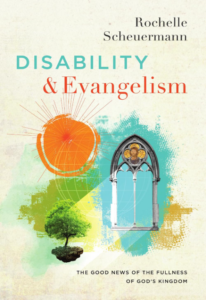
Disability and Evangelism: The Good News of the Fullness of God’s Kingdom
For many Christian scholars, disability studies rarely come to mind when they think about the future of theological and missiological discourse. Yet it should. Globally, individuals with disabilities are among the largest unreached groups, with an estimated 90–95% never having encountered the gospel. In the United States, almost 59% do attend a religious service (2). This reality highlights the urgent need for greater attention within Christian scholarship toward this community to equip the Church for evangelistic efforts and to integrate this marginalized population more effectively into its mission.
Addressing this need is one of the central aims of Rochelle Scheuermann’s new book. In the book, Scheuermann seeks to “reshape our evangelism theology and practice so that people with disabilities are central in all we think, say, and do” (4). In rethinking evangelism within the disability community, Scheuermann also aims to show that disability studies cross over with and deepen other Christian disciplines, arguing that by “including people with disabilities, we enrich our theology and practice” (4).
In the book, Scheuermann presents a scholarly exploration of the intersection of disability studies, theology, and missiology in an accessible way for all audiences. The book critically examines the Christian understanding of disability theology and missiology and their impact on the practices of the Church. Importantly, it weaves in the voices and lived experiences of individuals from the disability community throughout the text, aligning with many scholars in the field of disability studies who advocate for the inclusion of people with disabilities to inform and shape research.[1] By incorporating perspectives from a diverse array of individuals with disabilities, the book demonstrates not only an effort to seek out and hear from those within the disability community but also a commitment to academic rigor for the often-marginalized community. The integration of the community also has practical applications for the book. Their perspectives enrich the audience’s understanding of Scheuermann’s theological and missiological insights and biblical reflections by connecting readers to real-life experiences and voices and by illuminating the realities and challenges faced by individuals with disabilities.
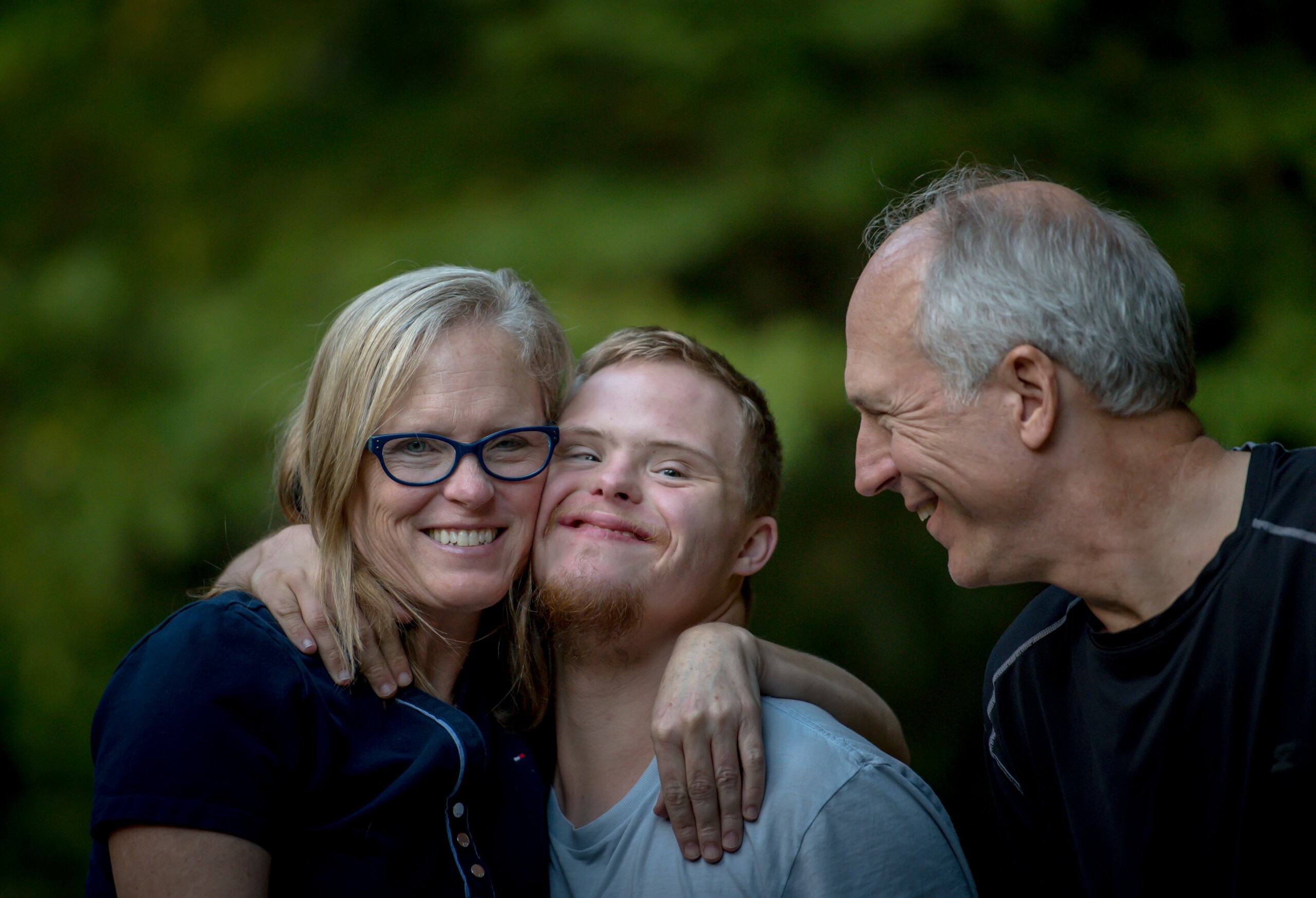
One of the highlights of the book is the author’s willingness to share her experiences as a mother of a child with Down syndrome throughout the book. The ideas and arguments do not come merely from abstract theories or scenarios, but from a personal account that draws on real-life experiences and is presented by an academic with an insider’s perspective. Scheuermann invites readers to engage with her personal journey and, by doing so, better understand her perspectives and why such a call to action for inclusion of disability reflection within Christian thought and praxis is needed. Here, the author’s vulnerability and honesty exemplify what the book strives to bring to light: the messiness and openness of real life that entails not only engaging with the topic of disabilities within Christian academic discourses but also how it is lived out in practice amongst Christians communally. As Scheuermann explains, engaging with disability “demands nearness, honesty, transparency, discomfort, rawness, dependence, interdependence, humility, and being okay with paradox” (85).
The book is divided into two parts. The first part, chapters 1–5, focuses on how to view disability within God’s overarching missional narrative and on the theology that undergirds it. Before laying out how to view individuals with disabilities within the overall narrative of the missional God’s story, Scheuermann lays the foundation for the cross-disciplinary fields of missiology and disability. First, in chapter 1, she uses a missional hermeneutical lens to lay out God’s mission and our place in it. Then, in chapter 2, Scheuermann provides an overview of the complexity of understanding and defining disability. This approach to laying out the book orients readers who may be unfamiliar with these fields of study and how they overlap.
Scheuermann dives right into the heart of the disputes within the field of disabilities surrounding the complexities, biases, and views of disability. One such discourse concerns the different views of how disability is to be understood, which affects how Christians think about disability in all areas of thought and practice. Within disability studies, two main models frame disability: the medical model, perceiving it as a pathology or deficit, and the social model, viewing disability as a social construct imposing barriers on individuals.[2] For Scheuermann, it is not either-or but that the reality “that disability is both/and” (41). Disability is undeniably complex and multifaceted. While individuals with disabilities do face certain medical challenges or limitations, the social environment they live in influences how they are viewed, what they experience, and how they navigate life. Scheuermann’s framing of disability as both/and illuminates the reality that individuals with disabilities face biases and multiple difficulties on both the medical and social levels. However, she points out that it is important to recognize that the medical impairments of individuals with disabilities should not be equated with an inability to participate “meaningfully in communal life” (41) and to make a “meaningful contribution” (42), which will also be central to the key arguments in later chapters on missional practices.
This perspective on disability reshapes how Christians ought to theologically engage with the topic of disability and the mission of the Church. One way the author does this is through a critical analysis of various theologies surrounding disability, challenging those that associate disabilities with sin, evil, or inherent wrongness. She also addresses the practical assumption that all individuals with disabilities universally seek prayer for healing. These views often stem from theological reflections on the creation and fall narratives in Genesis. The author argues that these perspectives are both misguided and potentially damaging to our perception of individuals with disabilities, originating from an ableist mindset. Christians ought to reject the idea that disabilities are linked to sin. Instead, they should embrace a theological view that “the fall can never overtake God or God’s pronouncement of goodness over what was created. In this way, no one is ever born as a tragedy of sin” (66).
One key theological takeaway is that, rather than holding a negative view of disability, Scheuermann encourages Christians to embrace the goodness inherent in all individuals, stemming from the Creator. All bodies, including those of people with disabilities, are valuable, and the diversity in which they exist is also good. Theologically speaking, there is nothing that separates non-disabled individuals from those with disabilities. Scheuermann highlights the importance of the imago Dei, which affirms that all individuals bear God’s image. As image-bearers, people with disabilities are not excluded from God’s love or from the overarching narrative of reconciliation. They need to hear the gospel and are created to have meaningful relationships with God and others, both of which are vital to their spiritual journey.
The second part of the book, covering chapters 6–13, focuses on how Christians can approach evangelism in the disability community and how to practice it collectively within a Christian framework. The reviewer views this section of the book as a significant contribution to the field of missiology regarding disabilities. It emphasizes the importance of evangelism, community, and necessary accommodations for all individuals, not just those with a disability. A key highlight of this section is Scheuermann’s discussion on the significance of interdependence. She writes, “Interdependence is a two-way street; everybody needs everybody else” (201). Scheuermann seeks to transform the way Christians view the disability community. Rather than seeing individuals with disabilities merely as recipients of outreach, she proposes that the churches should acknowledge the mutual dependence that exists among all its members, including individuals with disabilities. This approach fosters growth for both individuals and the Church as they engage in mutual learning, recognizing that those with disabilities contribute and play vital roles in the community.
This thought-provoking idea has significant implications for both the Church and the future of Christian scholarship. It challenges scholars to move away from an ableist or normative mindset in theology and mission studies concerning disabilities. Instead of focusing solely on helping the community, there is a call for a posture that allows disability studies and the lived experiences of individuals with disabilities to inform and enhance future Christian scholarship. Imagine what we can learn from a disabled theology, a disabled mission, and a disabled gospel.
This reviewer finds the book appropriate for both academic scholars and practitioners, and its positive, optimistic tone makes it an enjoyable read. It is especially useful as an initial resource for scholars eager to explore theological and missiological perspectives on disability. Its significance is heightened by the relative scarcity of material on this topic in Christian literature, especially in the field of missiology.[3] The reality is that people with disabilities are present in every community worldwide. Christian scholarship is needed to aid the Church in reaching out, supporting, and including their voices and perspectives, fostering growth in the whole community. It is exciting to consider what insights could emerge from integrating disability studies into more Christian scholarship in the future.
[1]. Erin Stack and Katherine E. McDonald, “Nothing About Us Without Us: Does Action Research in Developmental Disabilities Research Measure Up?” Journal of Policy and Practice in Intellectual Disabilities 11, no. 2 (2014): 83–91.
[2]. Benjamin T. Conner, Disabling Mission, Enabling Witness: Exploring Missiology Through the Lens of Disability Studies, Missiological Engagements series (IVP Academic, 2018).
[3]. Conner, Disabling Mission, Enabling Witness, 26.