One of the first things I learned when I started graduate school was how to be a hockey coach. Actually, this happened several weeks before I registered for any courses at the University of Alberta. We arrived in Edmonton—four hundred miles north of the Montana border—well before the first academic term began. We had no firsthand knowledge of what it was like to live in Canada, and we wanted some time to settle in. We also needed some income, and I had to explore part-time employment. Having recently studied in a seminary, a natural move was to apply for a weekend assignment in the United Church of Canada. They interviewed me about my church-related experience, and when I told them that I had just served for eight weeks as Protestant chaplain at a Boy Scout camp, they assigned me to be a youth pastor in an inner-city congregation.
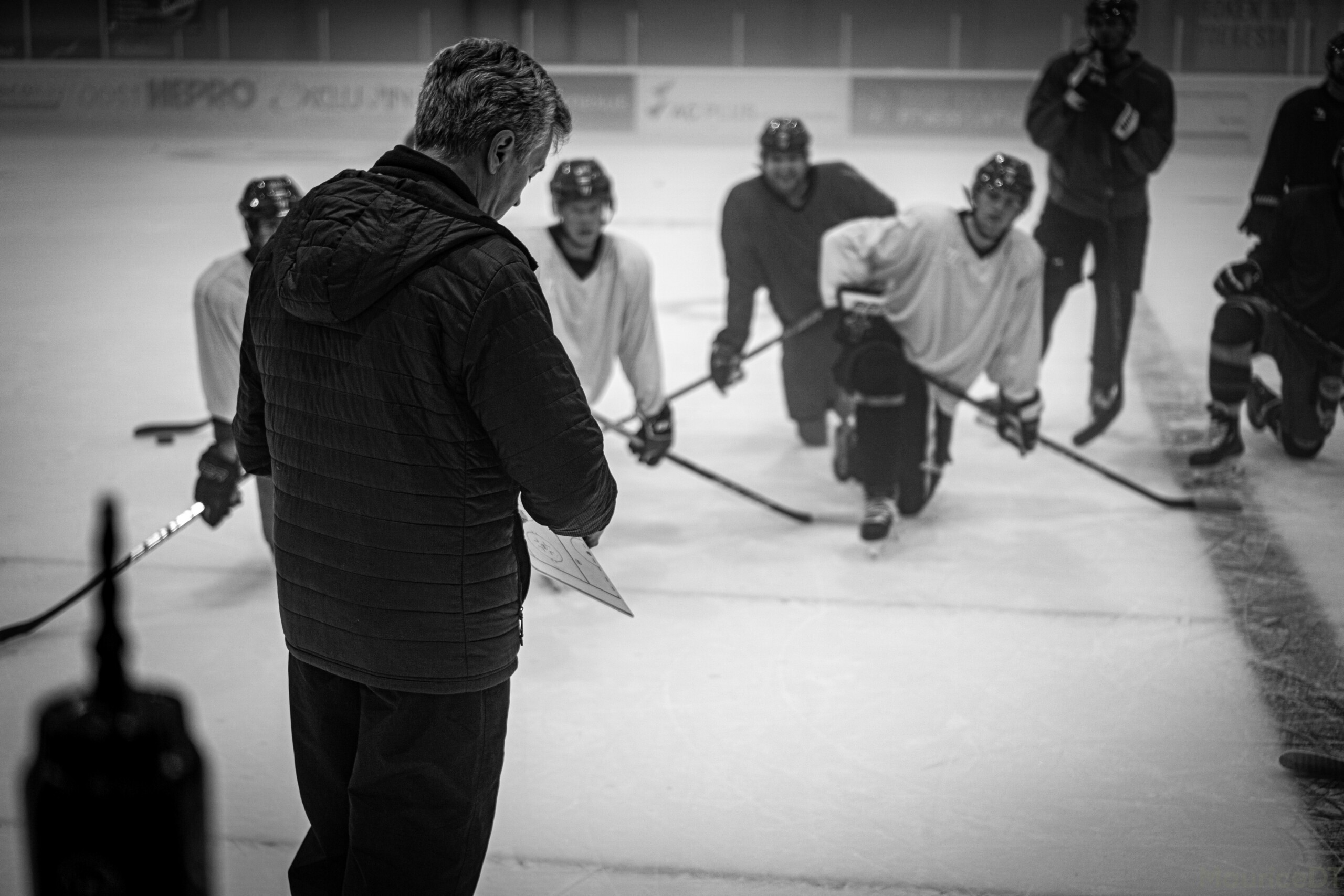
My first week on the job, I was told to show up at the church on Saturday morning to lead a group of pre-teen grammar-school boys. I decided to do a get-acquainted exercise with them, and I brought along a stack of 3 x 5 cards to use for the exercise. Much to my surprise, though, a dozen young kids, all of them indigenous Canadians, showed up wearing hockey uniforms and carrying sticks and pucks. They informed me that I was their new coach and that they, the Boyle Street Blue Bombers, were to have their first team practice—with the local inner-city league beginning the schedule of games in two weeks
I tried not to show my panic. I knew nothing about hockey. I had never even watched a game on television. Then, aware of the fact that I was clutching a stack of 3 x 5 cards, I improvised. I distributed the cards and asked them to write down the position that he was to play and the specific things that he was to be doing at that position over the next week. Anyone who did not do the assignment adequately would not be able to play in the first match. I said, “This week we will just skate around the ice a lot, and practice hitting the puck.”
They did a good job on their written assignment, handing in fairly detailed instructions for their positions the next Saturday. During that week I did my own homework; I read all that I could find about hockey rules. But throughout the season I coached primarily from their hand-scrawled notes, yelling out with confidence things like: “Charles, you’re offsides!”
While the Boyle Street Blue Bombers had a winning season, the main joy in my brief coaching career was getting to know the players. And on our final Saturday together, it became clear that they felt the same way about me. Our season was over, and I told them I would be bringing donuts for all of us. When I arrived at the appointed time, no one was there—this seemed strange since there were usually several of them who arrived early. I waited for several minutes, and then one kid came running. “We’re all going to be here! The rest of them are going to be late.”
When I asked him what his friends were doing, he went quiet. “C’mon, tell me,” I said. He made me promise not to let on to the others that I knew. He said, “They have to be careful; they don’t want to get caught-they’re stealing a gift for you.” The gift was a belt. It was the right size, and I wore it frequently, with gratitude.
A few weeks later Phyllis and I attended a reception at the university, where local donors for graduate student scholarships (mine covered tuition) could meet the student beneficiaries. I had a delightful conversation with Sammy Goldsmith (his real name), who was originally from New York City and was eager to instruct me on the differences between American and Canadian politics.
At one point I asked Sammy what he did for a living. He was, he told me, the manager of a discount store—the very one, it turned out, where my hockey team had gone. I showed him the belt I was wearing and told him about my team members stealing it as a gift for me. I told him that I fully intended to drop by the store and pay for the belt. “Oh no!” Sammy replied, laughing “That’s wonderful! I get reports on missing merchandise, and now I know some of it goes to good causes! The Boyle Street Blue Bombers, you say? I know what church that is and I will send them new equipment for their hockey team!”
Hockey Coaching and Academic Administration
When years later I became Fuller Seminary’s provost, I drew on my hockey coaching experience. I was comfortable with the “chief academic officer” side of my job, knowing how to work with the academic deans. But I was uncertain as to what my “chief operations officer” role covered. On my first day on the job, my executive assistant went over the schedule for the day, which was a series of individual meetings with vice presidents who reported to me. I asked her
(she had worked for the previous provost) “What in the world does a Vice President for Auxiliary Services do?” She told me that he was in charge of food services, student housing, and the bookstore. So, in that following meeting, I asked him for details about how he tracked each of those areas—and remembering my hockey team assignment, I took notes to guide our discussions in subsequent meetings.
While in my seminary leadership, I never became anything like an expert in administrative theory and practice, I did apply what I learned from coaching hockey to my institutional roles. For one thing, I learned to pay attention to job descriptions. In fact, on my first visit as a new graduate student to the Philosophy Department office at the University of Alberta, I asked the departmental secretary what her job was like, and she confided in me with insightful details. That conversation included a few stories about the quirks of specific faculty members—I learned much from her about what my academic life was going to be like for the next two years!
Hockey coaching also taught me the importance of leaving a job description a little vague. One kid, Jeffry, wrote on his 3×5 card that he wasn’t one of the players. His job, he said, was “just to hang around the coach and to help him.” And that is exactly what Jeffry did, to my benefit—he was the one, incidentally, who reluctantly informed me about the team stealing the gift for me! That “hang around” function became important to me as Fuller Seminary’s president. My first executive assistant, who also met with students as my teaching assistant, did a fine job of letting me know what she was learning about how new students, faculty, and staff were experiencing the campus. From then on, I always made sure that I had someone on my staff who did what she had done for me.
Of course, much of that presupposes presidential privilege. Faculty members can’t require, for example, that certain job descriptions are included in their office budgets. But I think we are all more aware of our broader responsibilities these days, as well as the important job responsibilities outside the classroom.
Learning Outside the Classroom
I had been a Calvin faculty member for fifteen years before our son became a student there and hearing him talk about his daily life was like being introduced to a new campus. Dorm residency, communal pranks, late-night activities, meals, school spirit, worship teams, group devotions, dating, cross-cultural friendships, typical student gripes—I came to see in new ways that not everything that is formative in a college education happens in the classroom.