

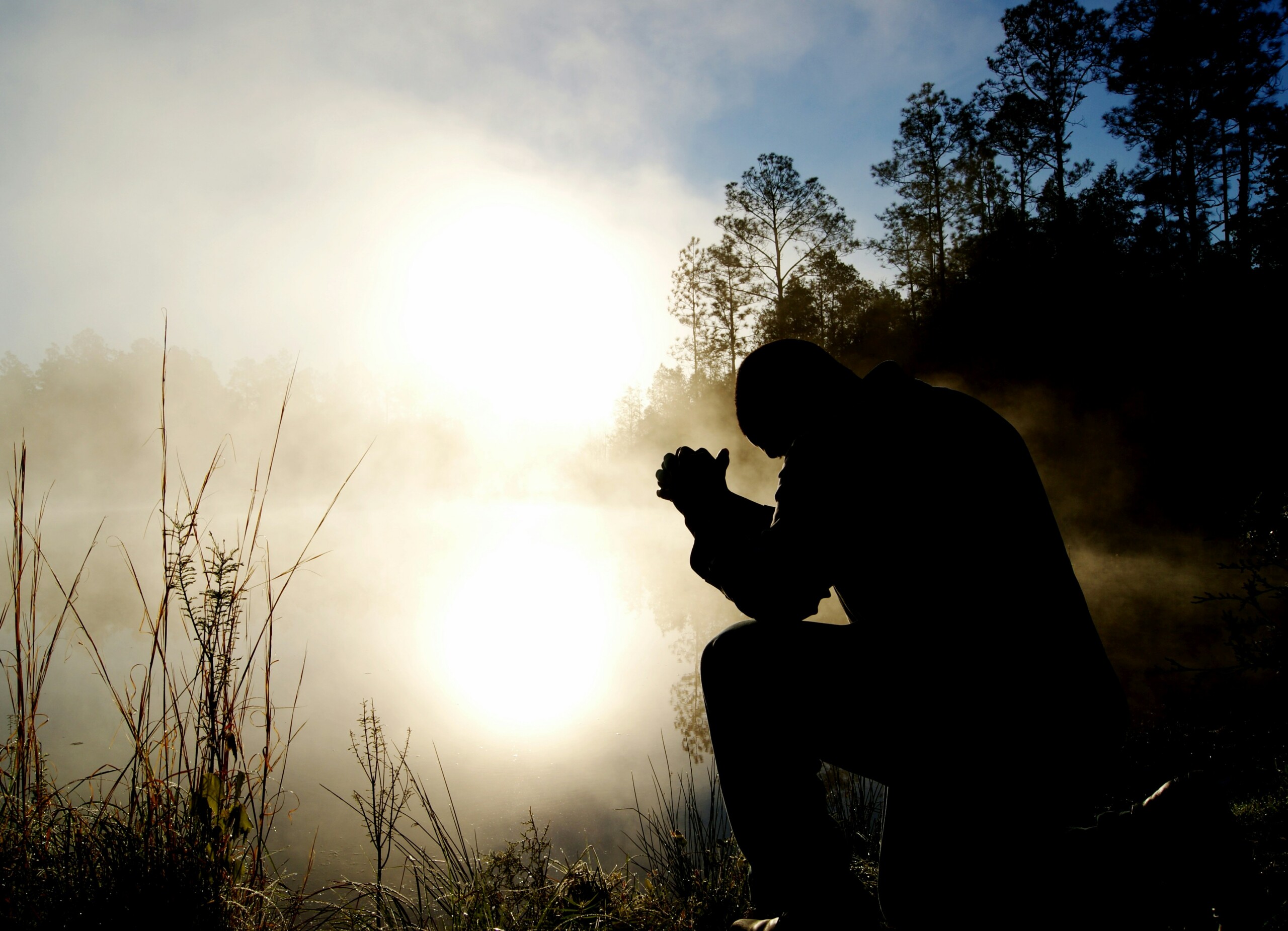
“This kind can come out only through prayer,” or, in some manuscript traditions reflected in translations such as the King James Version, “through prayer and fasting” (Mark 9:29). These were Jesus’ words to the disciples after they failed to exorcise a demon from a suffering boy. The boy’s father pleaded with Jesus to heal his son, who displayed symptoms like grinding his teeth, falling, rigidity, foaming at the mouth, and danger near fire and water. Jesus asks, “How long has this been happening to him?” and the father answers, “From childhood….” The Gospel presents this in a format familiar to clinicians during a medical visit, where the provider asks, “What brought you in today?” The symptoms closely resemble a seizure disorder. This passage raises many questions for Christians, medical providers, and patients. What is fasting? Why might Jesus, the Divine Physician, have prescribed fasting in some translations? And what does fasting mean for Christians today?
Fasting in Scripture and Early Church History
Fasting is not simply “not eating,” although this can be an important part of the practice. It is also a bodily act of prayer, repentance, humility, and dependence on God. Its roots lie in Jewish tradition. Moses fasts on Mt. Sinai, Elijah fasts in the wilderness, Esther calls Israel to fast before danger, and Daniel practices dietary restraint.
This tradition continues with Jesus fasting for forty days in the wilderness before beginning his ministry. In Matthew 6, he teaches his disciples how to fast, assuming the practice will continue: “So when you fast….” Fasting is not a sacrifice for its own sake, but a means of deeper communion with God. In Matthew 9, Jesus does not reject fasting; he says his disciples will fast when the bridegroom is taken from them, tying fasting to the mourning of his death.
After the Gospels and Acts, an early church catechism called the Didache laid out further guidance on Christian conduct, including fasting before baptism, on behalf of those who persecuted Christians, and on Wednesdays and Fridays (Didache 1:1; 2:7, 2:8).[1] It is believed to have been authored sometime between AD 70 and 140 and was included in some Bible versions before AD 692.[2]
Fasting continued among the early Christian desert fathers and mothers, who saw it as one part of the ascetic life.[3] Their point was not that hunger is holy in itself, but that bodily appetites can scatter the mind, while disciplined restraint can help quiet both body and soul. In modern language, some people report a similar sense of bodily peace and mental clarity during fasting-like states. The ancient Church did not use terms like “ketones” or “mitochondria,” but it did understand that one’s spiritual, physical, and mental states were interwoven.
Fasting and the Brain: From Ancient Discipline to Metabolic Therapy for Epilepsy and Psychiatric Illness
Modern medicine has found that fasting and fasting-like metabolic states can affect the brain, including by modulating neuronal excitability and, for some, promoting a sense of mental clarity or steadiness, much like the early desert fathers and mothers described. One key mechanism is the production of ketone bodies. Ketone bodies, or ketones, are an alternative energy source to glucose for mitochondria, the “powerhouse of the cell,” and are generated from bodily or dietary fat.[4] In the early twentieth century, clinician-scientists discovered that a high-fat, low-carbohydrate diet could mimic the fasting state.[5] This ketogenic diet was first used in childhood epilepsy, since asking young children to fast was impractical and potentially unsafe. Ketones may also reduce inflammation and oxidative stress while promoting mitochondrial function and neurotransmitter balance.[6]
Medical ketogenic interventions are now being studied beyond seizure disorders, such as in chronic illnesses like diabetes and obesity, and intriguingly, psychiatric illnesses.[7] Metabolic psychiatry is a growing field exploring the relationships between metabolism, inflammation, mitochondrial function, insulin resistance, and psychiatric illness.[8] Difficult-to-treat conditions such as schizophrenia, bipolar disorder, and major depression are under investigation. Evidence from case reports, pilot studies, and early randomized controlled trials suggests benefit for some patients with refractory symptoms poorly responsive to medication therapies.[9] Ketogenic interventions may help some individuals reduce symptom burden or, in select cases, medication burden, but they should not be treated as a simple cure.
This returns us to Jesus, the boy, and the disciples. If the boy’s symptoms resemble a seizure disorder, fasting’s appearance in some translations of Mark 9:29 is especially intriguing in light of ketogenic therapy. Yet fasting is not a cure-all. Mark 9 preserves a tension: the boy’s condition is described as demonic possession, yet manifests bodily and neurologically.[10]His healing rests in Christ, not sheer technique. Likewise, fasting-related interventions can be powerful, but require supervision and discernment. Rightly practiced, Christian fasting is not reckless self-harm, but a disciplined, humbling practice ordered toward holistic vitality.
Fasting in Christian Practice Today: A Living Spectrum
Christian fasting remains a living practice, though unevenly distributed across traditions. Orthodox and Eastern Catholic monastics retain some of the most rigorous fasting patterns, especially during Great Lent, while Orthodox and Eastern Catholic laity participate to varying degrees.[11] Roman Catholic monastic communities and many Roman Catholic laity also preserve fasting and abstinence, particularly during Lent, although to a more moderate degree since 1966.[12] Among many Protestants, fasting is still biblically recognized but often less standardized and less embedded in the rhythms of church life, though it continues in personal devotion and some congregational practices.[13]
Interestingly, these practices have attracted clinical attention. Studies of Orthodox Christian fasting, especially during Great Lent, have reported possible benefits in weight, lipid profiles, blood pressure, insulin sensitivity, and depression, though much of the evidence is observational.[14] Such findings do not reduce fasting to health optimization, but they remind us that spiritual practices are integrated with whole health.
Conclusion
Fasting, then, is neither magic nor mere metabolism. It does not manipulate God, nor is it merely a tool for producing ketones. It is an ancient discipline that brings the body into prayer, even as modern medicine shows that fasting-like states can affect the brain. Returning to Mark 9, we see that healing is not a technique to master but a gift to receive from Christ, the Divine Physician. For Christians today, fasting is worth attention because it teaches us to bring our hunger, bodies, minds, and souls before God.
[1] Jonathan A. Draper, “The Apostolic Fathers: The Didache,” Expository Times 117, no. 5 (2006): 177–81, https://doi.org/10.1177/0014524606062770.
[2] Didache (Saint Ignatius Orthodox Press, 2024), https://legacyicons.com/content/didache.pdf.
[3] Henry L. Carrigan, The Wisdom of the Desert Fathers and Mothers (Paraclete Press, 2010).
[4] Silvia Vidali, Sepideh Aminzadeh, Bridget Lambert, et al., “Mitochondria: The Ketogenic Diet—A Metabolism-Based Therapy,” The International Journal of Biochemistry & Cell Biology 63 (2015): 55–59, https://doi.org/10.1016/j.biocel.2015.01.022; James W. Wheless, “History of the Ketogenic Diet,” Epilepsia 49, suppl. 8 (2008): 3–5, https://doi.org/10.1111/j.1528-1167.2008.01821.x.
[5] Wheless, “History of the Ketogenic Diet.”
[6] Vidali, et al., “Mitochondria: The Ketogenic Diet—A Metabolism-Based Therapy.”
[7] István Szendi, “[The Basics of Metabolic Psychiatry],” Psychiatria Hungarica: A Magyar Pszichiátriai Társaság Tudományos Folyóirata 39, no. 2 (2024): 161–79; Chong Zhou, Meng Wang, Jiling Liang, Guomin He, and Ning Chen, “Ketogenic Diet Benefits to Weight Loss, Glycemic Control, and Lipid Profiles in Overweight Patients with Type 2 Diabetes Mellitus: A Meta-Analysis of Randomized Controlled Trials,” International Journal of Environmental Research and Public Health 19, no. 16 (2022): 10429, https://doi.org/10.3390/ijerph191610429
[8] Szendi, “The Basics of Metabolic Psychiatry.”
[9] Albert Danan, Eric C. Westman, Laura R. Saslow, and Georgia Ede, “The Ketogenic Diet for Refractory Mental Illness: A Retrospective Analysis of 31 Inpatients,” Frontiers in Psychiatry 13 (2022): 951376, https://doi.org/10.3389/fpsyt.2022.951376.
[10] J. C. DeToledo and M. R. Lowe, “Epilepsy, Demonic Possessions, and Fasting: Another Look at Translations of Mark 9:16,” Epilepsy & Behavior 4, no. 3 (2003): 338–39, https://doi.org/10.1016/S1525-5050(03)00038-6.
[11] Rena K. Quinton and Michele Ciccazzo, “Influences on Eastern Orthodox Christian Fasting Beliefs and Practices,” Ecology of Food and Nutrition 46, nos. 5–6 (2007): 469–91, https://doi.org/10.1080/03670240701486768.
[12] Angelus Press, “Rules for Fast & Abstinence,” accessed July 6, 2026, https://angeluspress.org/blogs/catholic-doctrine/rules-for-fast-abstinence.
[13] Alec Ryrie, “The Fall and Rise of Fasting in the British Reformations,” in Worship and the Parish Church in Early Modern Britain (Routledge, 2013).
[14] Constantinos Giaginis, Maria Mantzorou, Sousana K. Papadopoulou, Maria Gialeli, Andreas Y. Troumbis, and Georgios K. Vasios, “Christian Orthodox Fasting as a Traditional Diet with Low Content of Refined Carbohydrates That Promotes Human Health: A Review of the Current Clinical Evidence,” Nutrients 15, no. 5 (2023): 1225, https://doi.org/10.3390/nu15051225.; Katerina O. Sarri, Nikolaos E. Tzanakis, Manolis K. Linardakis, George D. Mamalakis, and Anthony G. Kafatos, “Effects of Greek Orthodox Christian Church Fasting on Serum Lipids and Obesity,” BMC Public Health 3, no. 1 (2003): 16, https://doi.org/10.1186/1471-2458-3-16. Cleanthe Spanaki, Nikolaos E. Rodopaios, Alexandra Koulouri, et al., “The Christian Orthodox Church Fasting Diet Is Associated with Lower Levels of Depression and Anxiety and a Better Cognitive Performance in Middle Life,” Nutrients 13, no. 2 (2021): 627, https://doi.org/10.3390/nu13020627.






















Beautifully framed, Julianne — reading through a metabolic-psychiatric lens is exactly the kind of bridge our two fields need more of. As a gastroenterologist/hepatologist working on the liver-pancreas side of fasting physiology, I found your synthesis of ketone metabolism and ancient ascetic wisdom striking — the desert fathers understood something about bodily restraint and clarity that we’re only now reaching with mitochondrial biology. ; I have a review in a very similar spirit which i am working on. Would like to share my work and get your comments to make the article excellent. Thanks
Hi Mathew,
Thank you for your kind words – I would love to hear more about your work. Because of online privacy concerns, I’d kindly ask you to contact the CSR admins to get my contact information or find me on LinkedIn.