First Steps at Advent: On Faith and the Fantastic Four Film Post

Amid star-strewn heavens, a woman groans in labor pains as an enormous devourer endangers her, intent on seizing her miraculous child the moment he’s born. So unfolds the vision of Revelation 12:1–5. So too goes a crucial scene in the Marvel Cinematic Universe’s latest film, The Fantastic Four: First Steps (2025). The Revelator retells the…

Toward the City: Rethinking the Pilgrimage Metaphor for Faith and Learning –A Review of Christianity and Intellectual Inquiry: Thinking as Pilgrimage Post

In their latest installment chronicling the relationship between religion and American higher education, Douglas Jacobsen and Rhonda Hustedt Jacobsen turn to the constructive task of offering a novel and hopeful model of faith and learning suited to the present moment. Rather than remain entrenched in the enclosed ghettos of polarizing and identity-­constrained thinking, “pilgrim thinking”…

AI and a Possible Renaissance for Christian Higher Education Post

The early Greeks saw the essence of education as Paideia: the process of forming a whole person into an ideal citizen. They emphasized the formation of virtues like prudence, justice, fortitude, and temperance in preparation for active citizenship. In Plato’s Republic, we read that “The object of education is to teach us to love what…

“Much More Open, Much More Transcendent, and Much More Celebratory” ft. Georgetown University’s Mark Bosco, S.J. I Saturdays at Seven – Season Three, Episode Thirteen Post

In the thirteenth episode of the third season of the “Saturdays at Seven” conversation series, Todd Ream talks with Mark Bosco, S.J., the Vice President for Mission and Ministry at Georgetown University. Bosco begins by discussing his research interests residing at the intersection of theology, literature, and the cultivation of a well-ordered imagination. Those interests led him to explore the life of Graham Greene and Flannery O’Connor. While most of Bosco’s scholarship comes in the form of books and articles, his 2019 documentary, Flannery, received the Library of Congress’s inaugural Lavine/Ken Burns Prize for Film. Bosco then discusses how those interests emerged, how they contributed to his calling to the Society of Jesus, and how they informed his service at Loyola University Chicago and now at Georgetown University. At Loyola, Bosco taught in the theology department and led a center dedicated to the Catholic intellectual heritage. At Georgetown, he was called to lead the division that helps cultivate the university’s Jesuit mission while also providing pastoral care for all members of the community. Georgetown’s academic programs and location in Washington, DC attract students and faculty members from around the world and from a myriad of religious backgrounds. At Georgetown, Bosco contends those backgrounds become a strength, operating in a culture informed by Jesuit charisms such as cura personalis (or care for the whole person) while also appreciating those backgrounds and the ways they interact with one another. Bosco then concludes by detailing how universities such as Georgetown serve as locales in which the Church can do its thinking while also preparing the next generation of lay and clerical leaders.

Put on the Attire of Leadership (Part 2) Post

Many years ago, my wife, Phyllis, and I were the guests of the University of Notre Dame provost at a football game in South Bend, Indiana, between the Fighting Irish and West Point. At halftime, someone pointed me toward the private box where the leaders of the two schools were watching the game together. I…

The Fragile Cultural Foundations of American Democracy (An Extended Review) Part 2 Post

Hunter’s overall point is well taken, though: new efforts at undergirding democracy became more focused on reason (internally derived ideas) or on natural law (externally derived absolutes), and less so an amalgamation of the two, feeding eventually into a culture war. For instance, John Dewey had great faith in our capacity to reason our way…

A Christian Word on Professorial Impact Post

In the present university world, we talk a lot about impact. Our research is measured by its impact on our academic discipline, according to how often it is cited and by whom. Woe to the professor whose research always winds up in journals with a low JIF. The leading accreditor in the field of business,…

Samford University’s Josh Reeves Appointed Associate Co-Editor for Theology Post

The editors, associate editors, and institutional representatives who serve Christian Scholar’s Review are pleased to appoint Josh Reeves as the next Associate Co-Editor for Theology.  Reeves currently serves as the Director of Samford University’s Center for Science and Religion and joins Karin Stetina (Professor of Biblical and Theological Studies at Biola University), who serves as…

The Fragile Cultural Foundations of American Democracy (An Extended Review) Part 2 Post

Hunter’s overall point is well taken, though: new efforts at undergirding democracy became more focused on reason (internally derived ideas) or on natural law (externally derived absolutes), and less so an amalgamation of the two, feeding eventually into a culture war. For instance, John Dewey had great faith in our capacity to reason our way…

Hockey Priest: Giving Greater Thought to Sporting Involvement Post

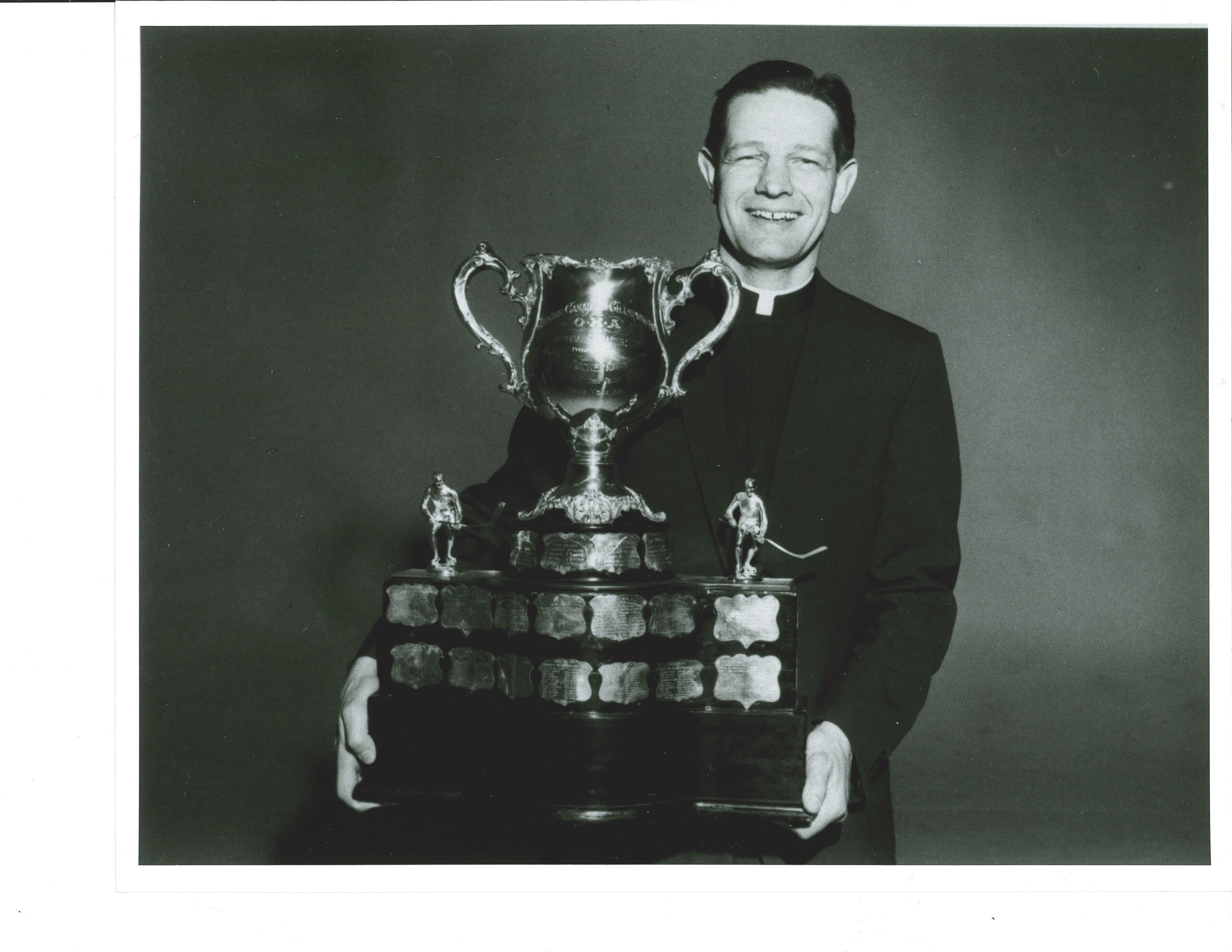
Editor’s note: Images Courtesy of St. Michael’s College School “Why speak of muscular Christianity?” asked an academic to a presenting colleague at a sports history conference I recently attended. The questioner made it clear that, in his opinion, sport historians have no need for religion in their field of study. The statement sounded sensible, as…

The True Race Part III: Eternal Love and Sport Post

In yesterday’s post, I pointed out how Dante’s Paradise helps one see the primacy of love. The arete of love is eternal, while all of the records, championships, trophies and praise in sport will pass away. In this final post, I will address the implications that the eternal love of God, to which Dante points…

Learning in AI Time: Institutional Virtues in an Era of Artificial Intelligence Post

In his 1939 sermon Learning in Wartime, CS Lewis considered whether education should continue amid high-stakes global conflict. Is learning something that should be suspended during a war, saved only for times of peace and predictability? Or does the acquisition of knowledge, learning, thinking, and prudential judgment become more important during moments of upheaval? Predictably…

Is Holiness a Virtue? Post

One of the primary things we learn about God in the Bible is that he is holy (Lev. 11:44-45; 19:2; any reference to the Holy Spirit). Moreover, we learn that as image bearers of God, we are to exhibit God’s character by being holy as well (Lev. 11:45; I Peter 1:15-16). Yet, holiness is a…

The Fragile Cultural Foundations of American Democracy (An Extended Review) Part 2 Post

Hunter’s overall point is well taken, though: new efforts at undergirding democracy became more focused on reason (internally derived ideas) or on natural law (externally derived absolutes), and less so an amalgamation of the two, feeding eventually into a culture war. For instance, John Dewey had great faith in our capacity to reason our way…

Why AI Shouldn’t Replace Human Empathy in the Helping Professions Post

Like so many, I have recently enjoyed the benefits of the age of Artificial Intelligence (AI). Raising teenagers in a technological world has been complicated, but AI has helped my husband and me monitor our teens’ phone and text use by providing red flags for things like bullying, depression, and anxiety, while still allowing them…

Public Sociology and Anthropology: Moving Toward Things That Smell (Part 2) Post

Things that Smell Good When we think of good smells, we imagine things like freshly baked bread. Particular good smells can evoke fond memories. Babies heads have a pleasant smell about them. Perhaps you’ve known a child who didn’t want his or her “blankey” washed, because they didn’t want the comforting smell of it to…

Cultivating Honest and Courageous Researchers: Teaching Statistics Through a Christian Virtue Lens Post

In recent years, the social sciences have faced a “replication crisis,” raising questions about how we conduct, report, and interpret research findings. A large-scale replication project in 2015 tried to recreate nearly 100 studies from recent publications and found only about 40% of attempts successfully replicated. This finding sent shock waves through the psychology community….

The Fragile Cultural Foundations of American Democracy (An Extended Review) Post

James Davison Hunter wants us to know things look bad because they are bad and have been so for quite some time: the United States is not only facing stark polarizations in our time, but, he argues, these polarizations are a result of the longstanding fault lines within our foundations for democracy. In this long-awaited…