Introducing the 2026 Christian Scholar’s Review Winter Issue Post

For much of the past century, Christian scholars have turned to the concept of worldview as a primary way to articulate the academic vocation of integrating faith and learning. The popular concept of a Christian worldview is often traced to the writings and speeches of Abraham Kuyper, a Dutch politician and theologian of the late…

Book Review of Scrolling Ourselves to Death: Reclaiming Life in a Digital Age Post

Scrolling Ourselves to Death is a project of the Gospel Coalition, harnessing the arguments of Neil Postman’s 1985 book, Amusing Ourselves to Death,[1] to take on post-millennial media. This compilation of essays applies Postman’s logic and insights about the social and spiritual impact of television to the 2025 world of social media and other digital…

Book Review of Bodies in Motion: A Religious History of Sports in America Post

It is an indication of how far the field has come that Oxford University Press recently published not one but two excellent books on the historical relationship between religion and sports in the United States, each work taking a different approach to the subject. Paul Putz’s The Spirit of the Game[1] explains how deepening connections…

“God’s Goodness, God’s Grace, and by God’s Design” ft. Trinity Western University’s Todd Martin I Saturdays at Seven – Season Three, Episode Twenty-Eight Post

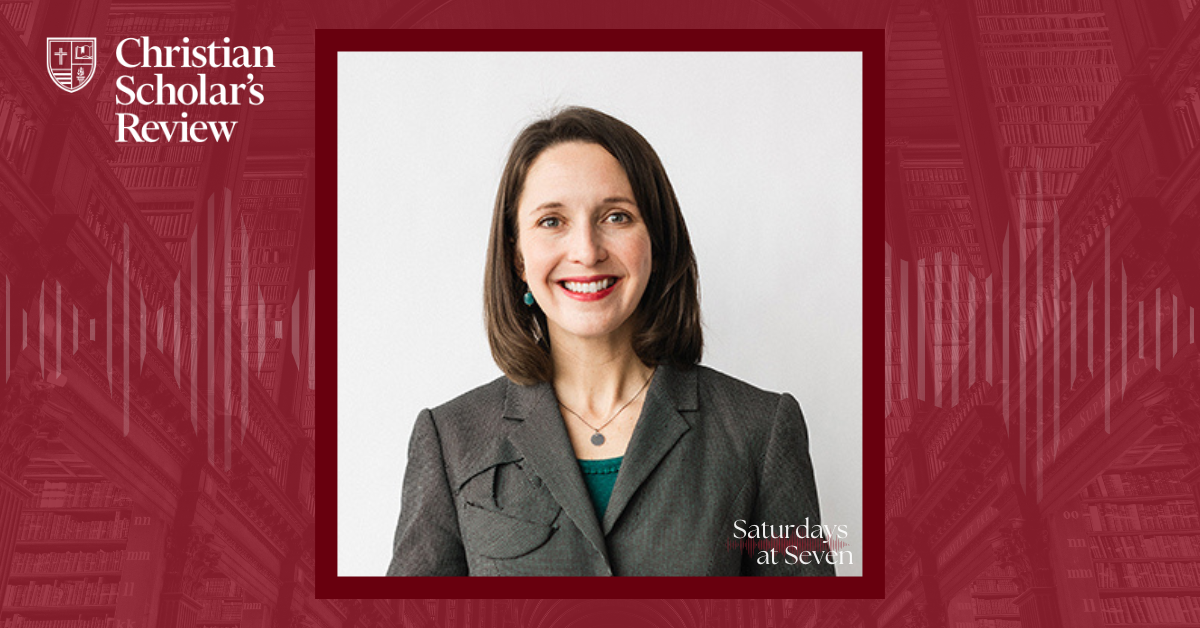
In the twenty-eighth episode of the third season of the “Saturdays at Seven” conversation series, Todd Ream talks with Todd Martin, the President of Trinity Western University. Martin opens by reflecting upon his expertise as a family studies scholar, exploring the ways that channeling theory and family development theory can prove beneficial to educators striving to understand the students they serve. However, Martin is also quick to note that God is sovereign and, as a result, parents and children do not always have to make optimal choices in order for flourishing to be possible. Wise, prayerful choices as highlighted by these theories are valuable but leaving room for God to act also proves important. Martin then shifts to discussing his own vocational discernment, how his service as a minister intersected with his growing interests in the sociology of religion and the sociology of family, and then how he began to discern adding administrative roles was part of how he was called to express his vocation. Along the way, the underlying theme Martin stresses in terms of vocational discernment is a willingness to be used by God and be of service in whatever context one is called to live. As a result, part of the joy he derives from serving as president is solving problems. While serving as provost, Martin shares that he led an effort to develop what came to be known as “A Faculty Vocational Career Guide”—a guide that seeks to help all faculty members at Trinity Western live their fullness as they were called by God. As he closes, Martin returns to his experience as a family studies scholar, cautioning fellow scholars not too make too much of their previously experienced field work residing with their respective families of origin but also to seek to understand the family as existing in a much larger story as ordained by God.

“Discussion and Common Discernment” ft. Gonzaga University’s Katia Passerini I Saturdays at Seven – Season Three, Episode Twenty-Seven Post

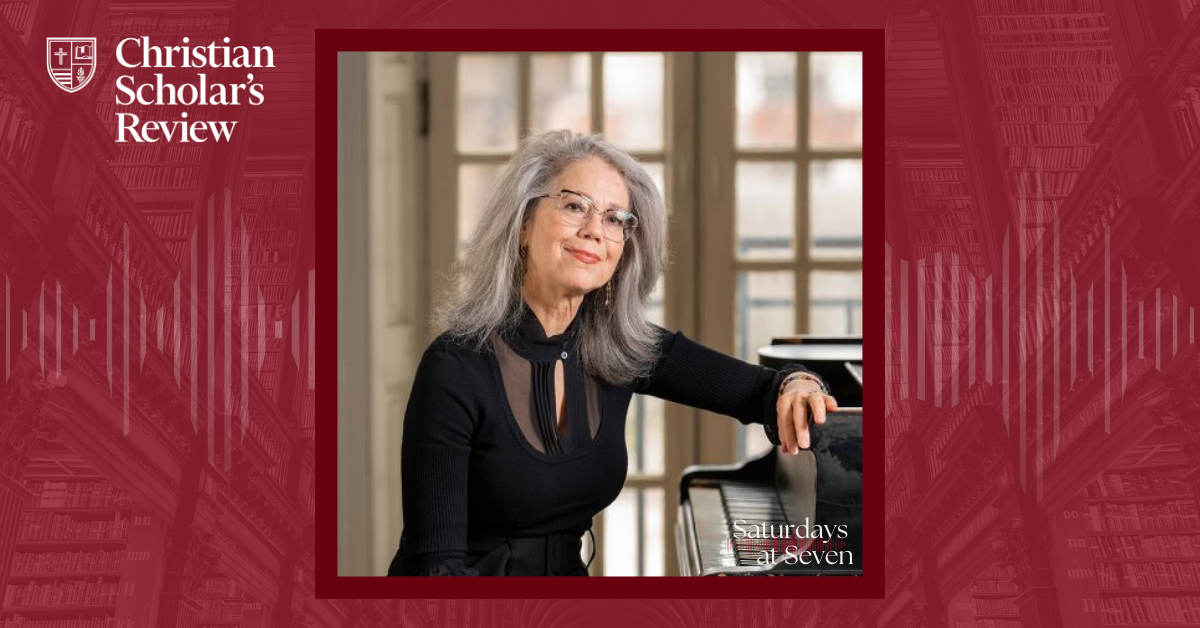
In the twenty-seventh episode of the third season of the “Saturdays at Seven” conversation series, Todd Ream talks with Katia Passerini, the President of Gonzaga University. Passerini begins by drawing upon her expertise as an information system management scholar, thinking through academe’s successes and failures to date in relation to online learning. While such opportunities came with greater access for populations previously underserved by higher education, Passerini contends one challenge is those efforts were not personalized to the point that students had access to immersive experiences that often allow for deep learning or personal formation. The rapidly accelerating presence of AI may allow for greater personalization. However, Passerini cautions rapidly accelerating forms of technology such as AI may also come with accelerating costs for the foreseeable future. Passerini then shifts to discuss her own calling to education and educational leadership, beginning with her student years in Rome and DC, appointments she accepted at in the Tri-State region at the New Jersey Institute of Technology, St. John’s University, Seton Hall University, and now her appointment as the president of Gonzaga University. When considering that current appointment, Passerini shares what she sees as jewels in terms of Gonzaga’s Jesuit charisms, relationship with the Catholic Church, and commitment to global engagement and service. Passerini concludes by exploring her hopes for relations shared by Church-related colleges and universities and the Church, noting, in particular, inspiration she draws from the practices embedded in Pope Francis’s commitment to synodality and the habits of discussion and common discernment.

“The New Heaven and the New Earth” ft. the University of Arkansas for Medical Sciences and Arkansas Children’s Hospital’s Joshua August Daily I Saturdays at Seven – Season Three, Episode Twenty-Six Post

In the twenty-sixth episode of the third season of the “Saturdays at Seven” conversation series, Todd Ream talks with Joshua August Daily, Professor of Pediatrics and the Pediatric Cardiology Fellowship Program Director at the University of Arkansas for Medical Sciences and Arkansas Children’s Hospital. Daily begins by offering insights concerning how he builds rapport with patients and their family members. That rapport offers Daily with insights into the spiritual commitments held by patients and family members. Daily notes that doing so allows him to serve patients as whole persons and, in turn, be of greater service to them at the intersection of their hopes and fears. Daily then shifts to discussing his own calling to medicine and eventually how that calling came to include pediatric cardiology as well as serving as a physician educator. In addition to the technical competence Daily sought to master through his medical education, he returned to school to earn a graduate degree in education when he discerned he would also serve as a physician educator. Daily acknowledges service as a physician and as a physician educator means long hours that are also spent under stressful conditions. While he is grateful for the ways that the profession has sought to address those challenges, he also fears that many young physicians (especially young physicians who are also evangelical Christians) are avoiding certain specialties in favor of greater work-life relations. While understandable, Daily contends that tendency also leaves those specialties bereft of a Christian perspective. Daily closes by detailing the virtues he believes physician educators need to seek to cultivate in their students, the vices they need to teach their students to confront, and the ways the Church can invest at higher levels in the years to come in the formation of future physicians.

Introducing the 2026 Christian Scholar’s Review Winter Issue Post

With today’s blog, I’m pleased to introduce the Winter issue of Christian Scholar’s Review. For much of the past century, Christian scholars have turned to the concept of worldview as a primary way to articulate the academic vocation of integrating faith and learning. The popular concept of a Christian worldview is often traced to the…

Thinking and Teaching Christianly Part I Post

I love thinking about the big picture. So it was with a great deal of excitement and hope that I read Glanzer’s post earlier this year on “Christ-Animated Analysis of Academic Theories. In the hubbub of day-to-day teaching it’s easy to focus on the individual notes we have to play and miss the direction of…

The Outbreak of War on Empathy Post

Given the military setting of all four verses of their national anthem, Americans have unsurprisingly employed the same rhetoric to declare a “war on poverty” (Lyndon B. Johnson, 1964), a “war on drugs” (Richard Nixon, 1971), a “war on terror” (George W. Bush, 2001), and an ongoing “war on crime.” Nevertheless, commencement by some Americans…

Community of Open Hands: Reimagining the Classroom through Beauty Post

One of the boldest decisions that I have ever made as an educator was taking twenty-four middle school students on a camping trip at the end of the school year. We had made our way through a couple of months of astronomy and what better way to conclude the project than to celebrate our learning…

“We Magnify Each Other” ft. Wheaton College’s Amy Peeler I Saturdays at Seven – Season Three, Episode Twenty-Two Post

In the twenty-second episode of the third season of the “Saturdays at Seven” conversation series, Todd Ream talks with Amy Peeler, the Kenneth T. Wessner Professor of New Testament at Wheaton College. Peeler opens by sharing how she coordinates the roles which she is called to fill—roles which include serving as a spouse, a parent, a scholar, and a priest. She acknowledges that while being organized is critical, she also offers that being part of supportive communities proves paramount. With that end in mind, she expresses her gratitude to the ways her spouse, Lance, Wheaton College, and St. Mark’s Church all value, nurture, and encourage her calling. Peeler explores the origins of her calling to study the New Testament then also expanded into service as a constructive theologian and parish priest. A critical component in that expansive formation, according to Peeler, is her lifelong love for studying the Epistle to the Hebrews. She contends she may not presently have any additional questions she seeks to pose to the Epistle to the Hebrews. The lessons she learned from those previous studies—lessons concerning the nature of God, how to think about how God interacts with humanity, and, in turn, how to do theology—are lessons she believes informed her more recent efforts including books such as Women and the Gender of God and Ordinary Time: Seasons of Growth. As a scholar and priest, Peeler then closes by offering her unique reflections concerning how the university and the Church can grow in their service to one another—service Peeler most immediately sees in the lifelong spiritual growth for which she hopes and prays for the students she serves at Wheaton.

The Poet, an Instance of Human (Part II) Post

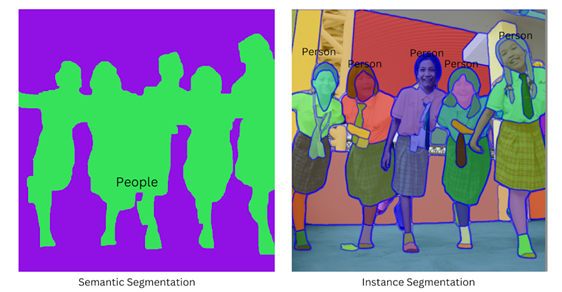
How do we train AI to recognize what is a human? In other words, what is an instance of the human? In my non-technical, lay-person’s understanding, AI makes this distinction by differentiating between semantic segmentation and instance segmentation.[1] In a semantic model, the output would be a silhouette of the whole group against the background….

“God Don’t Make No Junk”  Post

After a good conversation on genetics with a dear colleague, I started pondering the following question: Isn’t it interesting how one’s training and worldview make such a vast difference in an approach to a topic? One thought led to another, and this is where I landed…  Even though the idea about differing worldviews can be applied to almost every topic in our world and our lives, I want to zero in on human genetics. That is, to consider the long sections of DNA that…

“Transcendency and Transformation” ft. the Peabody Institute of the Johns Hopkins University’s Elizabeth Futral I Saturdays at Seven – Season Three, Episode Nineteen Post

In the nineteenth episode of the third season of the “Saturdays at Seven” conversation series, Todd Ream talks with the Peabody Institute of the Johns Hopkins University’s Elizabeth Futral. Futral begins by detailing the myriads of ways individuals new to opera come to find the artform compelling. Some people are initially drawn to the music. Some people are drawn to the costumes. Some people are drawn to the storyline. Some people are even able to appreciate all of these dimensions of opera and more during their first encounter. Futral then shifts to discussing the experiences which allowed her to appreciate the potential she had as a vocal performer during her undergraduate years at Samford University, her graduate years at Indiana University, and as an apprentice at Lyric Opera Chicago. Along the way, mentors such as Eleanor Ousley at Samford, Virginia Zeani at Indiana, and Ardis Krainik with Lyric Opera provided Futral with the guidance and counsel she would need to sustain a vocation as a coloratura soprano. That career took Futral to perform in the world’s leading opera houses in roles in history’s most widely recognized operas as well as some of the most recent operatic compositions. While performing as a soloist, Futral would often lead master classes, experiences she came to appreciate and led her to understand that her calling would eventually include preparing the next generation of vocal performers at an institutional home she has now come to appreciate at Peabody. Futral then concludes by discussing ways the Church proved supportive of the performing arts, quiet ways that support continues, and ways it may increase in the years to come.

Toward the City: Rethinking the Pilgrimage Metaphor for Faith and Learning–A Review of Christianity and Intellectual Inquiry: Thinking as Pilgrimage Post

In their latest installment chronicling the relationship between religion and American higher education, Douglas Jacobsen and Rhonda Hustedt Jacobsen turn to the constructive task of offering a novel and hopeful model of faith and learning suited to the present moment. Rather than remain entrenched in the enclosed ghettos of polarizing and identity-­constrained thinking, “pilgrim thinking”…

Making Way for Gabriel’s Message Post

When the angel Gabriel visits Mary to announce Christ’s birth, his final words are “For with God nothing shall be impossible” (Luke 1:37 KJV). This proclamation resonates with Genesis 18:14, where the Lord asks Abraham, “Is any thing too hard for the Lord?” These two verses also resonate with a time later in Luke, when…

AI Guidelines Page

Christian Scholar’s Review recognizes that artificial intelligence (AI) tools (e.g., ChatGPT) and large language models (LLMs) are now commonly used in higher education scholarship (for simplicity, we simply refer to AI to include both).  Below, please find our policies regarding the use of such models in any CSR publication. All authors of journal articles, book…

First Steps at Advent: On Faith and the Fantastic Four Film Post

Amid star-strewn heavens, a woman groans in labor pains as an enormous devourer endangers her, intent on seizing her miraculous child the moment he’s born. So unfolds the vision of Revelation 12:1–5. So too goes a crucial scene in the Marvel Cinematic Universe’s latest film, The Fantastic Four: First Steps (2025). The Revelator retells the…

Toward the City: Rethinking the Pilgrimage Metaphor for Faith and Learning –A Review of Christianity and Intellectual Inquiry: Thinking as Pilgrimage Post

In their latest installment chronicling the relationship between religion and American higher education, Douglas Jacobsen and Rhonda Hustedt Jacobsen turn to the constructive task of offering a novel and hopeful model of faith and learning suited to the present moment. Rather than remain entrenched in the enclosed ghettos of polarizing and identity-­constrained thinking, “pilgrim thinking”…