


Blog

How Stories Slowly Shape Us: Even Engineers (Part 1)

The rise of artificial intelligence is not primarily a technical disruption. It is a formational one. The tools are reshaping us — our attention, our relationships, our sense of what it means to learn and work and belong. That conviction sits at the center of this series, reshaping the way I think about engineering education,…
April 8, 2026

Blog

The Curse That Sanctifies Us All

The popular futuristic fantasy of a world without work has been receiving increased attention lately. In a January 2026 podcast, Elon Musk opined that people should no longer worry about saving for retirement because, in the world of abundance to come, those savings would be irrelevant.1 By 2030, he claimed, artificial intelligence would be smarter…
Blog

The “Why” of the Christian Scholar’s Review

Almost every company in America can point to a corporate plan that highlights its unique strengths, market segments, growth opportunities, and headwinds. Many Christian not-for-profits, and especially Christian higher education institutions, can also point to their own strategic plans that focus on their mission, key areas for growth, and the steps they will take to…
April 6, 2026
Blog

Do Near-Death Experiences Offer Clues to the Scope of Salvation?

They claim to be eyewitnesses to eternity, spectators to the supernatural. “I’ve seen Heaven” is their audacious claim. “I met God there.” “I’m no longer afraid to die because I know there’s life after death, and it’s more real than real life!” One even described the experience like this: “If you took the one-thousand best…
April 2, 2026

Subscribe

for new content notifications, access to video and audio conversations with our writers, and invitations to our events.

Blog

Bringing Cultural Context to the Foreign Language Classroom and/or Introducing Culture (to a GenEd Curriculum) via Food

“companion” (n.)c. 1300, "one who accompanies or associates with another," from Old French compagnon "fellow, mate, friend, partner" (12c.), from Late Latin companionem (nominative companio), literally "bread fellow, messmate," from Latin com "with, together" (see com-) + panis "bread."Online Etymological Dictionary, “Companion,” (Etymonline.com, 2024), http://www.etymonline.com/search?q=companion. Enrollment in world language courses has seen a sharp decline in recent years.Kingson, Jennifer A. “College Students Bid…
Blog

A Pope Who Doubts?

“Certainty is the great enemy of unity. Certainty is the deadly enemy of tolerance... If there was only certainty and no doubt , there would be no mystery and therefore no need for faith. Let us pray that God will grant us a Pope that doubts.” So implores Cardinal Thomas Lawrence, compellingly played by Ralph…
May 9, 2025
Blog

The Joys and Perils of Silence: Lessons from Counseling

In my Counseling Theory & Practice class for undergraduate psychology students, the first skills practice session focuses on the reflection of feelings. As such, many of the guidelines for this session spotlight what to say and how to say it. For example, I provide students with a list of “feeling” words to add to their…
May 7, 2025
Blog

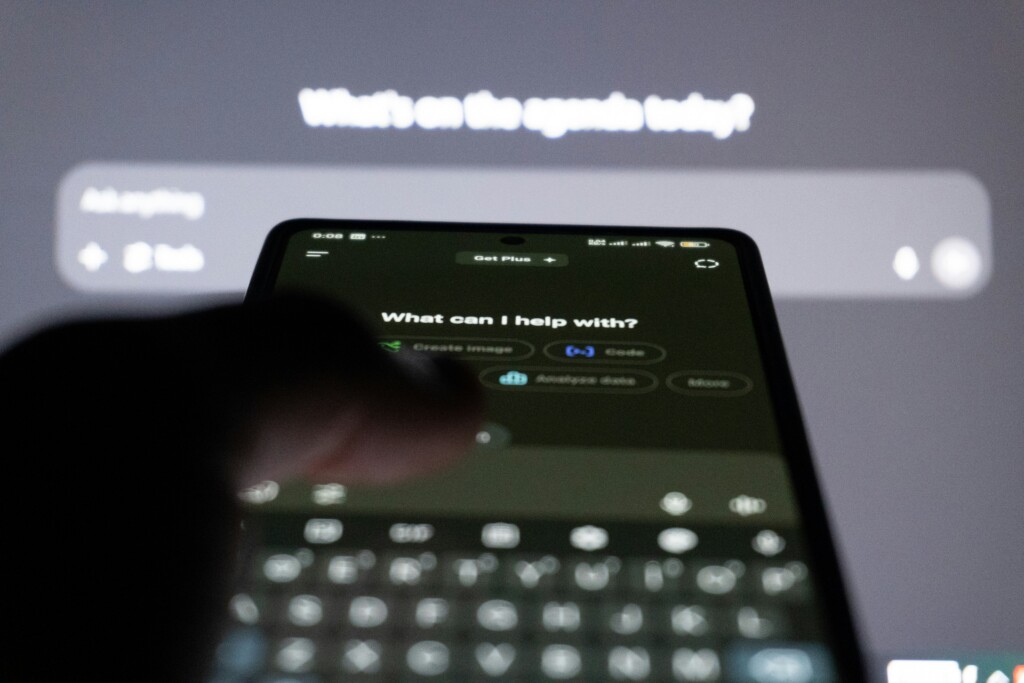
Are We Educating Intellectual Wrestlers? Not with Chat GPT  

Religious institutions of higher education often distinguish themselves from their secular counterparts in terms of something called “purpose.” Sometimes the idea is that the two kinds have different purposes; sometimes it’s that one is purposeful in a way that the other is not (as in the argument that “secular” means trying to be “neutral” between…
May 5, 2025
Blog

Seeing, and Understanding

“They came to Bethsaida, and some people brought a blind man and begged Jesus to touch him. He took the blind man by the hand and led him outside the village. When he had spit on the man’s eyes and put his hands on him, Jesus asked, ‘Do you see anything?’ He looked up and…
April 30, 2025