


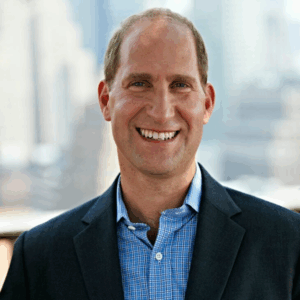
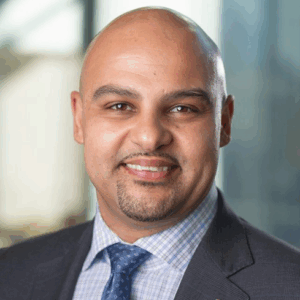
After the terrorist attack against Israel on October 7th, 2023, Simon Greer of Courageous Conversations pulled together a unique group of people from very different political and religious viewpoints for a 10-day trip to the region to engage diverse views surrounding this historic conflict. Tim Muehlhoff and Saad Solomon, a Muslim bridge-builder, were on that trip. We came together to reflect on perspective-taking amongst the three of us.
TIM MUEHLHOFF: Before we get to our trip to Israel after the terrorist attacks, lets define what we mean by bridge-building. Simon, might you give us a definition?
SIMON GREER: To me, bridge-building means crossing lines of difference, engaging with people who don’t see the world the same way you do, or who don’t understand it the same way as you. The goal for engaging them is try and solve problems. That’s bridge building.
Now, what I’ve seen sometimes is that people think I’m saying kumbaya, mushy middle, or watered down compromise. If Tim gives up his values and Saad gives up his and I give up on mine, we could all just get along, or if we just find our lowest common denominator: “Don’t all our traditions say love your neighbor? Isn’t that enough? We can just build some bridges!” I want to be clear right off, that’s not what I mean. I mean bipartisanship to find common ground to solve real problems. To me, bridge-building or pluralism, whatever you want to call it, is how you live together with people where you have deep disagreements.
TM: Simon, do you think today we are in danger of de-valuing perspective-taking?
SG: To be honest, I don’t know if we’ve ever valued it. Our history was written, some would say, by a relatively narrow set of the winners, and I don’t know how much they took other people’s perspectives in telling the story of our history or our humanity. I’m not sure we were ever that good at it. Having said that, I do agree it’s under assault today. If I know you’re the bad guys, why would I embody your perspective? If I’m afraid you’re going to cancel me or call me out or my team’s going to think I’m suspect because I took on your perspective, then I’m sure not going to do that. I’m going to mock your perspective; I’m going to caricature it. I think that’s a tragedy.
If I could give you one quick example which is close to home for you, Tim. The few times I’ve come to Biola as a non-Christian, I quickly learn the love of Jesus is a big deal for you. Can you imagine if when I arrive and hear you talking about the love of Jesus I responded: “I don’t really believe in that. That’s not my thing. Yeah, [Jesus] was a Jewish guy, but so what? Let’s move on?” You’d be like, “Okay. Let’s escort him off campus as quickly as he got here (laughing).”
The expectation isn’t that I would have to come to believe what you believe, but that I would step into your shoes and be like, “Wow, doesn’t the world look amazing from where they sit; from where Tim sits? Those guys, they live in this world that is so magical for them because of how they experience the world through their understanding of God, and I should take that seriously because it enhances my experience of life and my relationship with you all and those things matter a lot to me.” For me, there’s nothing more holy and more under assault than perspective-taking.
TM: Both of you had an unexpected opportunity to engage in perspective-taking with each other. Saad, can you explain?
SAAD SOLOMON: As the first formerly incarcerated person ever to be hired by the Department of Justice, I was asked to be part of a discussion with correctional officers, union leaders, and formerly incarcerated criminal justice reform advocates to engage each other about prison reform.
During our first dinner together, I meet Simon who is one of the facilitators, and we begin sharing stories. I don’t know how we got to the subject matter, but I shared that my father—Egyptian born—had lost three of his brothers, my uncles, in the Six-Day War between Israel and Egypt in 1967. There was silence from Simon. He then shared, “Well, it’s ironic because I remember that war as a source of great Jewish pride because my uncles served in that same war in ‘67, and I remember them posing in front of a picture of a captured Egyptian tank.” At that moment, when Simon shared that his uncles fought in the Six-Day War, I felt something shift inside me, not just intellectually, but spiritually.
I was standing at the intersection of pain and possibility. Here was someone whose story mirrored mine, but from the other side of the battlefield, literally. I could have stayed in the safety of my own narrative, nodded politely and moved on, but that would’ve been a betrayal of everything that I say I am as a bridge-builder. That fork in the road, it wasn’t about politics or history, it was about courage, and I chose to pursue Simon because I believe transformation for both of us happens not when we defend our wounds, but when we honor each other’s humanity. I didn’t see an opponent, I saw a partner in healing, and I’m so thankful that I chose that path because it’s enriched my life a hundredfold by just being Simon’s friend and being connected to Simon both professionally and personally.
TM: Simon, I’ve heard you share this story as well and you said when you heard of Saad’s family’s involvement, that you faced a fork in the road. Do you pursue Saad or not?
SG: Yeah, 100%. I remember we had this exchange I think it’s fair to say, that Saad’s Egyptian nationalism was put onto steroids because of losing his uncles. I of course knew my family story. Fighting that war was a source of pride in my family—in the shadow of the Holocaust, Jews could stand up and defend themselves. That mattered in my family’s story. I still have that picture of my uncles standing on a captured Egyptian tank up today in my office.
Literally, time stood still, and I ran through in my head all the reasons not to tell him. I’m here as the facilitator, we’re here to talk about criminal justice and this is a total distraction. There’s a lot of bridges you can cross, but this one, this is out of bounds. It felt like forever that I had all the reasons not to share, and I probably was holding my breath.
TM: Listening to you both tell this story reminds me of a crucial part of perspective-taking: courage. Courage to step into another person’s narrative. What pushed you over the edge to pursue each other?
SS: Well, there comes a time when you must practice what you preach. Hard to be a bridge-builder if you don’t ever pursue people on the other side. In the end, am I serious about this, really? When I’m asked to stretch myself by doing perspective-taking with diverse views, I often think of my daughter, Farah. What legacy would I as a father give to this young lady? In times of division, how do I want to act?
SG: Can two people find peace even when they have different narratives? If we’re ever going to find peace, I must at least be able to say, “Saad, I hung out in your shoes a little bit, I tried to sit in your perspective. While I do not accept it, I understand that this is deeply held for you and I’m taking it seriously. It’s not true for me, but I understand that you’re never going to let go of that truth so we have to figure out how to make peace where you can hold on to your truth and I can hold on to mine and we can still live here together.”
TM: The bridge-building that happened was not just between you both. Simon, after the October 7th, 2023 terrorist attack against Israel, you pulled together a unique group of people from very different political and religious viewpoints, and we went on a 10-day trip to the region to engage diverse views surrounding this historic conflict. When Simon approached me with this, he said something that really resonated with me. He said, “Listen, I want you to be there as an evangelical. Not one inch do I want you to water down your convictions.” That really stayed with me, because often evangelicals are not asked to be part of something like this, or if we are, we just feel like we’re muzzled. Simon, give us the background of how this trip originated?
SG: After the terrorist attack, I started making a list of who do I know who’s in the bridge-building world. Tim was high on that list along with Saad. I just started reaching out to people who were bridge-builders, and I didn’t know where they stood on these issues, but I thought, “This is a moment to say we’re not going to let other people drive this narrative about the conflict. I’m going to pull the people into it who I trust, who I think will know how to hold nuance and might have the courage to go.” That was late October, and I think we started meeting as a group in November, we convened in person one time, and then in February 2024 we were on the ground in Israel and the Palestinian territories all together.
TM: Before we go further, I want to highlight what some scholars call the ritual view of communication. Rather than just transmitting information, we seek to first start with our commonality. Saad, even though you and Simon have some different views of the Israel/Palestine conflict, talk about what you did right after you learned of the terrorist attack?
SS: Earlier, we talked about when Simon and I met at a retreat for criminal justice reform leaders where we learned of our family being on opposite sides of the Six-Day War. Two weeks later, the tragedy that occurred in Israel and Palestine with the terrorist attacks happened. I woke up and I saw that headline and immediately I reached out to Simon and just sent a quick note: “My thoughts and prayers are with you and your family. I hope everyone’s okay. If you need me for anything, feel free to reach out.”
Simon responds with this long email about how meaningful that was and how his world is so scary right now and his family [is scared], and he’s concerned and there’s just so much uncertainty, and it touched him deeply. A couple of weeks later, he reaches out and says, “I’m thinking about putting together a trip to Israel,” and I’m like, “Right now? Now?” Then I was like, “Sure, I would go.”
SG: Tim, I just want to add a little context here. Saad and I, as he said, met in September, and Saad’s uncles served in the Egyptian army and were killed in combat in 1967 fighting the Israeli army. My uncle served in the Israeli army. Imagine on October 7th, 2023, Hamas launches this brutal terrorist attack in Israel, and one of the first people to reach out to me is Saad whose uncles had been at war with my uncles. I don’t know, that’s enough to make your head spin right there. I was pretty touched by that.
TM: The ritual view grounds us in our commonality before we move on to transmitting differing and often conflicting information and facts.
SS: Yes, so important to recognize we’ve all lost loved ones.
TM: I want to dive into a couple of highlights from that trip that honestly were life-changing—and I don’t use that word loosely. Simon, are you not inviting chaos when you say to a diverse group of people with deep religious, political, and social differences, “I don’t want you to water down your convictions at all?” Is that not inviting absolute chaos and conflict for this 10-day trip?
SG: I don’t know if it’s inviting chaos; I think it’s inviting truth. What’s the alternative? Saying, “Hey Tim, why don’t you come on this trip and live in pretense with me for 10 days? Wouldn’t that be awesome? You could tell half-truths and pretend we are similar. Wouldn’t that be inspiring? Saad, maybe if you come and hold back what you really think, we could have a really great time together?” When I say it that way, it doesn’t actually make any sense, right? You have deeply held convictions, so wouldn’t you only want to take part if you could fully express your deeply held convictions? That doesn’t mean you got to be mean or attack people. When you invite someone to engage across lines of difference and you make it conditional, I think they’re more likely to act out.
TM: The very first time our group gathered was through Zoom. You started this meeting with something you’ve developed called The Invitation. Can you elaborate?
SG: It’s a four-part invitation, and like most of my work, it didn’t come from I would say a theoretical framework. Rather, it came out of practice and experimentation, and now it’s the anchor of how I think about this work. There are four couplets. The first one is we’re going to take seriously the things that others hold dear. If it matters to you, then it’ll matter to me. Second, we’re going to be curious what people think and why they do the things they do. We’re not going to try to change them, but we want to understand them. The third one is that we don’t think that we are diminished by hearing points of view that we disagree with, but rather, we think we’re enhanced by it. Finally, we believe there’s more common ground than we might expect. Even when there are fundamental disagreements, we can still respect and even love people. For me, these four couplets could be like a prayer, or a centering practice, that we keep coming back to as a way we want to engage with the world.
TM: While this invitation was crucial to our trip to a war zone, couldn’t it also be practically used with co-workers or family members?
SG: I think it does apply to my uncle who shows up at Thanksgiving dinner and my first thought is, “Let me sit at the other end of the table so I don’t have to deal with him.” Such a response is living in pretense and not honoring the sanctity of this soul sitting over there. I’ve kind of diminished myself and diminished him by running away from differences. What I should really do is say, “I want to sit next to my uncle no matter how hard it’s going to be.”
When my uncle says the thing that really just drives me up the wall, I could Google the alternative facts and counterpunch to him back on his heels. Or, I could say something like, “Can you tell me a little more about that?” to uncover his values. His response could be, “Well, I learned that from my dad and it really matters to me,” or “I read that in the Bible and that’s holy for me,” or “I’ve risked my life to defend that principle.” After hearing that, it wouldn’t be worth me trotting out my facts, would it? It’d be more valuable for me to say, “I really see it pretty differently and I tell you, the reason I see it this way is from this place, from this experience, from this journey because of this story.”
TM: That perfectly encapsulates the ritual view. Even in the midst of disagreement, I still recognize we are family, and we’ve had powerful experiences that shaped us.
SG: Instead of being like, “Oh, you’re one of them. You believe that thing? Well, I believe this thing. We have no common ground.” It’s more like, “Well, actually, can you make room in your imagination for why my view on this has developed?” If I trusted you, I could even admit that my view or conviction is not quite that crystal clear for me. Anyway, I hope that helps.
TM: That’s so powerful. Let’s talk about a moment from our trip that continues to stay with me. We had a unique opportunity to go to some of the iconic sites such as the Wailing Wall in Jerusalem. Right there is the Dome of the Rock, which is a holy site for both Muslims and Jews. Saad, can you explain a little bit the unique moment that happened where you as a Muslim could go into the Dome of the Rock, but Simon as a Jew you could not. Explain what was happening that day between the two of you.
SG: [laughter] You mean explain 2,000 years of theological, sociological, and political history?
SS: I’ll take a crack at it. The Dome of the Rock with its golden shimmer and ancient stone sits not just in the center of Jerusalem, but at the heart of two faiths with deep sacred lineages. For Muslims, it’s the site of the miraculous night journey where the Prophet Muhammad, peace be upon him, ascended to the heavens. It’s where heaven met earth and divine revelation for Muslims touched the heart of a man, and through him his entire community, the Ummah.
For Jews, and I have this written down, so I don’t mispronounce it, this is Har Habayit, the Temple Mount; the first and second temples. It’s where Abraham the Patriarch was tested, where the Holy of Holies once stood, the beating heart of Jewish worship and longing. I learned all this mostly from Simon. For millennia, Jews have been facing this spot in prayer.
SG: Preach, Saad, preach!
SS: When people ask why the Dome of the Rock matters, the answer isn’t political. Rather, it’s spiritual, it’s soul deep, it’s generational. Being there, it was a soul fulfillment moment for me, and I was there only through Simon’s bringing me there.
TM: Simon, the day we visited was a Muslim holiday. Why does that matter? Why can’t you go into the Dome of the Rock which equally has importance to Judaism?
SG: Yeah, it’s complicated, Tim. The Temple Mount complex, which Saad described its centrality to both traditions, is under the status quo agreement since 1967 between Israel, and we’ll say the Arab world in general, and the Jordanians specifically, through what’s called the Jerusalem Waqf—a Jordanian organization that controls access to the mosque, Temple Mount, and the Dome of the Rock. Only Muslims are allowed to pray up there at any time. Jews and Christians are allowed to visit as tourists, not as worshippers at times that are permitted by the Waqf, by the Jordanians. I want to be honest that not every young Muslim man who wants to enter the old city and go worship has an easy time doing it. That is one of the tragic outgrowths of the conflict, so let’s be blunt about that.
The thing for me, just personally speaking, my son for his bar mitzvah, his Torah portion, which is what he studied and interpreted as part of becoming a man in the Jewish tradition, was the binding of Isaac which happened at that spot. You can imagine, I’m in Israel, I’m in Jerusalem, I’m at the Western Wall, and I look over and there it is up on the Temple Mount there in the Dome of the Rock, the Al-Aqsa Mosque, Haram al-Sharif, however your tradition names it, and that’s the thing my son studied. Wouldn’t it be cool to go check it out? But, on this Muslim holiday I’m not allowed.
I’m not saying I have some divinely granted right that I should get to go that the Jordanians are violating. I’m just saying it’s a big part of my family’s story and my people’s story, and it seems like if we’re ever going to have peace there, Jews should get to go there too, and there should be a way that Muslims could still control access to that site. I’m not saying it must be taken from them, but it would be great if there’s a way that Jews and Christians could also express themselves up there without that seeming like a declaration of war, which is how it feels.
TM: Simon, after not being allowed to go in, you did a perspective-taking exercise that starts with the word imagine. I hope you remember this because well after the trip, I still remember it. You looked at us and you said, “Imagine the United States’s arch enemy, let’s say the Russians, conquer our country.”
SG: Yes, of course. However, some may view the hypothetical situation I’m about to present as mere propaganda, more than perspective-taking.
TM: Thanks for the disclaimer.
SG: What I said was, imagine you’re the United States and you’ve got a capital in Washington, you’ve got a White House, you’ve got the Washington Monument, and imagine the Soviet Union conquers the United States and takes over the country. A thousand years later, we get our country back and liberate it. Tim and Saad, good Americans, come to Washington DC and they want to go see the Lincoln Memorial, or the White House, which are now buried underground. It’s been a thousand years, they’re deep down.
For some strange reason, the Russians, though vanquished, still control access to those sites in Washington DC. Saad and Tim show the Russian guards their American passports, and say, “We’d like to go down and see those sites.” The soldiers respond, “No, you can’t go because they now sit under Red Square and Lenin’s tomb, which we built over the last 500 years.” No doubt, Saad and Tim would say, “Well, wait, this is our country now,” Their response? “No. Russia still controls these sites, and so no, not only can’t you go where the White House is, but you also can’t stand up here in Red Square and honor your tradition. You can come as tourists when we say you can, but you may not worship the thing down there and you can’t express any of your American patriotic values or traditions while you’re here because we still control this space.”
I think what I was trying to do was invite everyone on the trip to think about how weird that would feel for Americans because that might give the team some insight into how weird it felt for me as a Jewish person. I was inviting the team to do perspective-taking. I think the thing that I’m still questioning, Tim, is that it’s a pretty strong play on American patriotism and on the idea that the Russians took it from us as the Muslims are the arch enemies of the Jews, which I don’t want to believe, and that America would liberate that land like the Jews liberated it from the Muslims, which is kind of an aggressive posture. There’s a part of me that even as I recount it, I feel a little hesitation about whether, as I said, I was doing good propaganda, but was I really doing good perspective-taking and bridge building? Although I will admit that I think I did a nice job inviting people into a different perspective. Does that hesitation make sense to you?
TM: Yes. I walked away hearing your utter frustration at a deep level. It would be a crazy-maker for me. “Wait a minute. Even though you’re no longer controlling my country, I have to ask permission or go by your rules to see some of the most iconic parts of my American history?” I guess it could be debated the ins and outs of it, but what really happened was I stepped into your perspective and felt some of your emotions. Yes, there is a time to debate facts and history, but we should start with feeling the deep emotions attached to a person’s view. For a moment, I felt some of the frustration especially when you brought your son into it.
SS: I remember that exercise as well. I also remember Simon doing something even more powerful. After learning he couldn’t go in, Simon came up to me and said, “You should go pray.” Even in his disappointment and frustration, he was facilitating this journey for me, and it was so genuine and so sincere and so selfless. We hear the grief Simon experienced from being so close but not being able to go in or touch it, and yet, he’s thinking of my spiritual journey. It was a very powerful moment; one that I will never forget.
TM: We know from persuasion theory that when I put another community’s needs above my community’s needs, there’s this bond that is created that is really powerful. I’m not just looking out for my needs or the needs of my community 24/7. No, I’m also looking out for you and your needs. To me, that’s a clear expression of the Second Great Commandment to love our neighbors.
SG: What we are talking about, be it The Invitation or perspective-taking, isn’t just smarter politics. It’s how I want to live my life. This is how I want to be a father to my kids and the legacy I want to leave. I want people to see that Saad’s uncles and my uncles fought against each other in a war and yet, I’ve invited him to sleep in my home, next door in the bedroom across the hall from me and my wife and next door to my daughter, because I trust him and I love him.




















One Comment