

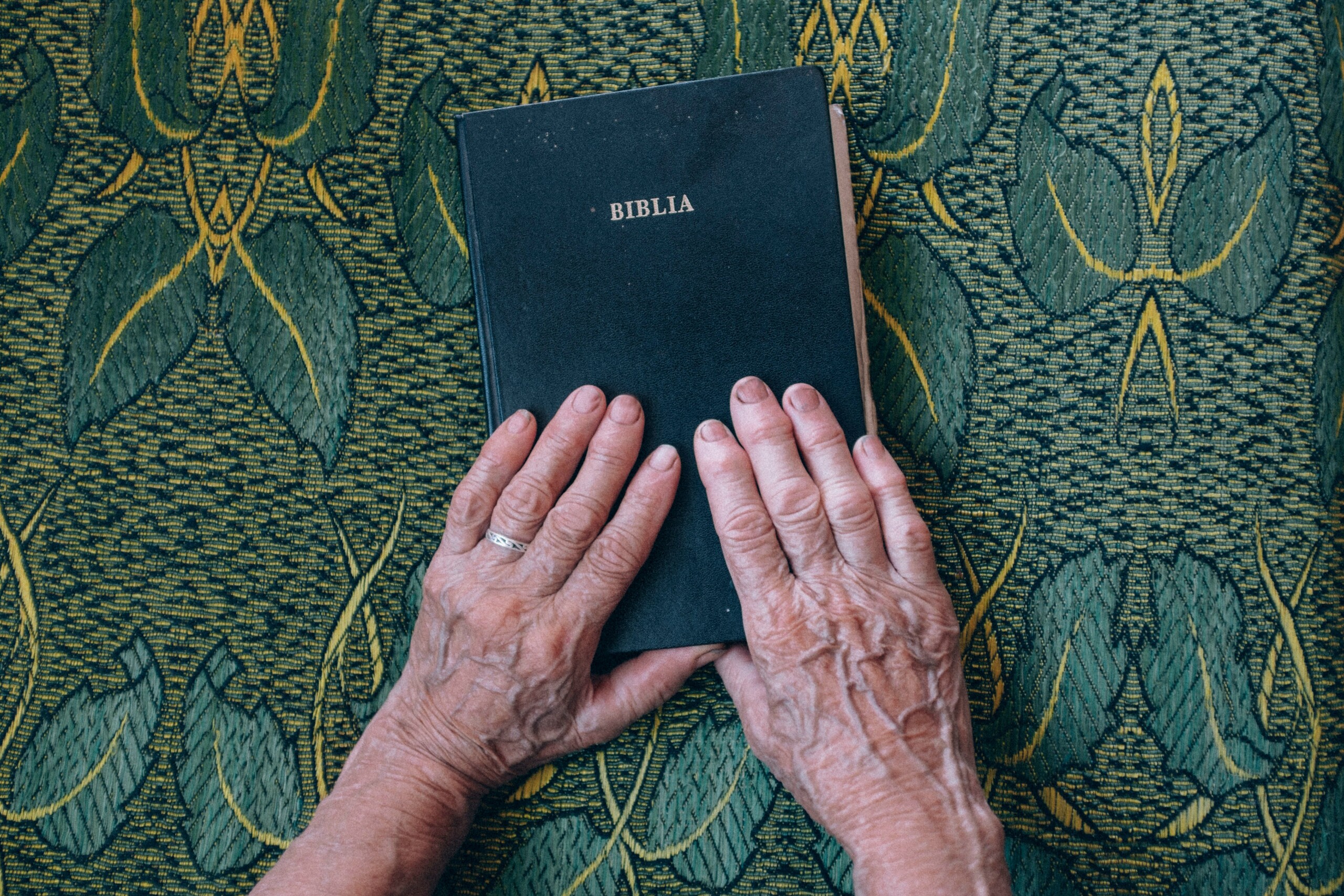
I turned eighty-four early in 2026. Eight-four years old. It is hard to believe. Indeed, I am still in denial about this.
We moved to a seniors’ complex in Waterloo, Ontario, one year ago, and this was the most difficult move of my life. I really felt that I didn’t belong here with all these old people. During the first few weeks of our stay, my wife and I attended a musical event at Luther Village, and I actually walked out after the first few minutes, leaving my poor wife, Maggie, behind. I just found it so depressing to see all the walkers and wheelchairs and people with white hair. So, I left and went for a walk, and soon felt a lot better. I am slowly getting used to walkers and wheelchairs and white hair, including my own.
I took early retirement from Medicine Hat College in Alberta, Canada, some twenty years ago. We moved back to Waterloo, where I had done my Ph.D. and started my teaching career many years earlier. During the early years of my retirement, I took great pride in describing myself as only semi-retired, because I was still doing quite a bit of writing and some part-time teaching. I had a new business card made for myself, which I didn’t really need because I was now retired. But I made it anyway, and I gave myself every competency I could think of – so desperate was I to hold on to my previous identity as a college professor.
My teaching career seems increasingly to be a mere blip in my life, even though it covered some thirty-eight years in total. I have already been semi-retired for twenty years. Now I am fully retired. The Lord willing, this segment of my life will soon equal the years I spent teaching philosophy. Now my career is aging, and trying to do this gracefully. And it is a challenge. I am repeatedly reminded of Psalm 39: “LORD, let me know my end and what is the measure of my days; let me know how fleeting my life is (vs. 4). I rather like the emphasis on “knowing” in this verse. Thankfully, one can still keep on learning as one grows older. Growing in my knowledge of God and the Bible and the world around me continues to be fulfilling.
Complicating the challenges of retirement and aging has been the decline of my wife’s health. This coincided roughly with our move to Luther Village. I found this very unexpected challenge hard to accept. In my recent reading of Michele Obama’s autobiography, I resonated with her writing about her father’s illness and death. “We were a family of planners, but now everything seemed unplanned.” Indeed, from a human point of view, life sometimes seems to be a matter of “time and chance” (Ecc 9:11). Thankfully, the writer of Ecclesiastes goes on to give us another perspective when he reminds us that it is God who has made both the days of prosperity and the days of adversity (7:14).
My wife’s physical and mental health problems brought about another major shift in what I do and my own identity. My job now is taking care of my wife and doing the shopping, cleaning, washing clothes, and learning to cook. All this has involved a steep learning curve for me, because we had a pretty well-defined division of labour in our marriage, and my role definitely didn’t include most of these things. Here, I have found it helpful to look at this change as a change of career. My full-time job now is caring for Maggie and keeping the household going. And this job can be just as meaningful as teaching philosophy at a college. I just need to look at this as a new calling, a new vocation, which I need to do to the glory of God.
My wife’s declining health and the need for me to remain healthy, coupled more generally with our aging, have made us realize anew our vulnerability and our dependence on God. And this is surely a good thing. We are all vulnerable and dependent on God, but we have trouble acknowledging this when we are younger and things are going well. When one recognizes one’s vulnerability, one clings to God who is unchanging, and to Jesus, who remains the same yesterday, today, and forever. I have also come to appreciate anew the unchanging truth of the Bible. It truly is a guide to the changes one experiences in life, and also a comfort in times of trouble.
Moving to Waterloo some twenty years ago also meant making new friends. Adjusting to a new church and new friends in the church isn’t easy, because one doesn’t know the history of these new friends. You have to keep asking how many children they have. And you haven’t seen their children grow up in the church or in the neighborhood, as we did in Medicine Hat, where we lived for 36 years. But here, another problem of aging comes to the fore. Since moving to Waterloo a number of male friends I was just getting to know better have died. And this is painful, another reminder of our vulnerability. One danger here is that one begins to be cautious in making new friends. What’s the use, if they are going to die soon anyway? Here I have had to remind myself of Jesus’ words: “Do not worry about tomorrow.” (Matt 6:34). Your friends are here for today – enjoy them today.
I have been particularly helped by two dear brothers who meet with me nearly once a month. All three of us are academics. What is rather noteworthy is that we represent three different generations. This intergenerational mix leads to rich discussions and helps me to realize that I am not entirely a relic of the past.
Another part of aging is, of course, adjusting to changing relationships with one’s children and grandchildren. Our children are now mature adults, sometimes seeming to catch up with us in age! Their thinking, too, has been evolving. We have had to navigate a whole range of changing theological stances in our children. One set of children has largely adhered to their parents’ orthodox and evangelical Christian stance. Another set has moved to a decidedly liberal theological stance. And our youngest son wouldn’t call himself a Christian.
It has been a challenge to navigate these differing religious orientations of our children. Mostly, we simply avoid talking about theology and religion. I’m not sure this is healthy, but that is where we seem to be at. It is difficult to discuss deep differences. But it is a loss. What is important is that we love them, and they love us. We have had to remind some of our children that we gave them the freedom to go their own way theologically, and so they need to give us the same freedom. Then there are our grandchildren, who display an array of lifestyles and religious beliefs. Again, we have had to navigate these differences, and again, respect them and love them for who they are.
Here, another dimension of our relationship to our children and grandchildren comes to the fore. We are becoming increasingly dependent on our children and grandchildren. They have been a huge support to us in our move and in our struggles with declining health. We have had to learn to accept this, and to simply say thank you, again and again. We also rely on our children increasingly for advice and counsel. Here, we have had to learn to humbly ask for their advice and counsel. Sometimes we wish they would ask us for advice!
As part of this growing dependence on our children, I have had to work at drawing up powers of attorney for finances and health. We have been very open with our children about our financial situation and our will. I have even given my children permission to tell me when they think I should no longer be driving a car. Whether I will submit to their advice when the time comes is, of course, another question! But we will face that problem when the time comes.
After reminding us that our life is short and full of “toil and trouble,” the Psalmist says: “So teach us to count our days that we may gain a wise heart” (Ps 90:9-12). This parallels the prayer in Psalm 39 quoted earlier: “LORD . . . let me know how fleeting my life is.” It seems that we need to learn that our lives are short and full of toil and trouble. Christ-animated learning and teaching does not only apply to academic disciples but also to the often very messy business of growing old.




















Elmer, thank you for writing this. It captures so much of the realities of aging. I have only been retired for 4 years but have already experienced a few of the things you mention. I have the privilege of leading a Bible Study for super seniors at a local assisted living facility where people are experiencing all of what you talk about. This group is full of amazing people who are still living and giving albeit differently. Unfortunately, in our churches today they are largely forgotten perhaps because no one on staff has experienced what it’s like to be this age and what the needs are. You have provided this understanding! I intend to pass this along to the staff at my church.
Thank you for this post. I recently retired early from teaching and you addressed a lot of things I’ve been thinking about.
Elmer,
Thank you very much for your thoughtful reflections on aging. We (my wife and I) are traveling this same road about 6 years behind you, but we recognize most of the dynamics you mention, in our own lives or in the lives of people we know. Your reflections, and their roots in Scripture are a source of deep encouragement.
I really appreciated your vulnerability in this reflection on ageing and life transitions. I am only in my 50s but it resonated in various ways, not least as I observe my mother tread a similar path. Thank you.
Thank you, Dr. Thiessen, for this enlightening personal account. A generous dose of humility seems to be the primary need at nearly every stage of life’s journey. Your essay reveals a humble spirit before God and man.
My dear Elmer . . . It is many years since we met, and quite a few since you honoured me by asking me to write a blurb for your “Ethics of Evangelism.” My wife drew this article to my attention, not knowing that we know each other, and I am grateful that she did. We are a little behind you in age, but not much, and are similarly coming to terms with being thought of as “old” and being expected to consort with all those white-haired old fogies. (Our 50 year old son shocked us recently by saying–very kindly–“Oh yes, I have elderly parents.” (Who on earth was he talking about???)
We are in process of downsizing, after 30 years in this house, and find ourselves looking for a smaller place where we would be content . . . even if (or, rather, when) it is only one of us.
Anyway, I appreciate your personal and theological reflection, which I take to heart. May you and Maggie have grace for every situation, whenever you need it and in whatever form you need it. (Maybe grace is like water–it takes the shape of the container in which you put it, and flows to the lowest point. Hmm.)
Every blessing!
John