

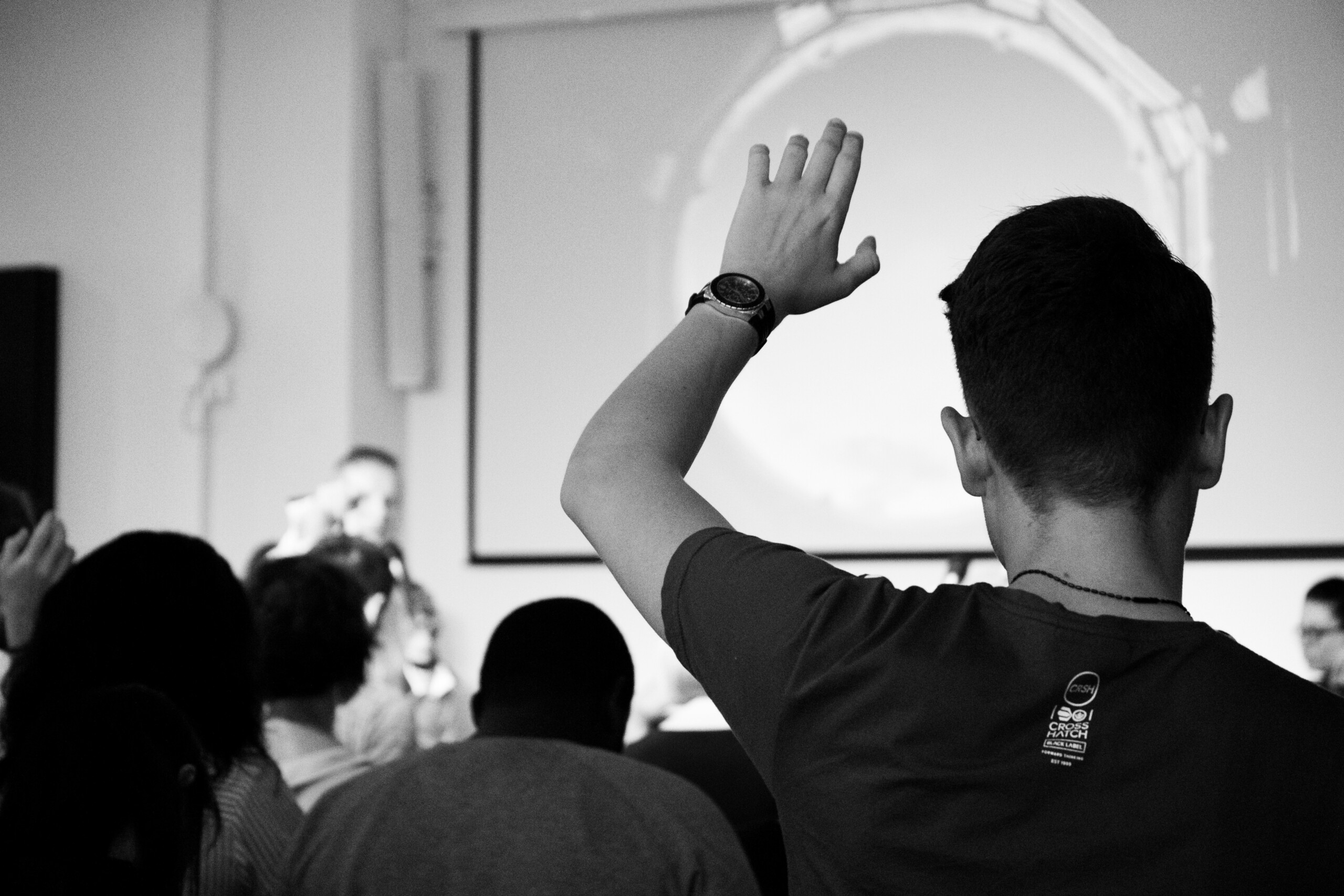
The conversation began, as it often does, with conviction.
In my undergraduate criminal justice classroom, we were discussing the death penalty. One student spoke with certainty about justice as retribution—grounded, she explained, in her understanding of Scripture. Across the room, another student responded just as firmly, articulating a vision of justice rooted in restoration, also grounded in his faith. Both students were thoughtful. Both were sincere. And both believed their position reflected a faithful Christian response.
Moments like this are not rare in my classroom; they are the norm. And they raise an important question for those of us in Christian higher education: What does it mean to cultivate a learning environment where deep disagreement exists, not in spite of faith, but because of it?
In her essay on campus climate and Christian scholarship,1 Kim S. Phipps describes Christian academic communities as spaces rooted in mutual care and flourishing. Central to this vision is what she calls intellectual hospitality—a posture of engaging others with care, openness, and a genuine willingness to learn, even (and especially) when we disagree. This is more than politeness; it is more than tolerating difference. Intellectual hospitality invites us to enter conversations with humility rather than defensiveness, to listen without prejudging, and to affirm the dignity and value of others as image-bearers of God. For those of us who believe in Imago Dei, this is not optional. If each person is created in the image of God, then our engagement with one another—especially in moments of disagreement—must reflect that sacred reality.
Yet Christian higher education faces a distinctive challenge. In many university settings, disagreements are often framed as political or ideological differences. In Christian institutions, however, disagreement frequently emerges from deeply held theological convictions. Students are not simply debating opinions—they are wrestling with what they believe faithfulness requires. This raises the stakes. In my discipline, these tensions surface regularly: Is justice best understood through punishment or restoration? How should Christians think about the death penalty? What is the faithful response to immigration enforcement, policing, or systemic injustice? These are not abstract questions. They are lived, urgent, and often emotionally charged. Increasingly, they are unfolding within a broader cultural moment marked by polarization, public distrust, and visible conflict across institutions, including the criminal justice system itself. This is what makes the present moment particularly potent and poignant. Our students are not only observing these tensions—they are being formed within them.
For some, the idea of intellectual hospitality may feel unsettling. There is a concern, understandably so, that openness to multiple perspectives could dilute commitment to truth. If we hold a biblical worldview, shouldn’t that provide clarity rather than ambiguity? Doesn’t flourishing come from alignment with truth, rather than engagement with competing views? These are important questions. But intellectual hospitality is not about abandoning conviction. It is about how we hold and live out those convictions in community. It is possible to be deeply rooted in one’s beliefs while also remaining open, curious, and humble in the presence of others. In fact, Christian tradition calls us to both: to pursue truth and to love our neighbor. Intellectual hospitality, then, is not a compromise of faith—it is an expression of it.
What I have witnessed in my classroom is this: when intellectual hospitality is practiced well, something shifts. Students begin to ask better questions, listen more deeply, recognize the complexity of moral and social issues, and see one another not as opponents, but as fellow learners. This does not erase disagreement, nor should it. But it creates the conditions for something deeper than agreement—it creates the conditions for formation. Perhaps this is where flourishing truly takes root, not in uniformity of thought, but in a shared commitment to engage one another with truth, humility, and love.
While these dynamics are especially visible in fields like criminal justice, they are not confined to them. Wherever students are grappling with complex questions—ethics in business, identity in the humanities, scientific responsibility, political life—similar tensions are present. The question, then, is not whether disagreement will emerge. The question is how we, as Christian educators, will respond. Will we retreat into certainty that silences dialogue, or will we cultivate spaces where conviction and curiosity coexist?
Christian higher education has the opportunity and responsibility to model something different. Not simply academic excellence, nor simply moral clarity – but also a community marked by mutual care, faithful inquiry, and a commitment to the flourishing of all. In a time when division often solely or primarily defines our discourse, intellectual hospitality offers another way forward. A way that is not weaker, but deeper. Not less faithful, but more fully aligned with the call to love our neighbor—even, and perhaps especially, when we disagree.
- Phipps, Kim S. “Epilogue: Campus Climate and Christian Scholarship.” Scholarship and Christian Faith, Oxford University Press, edited by Douglas Jacobsen and Rhonda Hustedt Jacobsen, 2004, pp. 171-183. ↩︎




















Thanks for the reminder and articulation for a main reason why I continue to serve at Messiah – intellectual hospitality!
Thank you, Dr. Waltman, for reminding us that Christian higher education should look different and that we need to share our stories with potential students that we are different. Our university is currently engaging in the topic of civil discourse for our quality enhancement plan. You articulate well many of the conversations that are happening around this initiative.
Your reflection is rich and true, and an important reminder about intellectual hospitality. I believe this would become more commonplace if each of us would genuinely model faithful thinking, with our perspectives grounded in biblical and theological convictions. Even among Christian colleagues, whether at our own institutions or in collaborative settings, it often appears that our opinions are more politically or ideologically driven than faithfully informed positions. This can be a challenge to charitable listening, resulting in the uncomfortable “silenced dialogue”. From this perspective, your article is also a crucial exhortation for each of us to test our personal convictions in light of truth.