

(The following is an excerpt from the author’s new book, Church Beautiful: Sacred Art and Spiritual Healing, available now from Cascade.)
Finding What’s Missing
We live in a broken culture. Levels of distrust and anger are high. Among young people, especially, clinical depression and anxiety are woefully common. Patterns of self-isolation – the deliberate “checking out” from community life – are on the rise, as evidenced by thousands of struggling churches and civic organizations. Though we may be comfortable on the outside, many of us are suffering on the inside.
Yet amidst our suffering, we clamor for the liturgical, even sacred, experiences hidden within secular culture. Disneyland and other theme parks host opulent secular liturgies aimed to sate our desires and alleviate our soul-suffering. Ceremonial occasions like lavish weddings, high school proms and fund-raising galas perform similar soul-healing functions (if only temporarily). And events like fan conventions, with their elaborate “cosplay,” attract more people than the largest national religious events. The year 2024, in fact, supplied proof of the dominance of secular pageantry: while San Diego’s famous Comic Con attracted 135,000 people to its annual gathering, the Catholic Church’s National Eucharistic Revival, in preparation for years, attracted less than 80,000.
Why are things like Comic Con and Disneyland so experientially powerful, often far overshadowing religious gatherings? I think one reason is because they leverage ancient liturgical and artistic rhythms better than many actual faith-based events. God created us to inhabit rhythms of worship that bring us into alignment with His movements and reflect His majesty in heaven. Theme parks, fan conventions and black-tie celebrations are the closest things some of us have to those ancient rhythms. That’s why they function, in a shadowy way, as balm to our souls.
Theme parks and conventions, however, are a poor substitute for the real worship God intended for us. This book, Church Beautiful: Sacred Art and Spiritual Healing, will reintroduce us to rhythms and postures that can heal us because they were meant for us from the beginning, and we were meant for them. These rhythms and postures are recorded in the marble, brick, wood, silk and gold of our ancient religious heritage.
Throughout history, temples, churches, statues, icons, and more have functioned as theology in three dimensions, “speaking” to parts of us that words can’t quite reach. Indeed, these aesthetic creations were taken for granted – that is, served as a kind of theological “background music” – for some of the greatest thinkers and mystics in the history of the Church, including the authors of the Bible themselves! By recovering the rich, contextual witness of these sacred forms, we can reclaim a deeper understanding of our holistic inheritance as children of God. Indeed, by recovering this rich, contextual witness, we can join generations of believers who through centuries of trial and error have effectively used aesthetic techniques to heal their souls. Every age of the world is broken, in its own way; sacred forms evolved to create the alignment necessary for spiritual healing – like the setting of broken bones. Our age has forgotten many of these sacred forms, but they can be reclaimed.
Biblical Artwork that Healed
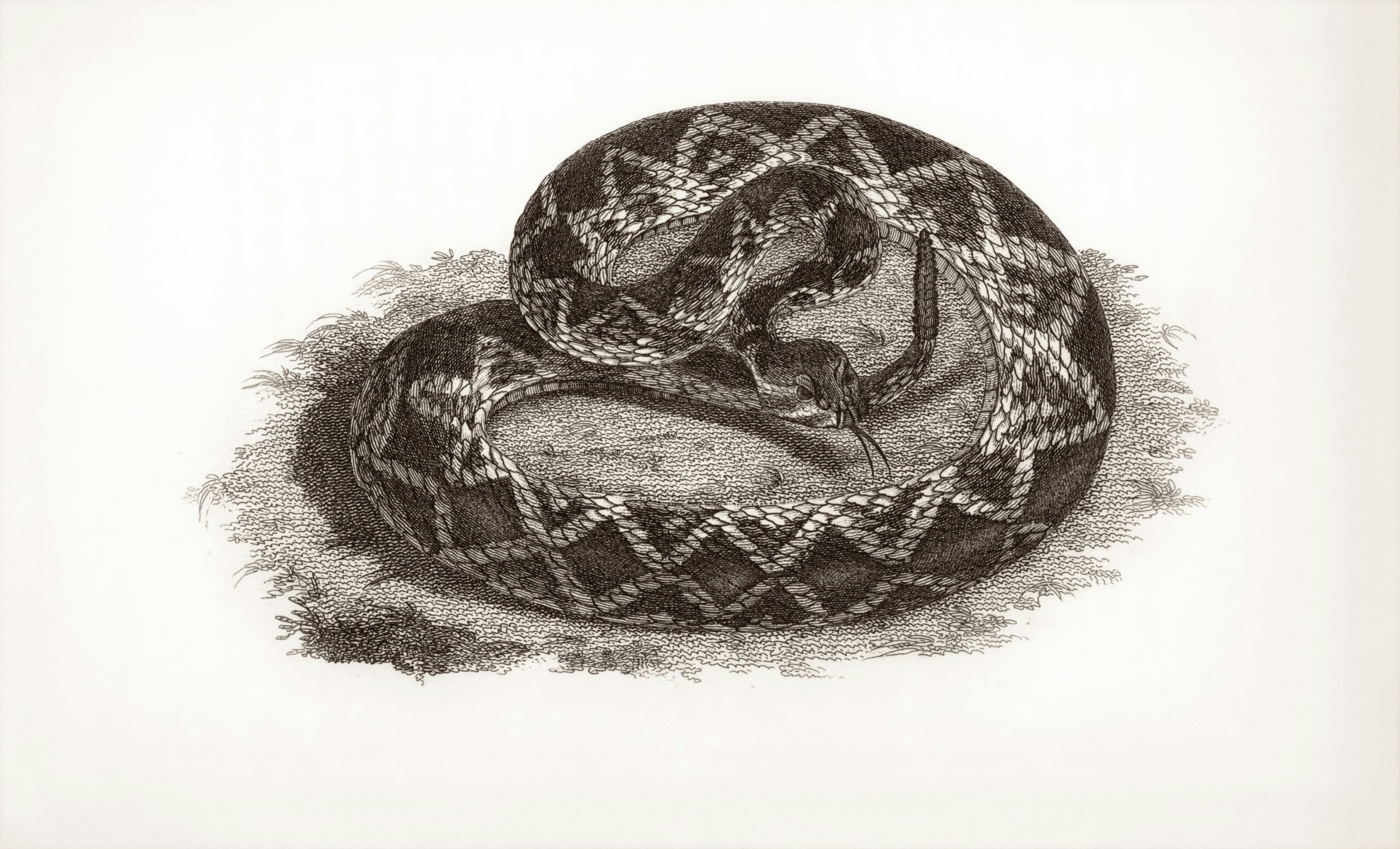
The right kind of sacred art is necessary to simultaneously heal our spirits, psyches and emotions. A very early example of healing through aesthetics is the biblical “brazen serpent” discussed in Numbers 21. Here, God commands Moses to make a sculpture that his people must “look upon” to “be healed.” The story is familiar: God’s people, wandering in the desert, complain and rebel, angry at God for bringing them out of Egypt. In response, God sends a plague of venomous snakes, and the people grovel in desperate repentance. Of course, God does agree to heal his people – but only after they have looked upon the sculpture He has commissioned. Why? Because, for true realignment to occur, verbal repentance is not enough – God’s people must also look upward at the source of their pain and then kneel. Their whole selves – mind, body, and spirit – must be brought into right relationship with the One who is Most High.
God commissioned the so-called “brazen serpent” because He knew His people needed more than verbal commands and explanations. He designed them that way! And our inborn need for aesthetic engagement is stamped throughout global cultural history. Centuries of human striving have left behind mysterious aesthetic objects of tremendous psychological power – objects that have stoked hatred and violence, yes, but also objects that have healed inner wounds, corrected misconceptions and opened the mind to the transcendent.
How does this aesthetic healing work? It works by placing viewers in physical relationship with important truths, forming total-body habits that can “trickle inward,” impacting the very core of the self. What does it mean to kneel before something majestic? What does it mean to climb toward something both literally and figuratively “high”? How can a meditative focus on beauty shape us to be more serenely disciplined and therefore more spiritually free? Objects like the Brazen Serpent begin to teach us how.
A Culture of Dissection
Recent events, however, have compromised the progress of healing through liturgy and art. (And as a historian, when I say “recent,” I mean in the last few centuries!) In the 19th century, for example, many traditional lifeways were dissected by imperial governments, cultural theorists and profit-seeking entrepreneurs eager to commoditize the emotional effects of these global art forms in ways that evaded sticky cultural complexities. Accordingly, institutions like art museums and natural history museums were born; here, traditional objects were decontextualized and showcased for their unique design choices or “scientific” distinctiveness. Alongside this new museum-industrial complex, cultural movements called “Aestheticism” and “Eclecticism,” respectively, made decontextualization into a virtue, encouraging consumers to privately sample and enjoy – without pangs of conscience! – powerful objects originally made for a wide range of deeply sacred and emotionally profound purposes.
What were the implications of this cultural commodification, practically speaking? It meant that in rural Italy, down-on-their luck country churches were forced to sell their precious altarpieces (the most sacred paintings in their sanctuaries) to American millionaires, to be enjoyed in private drawing rooms. It meant that in Benin, Africa, thousands of ancestral objects were looted by British soldiers and distributed among the flea markets of continental Europe, to be consumed as mere bric-a-brac. And it meant that in New York City, John D. Rockefeller could sponsor the famous Cloisters Museum, a cultural showcase built from the stones of deconsecrated and dismantled monasteries shipped across the Atlantic! This trade in sacred objects, along with the cultural ideology that supported it, did much to destroy surviving rhythms of reverence and worship across the world. But the call of deep, authentic liturgy and beauty is undeniable. That’s why “eclectic” places like Disneyland, in which many of the “old things” are copied and reconvened as entertainment, have such power today.
Thankfully, all is not lost. As our emerging global culture forges ties of sympathy across national boundaries, patterns emerge. We begin to notice and experience universal aesthetic expressions of spirituality, reaching back to the dawn of human civilization (e.g. High Places, Pilgrimage Roads, and Icons, as will be discussed in the chapters of this book). Furthermore, we begin to recognize that many of these expressions have found their fulfillment in the ancient Christian liturgies; for Christian believers, a wealth of healing tools are just waiting to be rediscovered in our own cultural backyard! This book aims to trace such reverential expressions, which together unfold into a rich Christian anthropology that, under the sign of the Incarnation, affirms the complexity of our embodied existence and contextualizes millennia of religious culture as the natural effect of total-body immersion in God’s beautiful, enchanted Creation. This total-body immersion is ours to joyfully reclaim.
Church Beautiful: Sacred Art and Spiritual Healing is available in paperback, ebook and Kindle formats Click here to learn more:. Church Beautiful- Wipf and Stock Publishers















Katie,
Congratulations on the book! Your writing is as inspirational as it is informative. I’m sure the book will influence many toward understanding righteous beauty.
I appreciate your article and am intrigued by the book. It reminds me of Becoming by Beholding by Lanta Davis (2024), reviewed last year by Christian Scholar’s Review, for its exploration of how art and literature have the power to shape us.
We must be careful to remember, however, that literature, art, and liturgies can only direct our attention, not heal. The ultimately purpose of Christian art, literature, and liturgies is simply that – to direct our attention to God who alone can heal and save.
A fascinating and important extension we ought to note concerning the brazen serpent is found in 2 Kings 18. Hezekiah is commended not only for removing the oft-mentioned elements of pagan worship (the high places, sacred stones, and Asherah poles), but also for breaking that same bronze serpent Moses had made, because the Israelites had been burning incense to it.
The article here states that the book reintroduces “rhythms and postures that can heal us because they were meant for us from the beginning and we were meant for them.” In my view, this language indicates that we may be making a similar error to the Israelites in Hezekiah’s day: taking biblical images, rhythms, and postures, and finding our salvation in them rather than in the God to which they point. The purpose of the original bronze serpent was to foreshadow Christ (see John 3:14); it is the Jesus unto Whom we look that saves, not the bronze serpent or the image of the cross.
I share your concern that Disneyland and Comic Con draw more people than religious gatherings. In a desire to draw people into the church and spiritual revival, let us not measure faithfulness by the ability to capture attention. How can we ensure that people are meeting God Himself? That is the most “experientially powerful” part of worship and a glorious expression of the beauty of the Gospel, that sinners are reconciled to their Creator, Redeemer, and Lord.
Hello Lennart! Thanks for reading this post. I completely agree with you that cultural objects like the ones discussed here – even cultural objects whose making was commanded by God! – run the risk of becoming idols. Any time our gaze stops with the object, instead of using the object as a passage to the divine, we have begun to abuse a good tool, and the tool may need (situationally) to be discarded.
The answer, however, is not to discard all risky tools from the outset, as some would argue. (And I’m not saying you’re arguing that!) In fact, everything is on Earth susceptible to becoming an idol! Instead, we need to exercise discernment about how to properly interact with the whole complement of beautiful, expressive tools the Lord has given us. This book is about achieving that discernment – or at least, beginning to. The healing that results amounts to a full(er) activation of our human nature, such that squashed, repressed or misunderstood energies can flow properly. Some ancient Christian traditions offer us templates for how to peacefully reclaim these parts of our human nature without lapsing into idolatry.
As my book argues, all creation, including all human gifts and talents, are communications from God about Himself. When we receive them properly, we are able to know God in a deeper way and receive the fullness, healing, joy and richness He intends for us. God takes all things and baptizes them, claiming them for His kingdom. He character is not to destroy, but to redeem, purify and transfigure. I hope this book can hint at how that redemption can take place within the realm of visual culture.
One more thing, Lennart – I like your phrase, “art and liturgies can only direct our attention, not heal.” And to an extent I agree. Perhaps, in fact, it comes down to semantics! because I think that “directing our attention” properly IS actually a kind of healing. It’s a way of massaging “bent” or “twisted” energies in the right direction so that they can receive true grace and light. (And folks today have so many “bent” and “twisted” energies!) But again, we must exercise careful discernment in that regard – because it IS risky, and certain cultural objects, when abused, can do the opposite of restore and heal! Thanks again for your thoughtful comment.