

Recently, Tamar Shirinian, a University of Tennessee assistant professor of cultural anthropology, filed a lawsuit against the UT administration, contesting termination over social media posts about the assassination of Charlie Kirk.1 She is not the only faculty member pursuing legal action. Each case invites a thoughtful debate about free speech and ideological diversity, but this essay asks a different question: What happened in our culture that death no longer quiets us or even briefly unites us?
Our collective mood is sad and angry, but not sorrowful, for sorrow makes room for silence, and silent we cannot be, not even in the presence of death. For centuries, the rule De mortuis nil nisi bonum (“say nothing but good of the dead”) governed public speech. The old restraint has vanished from public life, and with it, one of the last bonds of our culture.
The wisdom of antiquity reflected the rules of discourse. Oratory and dialogue presupposed presence, response, and the hope of persuasion—none possible for the dead. To speak ill of them was, in a sense, to violate those very rules. The seventeenth-century Bible scholar Matthew Henry recalled the Latin saying as he reflected on David’s tender lament for King Saul (2 Samuel 1), honoring his dead rival and being silent about his faults: “Let the blemish be hidden and a veil drawn over the deformity.”2
In Henry’s view, the old proverb reflected more than rhetorical etiquette. It reflected the virtue of charity that restrained vengeance and humanized even one’s enemies. For both the Greeks and the Hebrews, honoring the dead preserved communal harmony and acknowledged the limits of human judgment.
David’s ease in honoring his adversary sprang from a twofold awareness: seeing beyond himself—recognizing Saul as God’s anointed and part of a larger story—and knowing himself rightly, as a sinner. This eulogy did not alter historical memory. Scripture remembers Saul as a man whose life was a tragedy, and tragedy begets sorrow, not scorn.
Similarly, Abraham Lincoln refused to see enemies in the fallen in his Gettysburg Address. In keeping with the classical and biblical moral tradition, he recognized that death ended the dispute. We are no longer humbled by the gravity of death; instead, we feel compelled to “talk back” with an adolescent mix of defiance and urgency. Death does not have the last word; our comments on X or a TikTok video do.
While the standards of public discourse have reached an all-time low across the ideological spectrum, reactions to Charlie Kirk’s assassination marked a new normal. Phillip Dolitsky has recently written about the role of social media in the dehumanization of the dead.3 Yet social media is more a facilitator than a cause – the screen reflects a deeper drama. His namesake, Philip Rieff, the late sociologist at the University of Pennsylvania, would likely have seen our rage toward the dead (an extension of our rage toward the living) as the consequence of the triumph of therapeutic culture. It is an unsettling conclusion, for what could seem more humane than the therapeutic, or more likely to cultivate kindness and respect, especially toward those who died?
In this 1966 classic, The Triumph of the Therapeutic, Rieff showed how Western civilization has passed through a succession of moral orders, each defined by the authority that shapes our shared sense of self and our moral imagination.4 The political man of antiquity sought virtue through self-mastery and service to the polis; the religious man of Christianity found communion with God and others through divine grace; the rational or economic man of the Enlightenment trusted reason to lift him from ignorance and misery.
“Americans,” Rieff observed, “no longer model themselves after Christians or Greeks.”5 The modern West has replaced transcendent models of personhood with a therapeutic one. From the ruins of moral and religious orders emerged a new self: the psychological or therapeutic man, whose highest good is neither virtue nor salvation but well-being. America proved uniquely receptive to a worldview centered on identity and self-definition, pursuing, as Rieff put it, “an infinite variety of wants raised to the status of needs.”6
Whereas earlier archetypes reconciled the self to the world through moral alignment, the therapeutic self seeks to reconcile the world to itself through affirmation. Authority has migrated inward as old institutions lose power. In this new order, affirmation replaces formation as culture’s chief expectation, and community itself becomes a mirror adjusted to reflect the individual’s conception of it. Earlier cultures built moral scaffolds through family, church, school, and state; the therapeutic order has no such scaffolds, except for its insistence on love, as it understands it. Salvation is reimagined as liberation from anything or anyone that threatens authenticity, the cardinal virtue of this age.
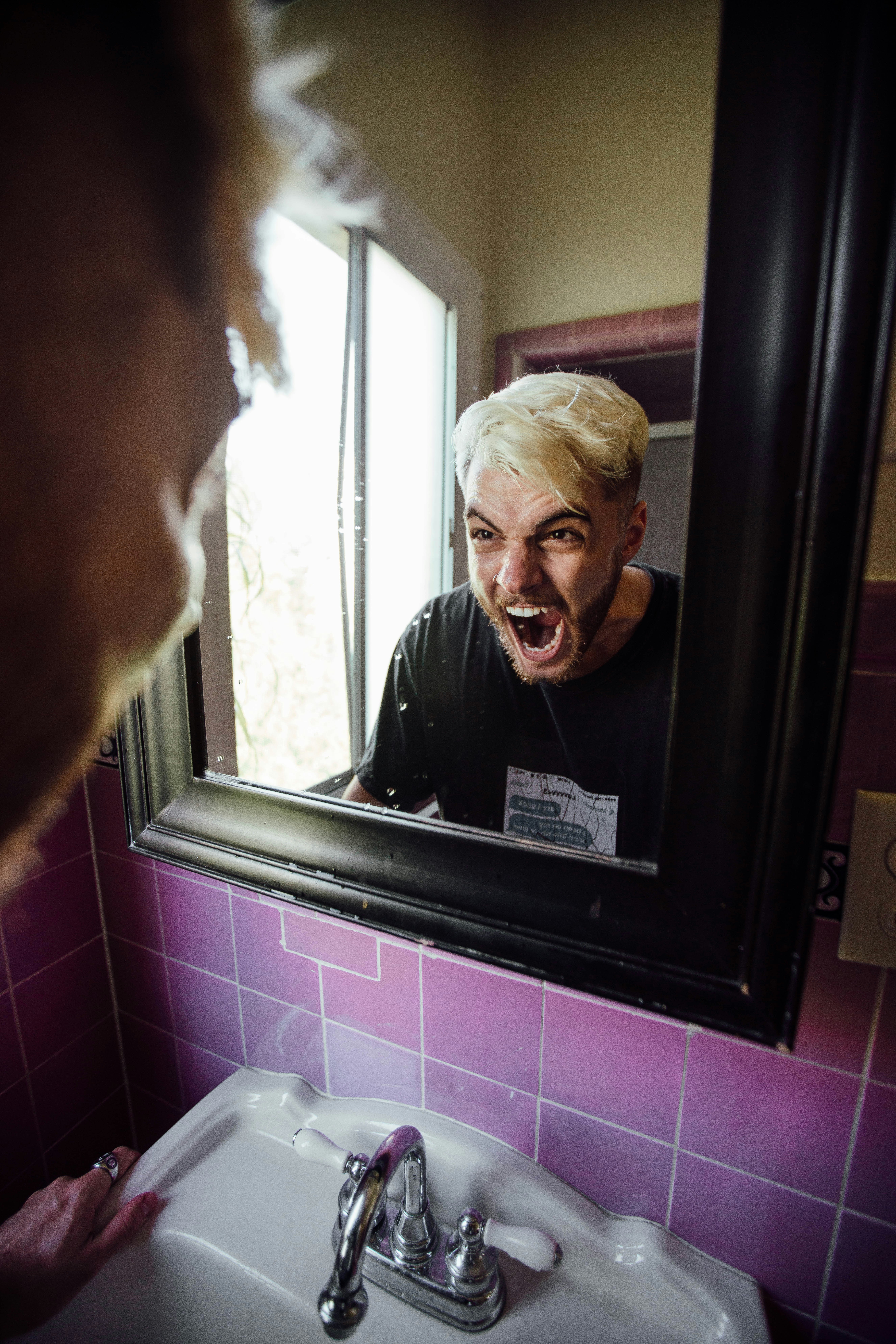
Without external sources of value, emotion becomes the most persuasive material from which meaning is made. When emotion is detached from any transcendent reference and becomes our only guide, it dictates swift judgment—a peculiar fusion of moral certainty and emotional injury, a kind of therapeutic rage.
Difference of opinion no longer produces intellectual disagreement but existential threat: a different view injures my personhood. And when personhood is wounded, it strikes back—whether through a cruel tweet or a silent cancellation.
Or a bullet.
In the days following Kirk’s assassination, Jonathan Haidt wrote on X, “We must repudiate the idea that speech can be violence.” I fear it is too late; the moral imagination has been rewired. Generations have been formed to wage a holy war in defense of the therapeutic self. Had Rieff written his book today, he might have called it The Tyranny—or perhaps The Terror of the Therapeutic.
I am mindful that while Rieff can help us see our unraveling, his framework should not be absolutized. And it is an error to treat the therapeutic as an entirely partisan vulnerability. It is not confined to one ideology, although it has found a more natural home in movements that define freedom as self-expression. The therapeutic culture is the moral atmosphere of our day, the air we breathe, the books we read, the sermons we stream, the signs we plant in our front yards: so caring, and yet so inconsequential to our bank accounts. On either side of the ideological spectrum, reverence toward the dead has suffered. It is fitting to remember Justice Ruth Bader Ginsburg’s passing in 2020 and the immediate, opportunistic excitement at the prospect of appointing a conservative Justice, or the massive indifference that followed the slaying of Melissa and Mark Hortman, where apathy, no less than outrage, revealed the therapeutic impulse to regard only what concerns the self.
Another mistake would be to treat emotional well-being as suspect. Caring about mental health is not the problem; it is a good and necessary part of human flourishing. The problem arises only when emotional comfort becomes the highest good and begins to distort moral judgment. Similarly, struggles for justice and human dignity are deeply Christian, yet without a transcendent moral framework to guide them, even these efforts can become incoherent or drift into contradiction.
Even before Kirk’s death, I wondered about this shift in public discourse when John MacArthur and James Dobson passed away this summer. Their decades of study and ministry, nearly two hundred books between them and thousands of sermons and broadcasts, seemed to be run through the sieve of the therapeutic age, which allowed only their most countercultural or controversial views to surface.
When I asked why many Protestants lamented the death of Pope Francis but scorned MacArthur’s, someone offered a blunt explanation: “Because MacArthur was a misogynist jerk.” Yet Pope Francis held an even more restrictive view on women’s ordination, a stance solidified by last week’s papal commission vote against women deacons. His Holiness was perceived as kind; MacArthur, as harsh. By contrast, John Glass, friend and missionary pastor in Switzerland, posted this tribute: “All I can do is thank the Lord for having allowed me to know John MacArthur, not only as a great and influential expositor, but also as a kind, gracious, and gentle man.
Then, within hours of Dobson’s death, social media filled with voices denouncing his views. To his followers, he was a moral compass; to his critics, a relic of patriarchy’s cruelties. Someone wrote just one word, “Vermin.” Cruelty is now often the other side of empathy.
De mortuis nil nisi bonum.
Nah.
For the ancients, death ended rivalry; for us, resentment lives on.
My colleague Dan Haase often says, “Professors should profess.” So what should we profess in this morally fragmented age? Civility, humility, and charity, yes, but above all the gospel, as Paul put it in 1 Timothy 1:15, “Christ Jesus came into the world to save sinners, of whom I am the foremost.” Jesus—not death, and not the hurt or rage that rises in any of us—is our last word. He is the perfect Judge and the perfect Mercy. Fittingly for a Christian lament, this reflection ends in another mood, as sorrow gives way to the joy of the new dawn.
Footnotes
- Keenan Thomas, “Tamar Shirinian Sues University of Tennessee for Suspending Her after Charlie Kirk Comment,” Knoxville News Sentinel, October 30, 2025, https://www.knoxnews.com/story/news/education/2025/10/30/professor-sues-university-of-tennessee-over-charlie-kirk-comment-suspension/86950647007/
- Matthew Henry, Matthew Henry’s Complete Commentary on the Bible, “2 Samuel 1,” https://www.biblestudytools.com/commentaries/matthew-henry-complete/2-samuel/1.html
- Phillip Dolitsky, “Rot at the Core: Death, Social Media and the Collapse of the American Soul,” Public Discourse, October 2, 2025, https://www.thepublicdiscourse.com/2025/10/99076/
- Philip Rieff, The Triumph of the Therapeutic: Uses of Faith after Freud (New York: Harper Torchbooks, 1968).
- Rieff, The Triumph of the Therapeutic, 58.
- Rieff, The Triumph of the Therapeutic, 17.
















Thank you for such a thoughtful piece. After the death of Kirk, we decided not to do a segment on our podcast offering the good and troubling aspects of Charlie’s communication approach, but rather, to take time to lament. Your essay is such a validation of our decision–even when so many were asking why we didn’t comment. Thank you.
By the way, would love to have you on Biola’s Winsome Conviction Podcast to discuss your essay:)
Hi Tim! I understand the dilemma – to comment or not – and the decision that was made. I would love to look more closely into your good work with the podcast and the opportunity to collaborate. Thank you!
Thank you!
Thank you, Olga. As someone once said, “Let any one of you who is without sin be the one to cast the first stone…” But I see where the issues presented are frightening and may be seen to require therapy. When self-defined well-being encounters someone or something that declares the ideas or beliefs of me to be wrong, the implication is that the me is “wrong”. Given this perceived threat of an external altering the self-defined me, the fight or flight responses of the soul signify a fear of the potential destruction of Desein, therefore the destruction of the self-defined well-being. Frightening stuff that leads to a reaction!
Hi Geoff! It is great to hear from my friends in Australia. Yes, I agree with your thoughts about the reasons behind the fight-or-flight responses, but I also see how these dynamics are reinforced and amplified at a collective level.
Hi Geoff. Excited to hear from my friend in Australia! I am also wondering about how this dynamic operates at a collective level and how communities, institutions, and cultures begin to share and reinforce these fight-or-flight responses.