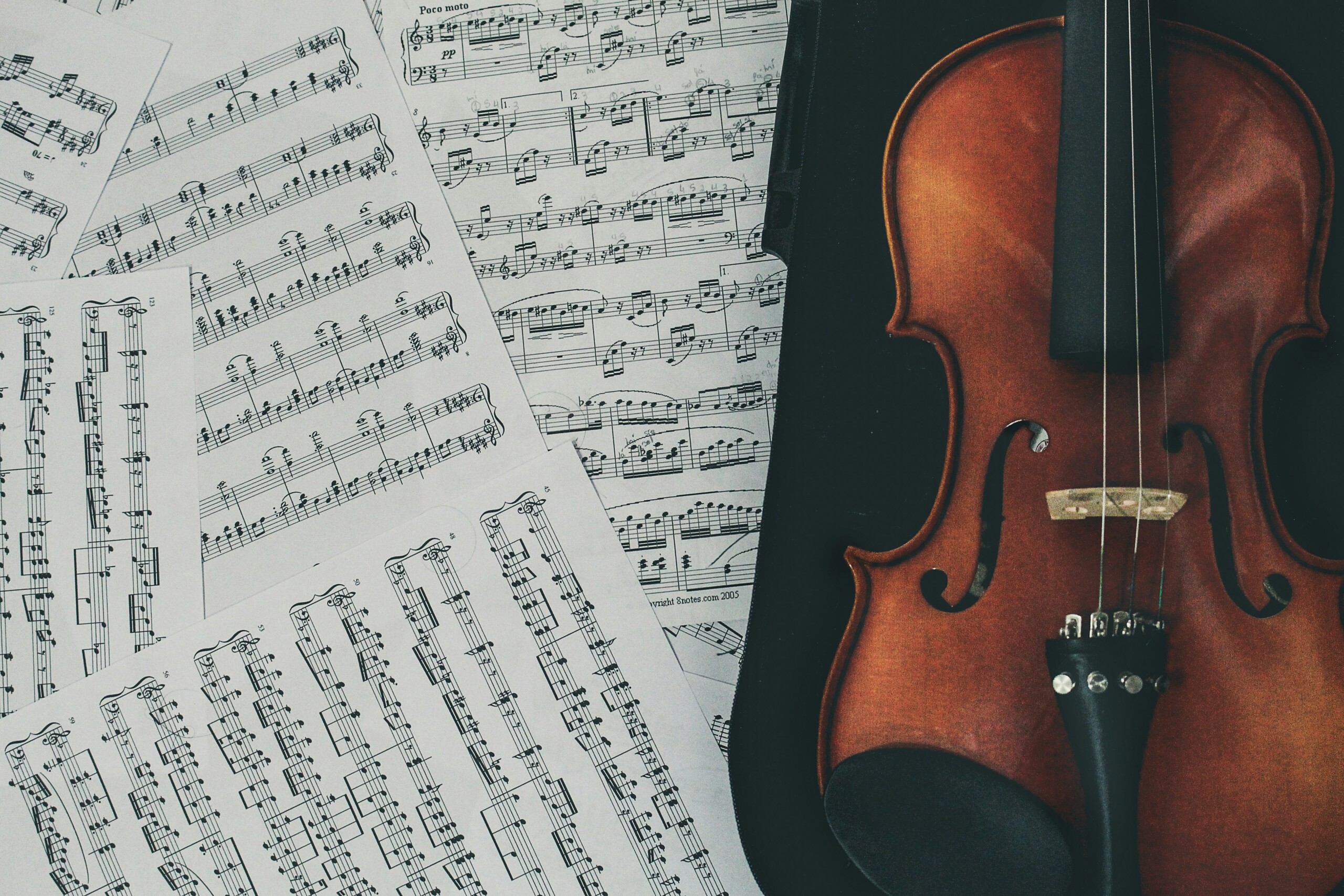
Many colleges and universities, within the CCCU and without, continue to be faced with difficult questions regarding which academic programs to retain and which to “consolidate.” There are an incredible number of factors that inform each of these considerations, and I do not covet those who are tasked with the corresponding decisions. It is often the case, though, that budget deficits and enrollment patterns are the chief motivators for the “sunsetting”1 of a program, and it is becoming increasingly common for music majors and departments to be first among those candidates for discontinuation.2 In light of the vital role music has had in the history of the liberal arts, these cuts have caused me to wonder: are we expecting to keep the body alive by first removing the soul?
In The Idea of a University, John Henry Newman offers a vision for the university that hinges upon the organization of the “disciplines”3 such that they can only rightly function if fundamentally ordered in relation to the primacy of Theology. This is because, in his estimation, “All that is good, all that is true, all that is beautiful, all that is beneficent, be it great or small, be it perfect or fragmentary, natural as well as supernatural, moral as well as material, comes from Him.”4 As such, if one dismantles Theology, it is not only Theology that is lost. Rather, each of the other disciplines becomes warped, taking what has been forfeited. The result is the following pattern: “[All disciplines thus have] their own department, and, in going out of it, [they] attempt to do what they really cannot do; and that the more mischievously, because they do teach what in its place is true, though when out of its place, perverted or carried to excess, it is not true.”5 It seems that truth, in its nature and substance, cannot be effectively communicated when it has been first severed from its ontological source.6
Even as Newman emphasizes the primary role of Theology, he also appeals to the way in which each of the different branches of knowledge “hang together, [so] that none can be neglected without prejudice to the perfection of the rest.”7 One might then conclude that music ought to maintain its position due to the greater order established by this paradigm. In Newman’s consideration, however, music is not merely another discipline that must be balanced with the others—all in right relation to Theology. Rather, it occupies a unique role, serving as one of the “high ministers of the Beautiful and the Noble”—a “special attendant and handmaid of Religion.”8
This role suits music, in part because of music’s tendency to become self-serving if it is not functioning in this ministrative capacity.9 However, this framework also recalls a much older conception of music that regards it as utterly essential for the education of man—a species of education that is aimed not simply at career preparation or intellectual prowess, but one that is instead marked by the cultivation of a soulish capacity for becoming sensitive to, knowing, and rightly enjoying the good.
Given this, the increasing discontinuation of music as an area of study is ironic, especially as many colleges and universities are endeavoring to resuscitate the liberal arts to varying degrees.10 This paradox, however, invites us to consider three of the tasks for which music is uniquely fitted.
In Augustine’s De ordine (The Order that Exists within the Disciplines), Augustine asserts that music is uniquely positioned to instruct us because of the way it first invites us to attend to it. Our attraction to it is the expected response to its delectability, or sweetness.11 As such, it collaborates with our desire to experience pleasure, thereby facilitating an earnest process of learning.
Music is not, however, simply sweet for its own sake. If it were, this would result in the movement toward self-servitude described by Newman. The qualities that render it attractive are intended to invite the learner to consider truth as it is presented in other disciplines. Due to its nature as unseen—but material—sound substance, it makes many principles put forth in other disciplines easier to understand.12 It exemplifies the nature of particularity, insofar as it is comprised of particular, demarcated figures (both visually and sonically) that are delineated from inchoate and infinite sound. It teaches about the relationship between things. It gives instruction regarding the nature of motion and communication, constituting a bridge between itself and areas of study like astronomy and rhetoric.13 The regular employment of music to exemplify such principles was expected in the medieval mind and has been a tool consistently deployed by philosophers for centuries.
Theologians, too, have known music’s educative power. St. Ignatius famously described a vision wherein he realized the Trinity could better understood by way of a musical triad. He reflected on his own experience in the following:
He used to have great devotion to the Most Holy Trinity, and so used to pray each day to the three persons separately…One day, while praying… his understanding began to be raised up, in that he was seeing the Most Holy Trinity in the form of three keys on a keyboard, and this with so many tears and so many sobs that he could not control himself.14
Indeed, what other earthly tool is more capable of communicating what it means for the Son to be of one substance with the Father, and for three Persons to be one God? The chord, insofar as it is comprised of all three tones, is identifiable specifically because of this constitution. And yet, each tone is regarded as its own tone, not as a “partial chord.” When apprehending such a chord, we believe something can be simultaneously three and one because we experience the reality of it. (And we often regard this sound as beautiful!) For centuries, music has thus not only served as an aid to many of the other disciplines; more importantly, it has “prepared the way mentally for the study of…the nature of God.”15
The above example demonstrates that music ministers to our understanding both because of its nature and because of our own. When we apprehend music, we learn not only through our intellect but through our experience. In considering the nature of “experience,” though, it is vital to realize that much of our contemporary musical experience—through the vehicle of a pair of ear buds and the immediacy of a streaming service that engenders isolation—is vastly different than an older, common experience of one who sings the very things he is learning (often together with others). The latter might be best exemplified in the church service, and historically in the mass, where one does simply hear music, but participates through song in different modes of prayer.16 By way of our experience, music instructs us and cultivates patterns of devotion that ultimately shape the contours of our soul.
Around the time of his conversion, Augustine composed his treatise on Music (De musica), which was originally intended to be part of a larger series of writings on the liberal arts.17 This gets at a central end of education. We cannot live lives in pursuit of the good if we know what is right or beautiful, but do not have affection for it. Newman speaks to the profound effect one’s taste has on the habits that comprise one’s life. In his estimation, taste is central because it “governs” us: “Even conscience…such as is owing to religious discipline, will make but a slight figure, when this taste is set amiss.”18
Having considered several of music’s distinct merits, I must also admit that music itself suffers from acute over-specialization. There are goods that attend this; one hopes that excellent and virtuosic musical performance contributes to needed and vivid experiences of beauty. But the serious study of music has become the occupation of “music majors”—specialists who are relegated to a particular building that is filled with other specialists. Thus, even musicians—those who are equipped with many of the greatest tools for achieving understanding—don’t realize the power and nature of the substance they enjoy. In fact, many musicians consider themselves to be simply practitioners of music, rather than thinkers of thoughts—as if these two activities belong to two entirely different domains. This further contributes to the musical solipsism that results in its being regarded as merely ornamental. How, then, might we come to again recognize music as “the expression of ideas greater and more profound than any in the visible world, ideas, which centre indeed in Him…who is the seat of all beauty, order, and perfection”?19
Many of these tensions relate to the fact that most North American universities do not share a vision of the end of education that is consistently rooted in the pursuit of God.20 And yet, it is also the case that many educators desire to rehabilitate fractured paradigms for learning—as evidenced by the growing number of great books programs, significant changes in general education curriculums, and consistent efforts to provide faculty and students resources for the integration of faith and learning. As we thus continue to consider mechanisms for pedagogical restoration, let us remember that the life of the university is dependent upon, and not hampered by, the cultivation of the soul.
Footnotes
- It is interesting to notice the manner in which commonly used language softens the reception of a reality that often has major consequences.
- AA few examples include Jacksonville University, St. Cloud State University, Providence University College, Southwestern University, and Newman University.
- Even as I use the term “discipline,” I realize this suggests the notion of separate, siloed areas of study that do not necessary relate to one another as they are presented in the present-day North American university (even many “liberal arts institutions”.) Without capturing the entire history here, it is important to note that while this framework has become standard in most North American institutions, it diverges from many, far more harmonious models that have characterized the academy until this past century.
- John Henry Newman, The Idea of a University, Frank M. Turner, ed. (New Haven: Yale University Press, 1996), 55.
- Newman, The Idea of a University, 62.
- It is worth noting that this statement assumes truth to be an end of education.
- Newman, The Idea of a University, 57.
- Newman, The Idea of a University, 63. Note: here he refers to music together with Painting, Sculpture, Architecture.
- “These high ministers of the Beautiful and the Noble are, it is plain, special attendants and handmaids of Religion; but it is equally plain that they are apt to forget their place, and, unless restrained with a firm hand, instead of being servants, will aim at becoming principals.” (Newman, Idea of a University, 63.)
- The recent news from the University of Texas at Austin is one of several recent examples of this: https://president.utexas.edu/message/preparing-students-for-leadership-and-citizenship-the-new-core-curriculum-task-force/.
- This is described and given valuable context in Nancy van Deusen, The Cultural Context of Medieval Music(Santa Barbara, CA: Praeger, 2011), 113, 119n7.
- Nancy van Deusen, The Cultural Context of Medieval Music, 125.
- Ibid.
- Saint Ignatius of Loyola, Personal Writings. Reminiscences, Spiritual Diary, Select Letters including the text of the Spiritual Exercise, ed. and trans. Joseph A. Munitiz and Philip Endean (London: Penguin Books, 1997), 25–26.
- Nancy van Deusen, The Cultural Context of Medieval Music, 126.
- See especially “Music within the Context of Medieval Education” in Nancy van Deusen, The Cultural Context of Medieval Music, 43–82.
- Augustine also wrote two different treatises on the soul close to this time: De immortalitate animae (On the Immortality of the Soul) and De animae quantitate (On Magnitude of the Soul). It is striking that he is navigating the nature of invisible substance as he deals with both music and the soul. Nancy van Deusen, The Cultural Context of Medieval Music, 114.
- Newman, The Idea of a University, 139. For a thoughtful consideration of Boethius’s work, together with ideas for application in a classroom context, see: John MacInnis, “Augustine’s De Musica in the 21st Century Music Classroom,” Religions 6, no. 1 (March 2015): 211–220, https://doi.org/10.3390/rel6010211.
- Newman, The Idea of a University, 64.
- This is even evident at many Christian institutions, where spiritual formation and Christian discipleship are valued, but pursued in a manner that maintains a separation between these values and the main academic project.