

The Fearless Christian University
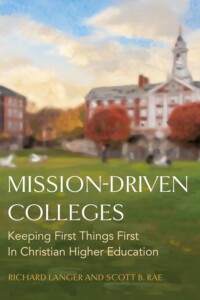
Mission-Driven Colleges: Keeping First Things First in Christian Higher Education
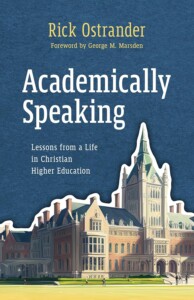
Academically Speaking: Lessons from a Life in Christian Higher Education
When I first became a provost at a small Christian college about ten years ago, I encountered the reality that forty percent of our faculty were within five years of retirement or already well beyond retirement age. Most of these faculty were long tenured members with a significant amount of institutional knowledge, strong academic leadership (many served as department chairs), and deep commitment to the mission of our college, an institution deeply rooted in the Reformed Christian faith. Over a period of five years, we lost a combined total of more than 400 years of institutional service. Both trustees and faculty expressed concern that the college might falter in its missional commitments without careful attention to the onboarding and development of our new faculty. As a result, faculty hiring and development assumed a primary role in my work. At the same time, as a college located in the northeastern United States, we faced the reality of a significant demographic decline further exacerbated by the COVID-19 pandemic. Similar situations affect other Christian higher education institutions around the United States. As an academic leader in this complex and challenging environment, I welcome resources that may provide insight and guidance to the dynamic reality facing Christian higher education. Three such books—Richard Langer and Scott Rae’s Mission-Driven Colleges, John Hawthorne’s The Fearless Christian University, and Rick Ostrander’s Academically Speaking: Lessons from a Life in Christian Higher Education—offer timely insights, critiques, and visions for Christian higher education. While each book approaches the subject from a distinct vantage point, collectively they identify shared challenges and opportunities, contributing to these ongoing conversations in Christian higher education. I will summarize each briefly below, identify themes and tensions, and conclude with each author’s unique perspective on a vision for institutional flourishing.
Mission-Driven Colleges: Keeping First Things First in Christian Higher Education
Richard Langer, professor emeritus of biblical studies and theology, and Scott B. Rae, senior advisor to the president for university mission and dean of faculty, both from Biola University, directly address a critical challenge facing Christian higher education: the potential for mission failure “by failing to be Christian or by failing to be higher education” (5). The book’s framework, originating from a three-day dean’s retreat facilitated by the authors at Biola in 2017, targets academic leaders from board members and presidential cabinets to deans and department heads to faculty. In six chapters and 192 pages, Mission-Driven Colleges desires to guide primarily those institutions with distinctly Christian faculty in “identifying, owning, and implementing the Christian mission of higher education” (5).
The book begins by exploring “What is a university?”, identifying five basic conceptions of the telos (purpose) of higher education: for jobs, for justice, for knowledge (or truth), for self-actualization, and for human flourishing. While acknowledging that any of these might be connected to the Christian faith, they argue that “the deepest and most natural connections are likely to emerge from higher education for the sake of human flourishing” (34).
In “What is a Christian university?”, Langer and Rae critically examine “inadequate” understandings of Christian higher education. They recognize that Christian institutions should not simply function as places of safety and Christian socialization. Instead, “Christian higher education exists to nurture the life of the mind and form our souls so that we might better serve the good of humanity and the glory of God” (39). The authors delineate a variety of distinctives of the Christian mind, including a view of the cosmos as creation ex nihilo, the “unity of truth,” that all knowledge is the result of “divine revelation,” a commitment to human flourishing, and an emphasis on calling and vocation as “an arena of service” (48–57).
The question “What is our university?” prompts institutions to understand their “sacred core,” defined as that which “animates the organization” and makes them distinct from other Christian colleges. At a minimum, a Christian college should “be clear about its foundational doctrinal positions since they significantly contribute to establishing the institutional identity of the school” (66). The authors discuss ways that institutions might communicate important doctrinal positions of their identity through required doctrinal statements, confessions of faith, or denominational membership.
In “What is a Christian understanding of academic disciplines?”, the authors present several competing models of faith integration. They critique the “compartmentalization model,” which by its essence avoids integration, and the “ministry model,” which simply adds religious practices in nonreligious contexts (e.g., prayers before class). The “cultural critique model” emphasizes a critical examination of modern culture and identifies those aspects that are not pleasing to God. The authors also refer to this system as the “referee model” (106). Their recommended integration process, a “cultural participation model,” encourages Christians to cultivate a Christian imagination for academic disciplines and cultural activities (106).
A practical section, “Creating and maintaining a culture of mission fidelity,” offers guidance for identifying strong missional faculty in the hiring process with an extensive list of potential interview questions. Langer and Rae also outline a variety of faculty development activities successfully launched at Biola aimed at increasing effectiveness in faith integration. These include faculty integration seminars, roundtables, coaching conversations, faculty reading groups, image reading groups, table talks, new faculty integration workshops, and co-teaching.
In the final chapter, “What is the Christian graduate?”, Langer and Rae advocate that Christian institutions should not only be concerned with academic outcomes but also provide “a clear vision of how their education seeks to form genuine and committed disciples of Christ” (154). They provide an example of what this looks like at Biola, a former Bible institute which still requires thirty credits of Bible for all students. Their Christian formation outcomes include a desire that graduates: know and interpret the Bible (biblically grounded), are equipped to articulate the Christian faith graciously (truth-bearers), are confident in their identity in Christ (identity in Christ), abide daily in Christ and his Word (abiding daily), worship in a local church community (unity within community) and love God and neighbor (God’s kingdom ambassadors) (167). The authors emphasize that students need to both “know and do” for transformative learning to take place.
The Fearless Christian University
In this book, John Hawthorne is advocating for a fearless Christian university, which he defines as “an institution that understands its role in the higher education landscape, can articulate that position in meaningful ways, organize its people and programs in support of that mission, and become a laboratory for how people of faith engage the broader culture” (3). His central message is that fear of mission drift, public relations crises, demographic change, and culture wars prevent institutions from embracing their identity as academic institutions (xi). Hawthorne’s primary audience is those actively engaged in the work of Christian higher education.
As a sociologist with nearly four decades of experience in Christian higher education, John Hawthorne has served as both a faculty member and an academic administrator at five different Christian institutions: Olivet Nazarene (as a faculty member), Sterling College (as a vice president for nontraditional programs), Warner Pacific (as chief academic officer), Point Loma Nazarene (as provost) and Spring Arbor (as a faculty member). Hawthorne retired in 2020 and confesses that it would have been difficult to write this book if he were still employed at a Christian university as it likely would have resulted in what he describes as a “We just want to make sure you’re still on board with our mission” conversation (xi). In nine chapters and 164 pages, Hawthorne attempts to reimagine what Christian institutions might be able to accomplish if they were not so afraid.
Hawthorne begins by discussing “The Limits of Fear,” diving into the internal and external factors that contribute to this fear. He submits that “the heart of the distinction between Christian universities and secular schools is the fear of students losing their way” (11). This fear, he posits, can lead university leaders to “operate far too often out of a concern that a boundary will inadvertently be crossed, and as a result, that their institution’s reputation will be damaged, donations will dry up, and the school will be characterized as ‘going liberal’” (2). He argues that the “former oppositional stance” of Christian higher education is “no longer tenable” given a variety of internal and external shifts (3). These internal changes include faculty identity that has shifted from mission-focused to discipline-focused, disconnection of administrators from faculty resulting in faculty unaware of institutional direction, demographic pressures, increasing college costs and competition, a decline in denominational identity, and changing values of the traditional student population (e.g., perspectives towards race, injustice, poverty, and LGBTQ+). External factors include the reality of living in a social media world (with brand at risk), the changing religious landscape in America (a.k.a. the rise of the “nones”), political alignments which may alienate segments of Americans, and the general questioning of college’s value. Hawthorne proposes a new model where the educational process is central, while Christian identity is “a key component of the pedagogical mission” (14). Per Hawthorne, “a fearless approach emboldens faculty and students to engage ideas that seem foreign to the Christian worldview—not to dismiss them but first to understand them before any response is offered” (14). He specifically mentions that sensitive issues like evolution, race, LGBTQ+ rights, gender, and politics could be “managed by foregrounding the pedagogical commitments to pursue truth amid complexity” (15).
In “Reimagining the Christian University Mission,” Hawthorne examines the concept of university mission, noting the need for such statements to emphasize teaching and learning. He identified ten key themes (e.g., academic excellence, Christian community, faith and learning integration, denominational identity) from thirty mission statements of member institutions of the Council for Christian Colleges & Universities (CCCU). After this review, he concluded that university mission statements often reflect the tensions at play within institutions. He states:
Academic priorities lead in one direction, while denominational commitments or methods of biblical interpretation might lead in another. The focus on internal community and the development of faith and character can be hard to reconcile with engaging and affecting the broader culture. . . . The integration of faith and learning can lead to unsettling conclusions that denominational leaders might disagree with. (32)
Hawthorne advocates for centering teaching and learning at the heart of the fearless Christian university mission, shifting focus from protecting the institutional brand to emphasize what is happening with the students (24, 29).
The chapter “Preparing Students for the Future” challenges the conventional notion of teaching a Christian worldview, arguing that it often reflects a “distrust of the broader intellectual world” (33). Instead, he proposes an alternative pedagogy that “builds from the students’ experience, coursework, career dreams, and faith toward a coherent whole” (35). This pedagogy, Hawthorne describes, “should focus on preparing students for the ongoing and future challenges of deconstruction as opposed to maintaining institutionally defined worldviews” (40). Although other authors might define “deconstruction” differently, Hawthorne specifically defines deconstruction as “the process of dismantling one’s prior weaker cognitive framework in order to build a more robust one that reflects a true subjective understanding of faith and learning” (39).1
“On Not Fighting Culture Wars” addresses the tendency of Christian universities to engage in “culture wars.” Hawthorne is critical of institutions that litigate against government policies, citing the College of the Ozarks’ lawsuit against the Biden administration as an example of fear driving Christian higher education’s “default assumption that the government is taking an antagonistic stance” (47). Instead, he advocates for James Davison Hunter’s concept of “faithful presence” and emphasizes “culture making, not culture wars.”2 This shift, Hawthorne argues, requires a “stance of partnership with the broader culture rather than the previous oppositional identity” (59).
In “Faculty and Administration in Partnership,” Hawthorne focuses on improving relationships between administrators, trustees, and faculty with a goal to forge relationships and understanding such that the faculty scholar becomes, for the administrator, one to be defended rather than a challenge to be addressed (68). He critiques three “misleading analogies” for Christian liberal arts universities—college as church, college as factory, and college as store—which he argues can lead to administrators viewing faculty as “operational units to be managed” or reacting quickly to complaints to protect the brand (66). Instead, he proposes an analogy as the Christian university as “laboratory,” where contemporary issues are explored within the context of the university’s faith commitments (78).
The chapter “Expanding the Christian University Market” tackles the challenges of enrollment due to the “demographic cliff” and decreasing evangelical student populations. In response, Hawthorne argues that Christian institutions should reach out to students that have not traditionally been primary targets in the recruiting pool. He suggests that Generation Z, or “Zoomers,” despite their limited religious commitments, may be more aligned with the mission of Christian universities due to their strong sense of morality and interest in spiritual community (96–97). To broaden the recruitment pool, he recommends dropping faith requirements for student admission, being more open to key political and social issues, attracting and retaining students of color, and finding hospitality for LGBTQ+ students.
“Listening to the New Generation” emphasizes the need for administrators and trustees to engage with students as they are, acknowledging the increasing prevalence of issues like family discord, sexual abuse, physical and mental illness, and non-traditional sexual orientation and gender identity. He recommends that institutions accept that today’s students are not going to be the idealized versions of Christian college students that are often highlighted in our marketing materials. He posits that “being a supportive community is not only central to the institutional ethos but potentially a way to enhance the school’s financial strength” (111).
“The Christian University as a Mission Outpost” reframes the relationship between the Christian university and the church. Hawthorne contends that colleges should stop viewing themselves as a “Church” and instead as a “mission outpost” concerned with “the common good and not simply boundary maintenance” (123). This requires administrators and trustees to articulate this vision of “faithful presence” to external stakeholders and empower faculty and staff to address contemporary issues proactively. The defining motif of a fearless Christian university, he concludes, should recognize fear but act with courage (125).
A concluding section, “Envisioning the Fearless Christian University,” provides a fictional account of a fearless Christian university (Bartlett University). This university features a diverse student body that embraces students of color and welcomes LGBTQ+ individuals while maintaining institutional policies against premarital sex. The institution is led by a president who defends the college’s responsibility to engage questions the church is unable or unwilling to raise.
Academically Speaking: Lessons from a Life in Christian Higher Education
Rick Ostrander’s Academically Speaking: Lessons from a Life in Christian Higher Education presents a deeply personal and reflective “case study” of an American Christian as he strives to live out his faith with both heart and mind. He recognizes that what began as a “how-to manual on academic administration” transformed into his autobiography, his attempt to “make sense” of his life so far, and “live forward more wisely” (xi, xiii). Ostrander, who has served in various leadership roles at institutions like John Brown University, Cornerstone University, Westmont College, and the CCCU, currently serves as the Executive Director of the Michigan Christian Study Center. In Academically Speaking, Ostrander narrates his “personal odyssey” through the world of Christian higher education. Published as eight chapters and 216 pages, the book’s target audience is current or prospective Christian higher education professionals and “Christians attempting to love God with both heart and mind and faithfully live out their particular calling” (xii). The book is structured around Ostrander’s experiences at different types of institutions, offering insights gleaned from each. He recounts his undergraduate years at Moody Bible Institute in “Bible College Beginnings,” and credits Moody with a quality education through its “alternative, countercultural, residential community” where he was exposed to different perspectives and came in contact with professors who “asked good questions, modeled humble curiosity, and prodded [him] in the direction of a deeper, more nuanced Christian faith” (19).
“Academic Awakening” details his time at the University of Michigan, a public university that transitioned from Protestant origins to a secular and socially progressive institution. Despite this, Ostrander personally experienced little anti-Christian hostility and learned that “non-Christians can excel at ‘culture making’ . . . that expresses the goodness of creation” (28). Through his own experience, he identifies the profound impact teachers have on students and emphasizes the importance of taking responsibility for one’s learning, the intellectual virtue of empathy, the value of critical thinking, and the need to develop a love for ideas. While sharing these positive reflections of his time at the University of Michigan, he also confesses that his academic life was “largely separate” from his Christian faith during this period (33).
In “A Community of Scholars,” Ostrander describes his graduate studies at the University of Notre Dame, a Catholic university with a reputation for being hospitable to evangelical scholars. Here, he sought to make sense of his faith by exploring the history of American evangelicalism. Influenced by George Marsden and the Reformed tradition, he learned that scholarly excellence need not exist at the expense of spiritual devotion and developed a strong appreciation for the approach to integrating Christian faith and scholarship that emerges from Reformed Protestantism, particularly its creation-fall-redemption paradigm and emphasis on Christ’s lordship (55).
“Loosening the Bible Belt” recounts his experience at John Brown University (JBU), an evangelical university with fundamentalist origins. He describes JBU as a “test case in the ability of evangelical higher education to overcome the ‘scandal’ of anti-intellectualism” (67). While a faculty member at JBU, he was introduced to the topic of faith integration in teaching through a CCCU workshop, a concept that would assume growing importance in his career (73). After six years as a faculty member at JBU, Ostrander served another six years as an academic dean. As dean, he recounts experiencing criticism regarding his book on JBU history, particularly his description of JBU’s history with race relations, as well as concern with his emphasis on the liberal arts (85).
In “Academic Leadership,” Ostrander details his time as Provost at Cornerstone University, an institution of Christian higher education in the highly competitive market of Grand Rapids, Michigan. During this period, he faced the difficult task of eliminating faculty positions due to a scarcity of resources, a process he was committed to manage with transparency and respect. It was during this time that Ostrander experienced a deeply personal challenge when his son came out as gay, prompting him to question how to respond as both a father and a provost at an evangelical Christian university. Ostrander found himself learning to “live in microcosm the life of a Christian college—to affirm traditional values but also to maintain that relationship supersedes theology” (102). After six years as Provost, he moved from Cornerstone to the CCCU when the opportunity to serve as a vice-president in that organization was presented. Ostrander cited a variety of reasons for making the move, most of which could be attributed to a desire to ensure that he and Cornerstone shared a common vision and mission.
“Plot Twist” described Ostrander’s time with the CCCU as a vice president overseeing study abroad and professional development programs from 2009 to 2018. During this time, the CCCU was living through the controversial moments when some of its members began to take a less oppositional stance to homosexuality and the “Fairness For All” initiative was introduced. Eventually, Ostrander’s position at the CCCU was reassigned to a part-time role as vice president of research and scholarship that would later end.
In “Back in Business,” Ostrander describes the years post-CCCU that he spent cobbling together a variety of part-time ventures including academic consulting until he accepted a position at Westmont as assistant to the president for academic innovation and director of Westmont’s new downtown campus. In “The Long Way Home,” we are introduced to the concept of Christian study centers, organizations that aim to combine “the best of two educational worlds—the sense of Christian community and faith integration found at a Christian college, and the significant resources and cultural influence of a major university” (161). The title of this last chapter not only reflects the reality that Ostrander had returned to the state of Michigan, but also the sense that the author had identified a role that truly allowed him to live out his calling.
Common Themes and Tensions
All three books present common themes such as the need for missional alignment of faculty and administration and the reality of challenges in the current higher education landscape. Langer and Rae directly state “that mission fidelity is everyone’s business,” especially in hiring, and outline ways that faculty and administration need to drive mission (131). They provide practical guidance on identifying missional faculty candidates and emphasize professional development activities aimed at increasing faculty alignment and engagement with mission. Hawthorne dedicates an entire chapter to a discussion on faculty and administration alignment and suggests some practical tips for improving those relationships. They include inviting faculty to board retreats, training for trustees, guiding faculty to develop an institutional orientation rather than a disciplinary one, and transparency and timely communication with faculty when problems emerge (81). Ostrander, having served on both sides of the faculty-administration divide, would agree on the need for faculty and administration to be aligned. His experience at Cornerstone, where he personally delivered news of faculty eliminations and organized receptions for them, underscores the importance of transparency and humane leadership in difficult situations. Ostrander references another leader in Christian higher education, Chip Pollard, president of John Brown University, to whom he attributes the quote, “the higher you rise in an organization, the more important alignment with the institution becomes” (103). Ostrander acknowledges that “in the highly competitive market of private, faith-based higher education, controversy between constituents that goes public can be disastrous” (97). His own narrative demonstrates the complexities of navigating these relationships, particularly when institutional direction or external pressures create friction.
All three sets of authors acknowledge the challenges facing higher education at this moment, such as the “demographic cliff,” evolving perceptions of higher education’s value amidst increasing college costs, and factors that may specifically impact Christian higher education such as an increase in students with no religious affiliation. Hawthorne further describes the shift in values held by the traditional student population on issues such as race, injustice, poverty, and LGBTQ+ that can be cultural challenges for today’s Christian colleges. In acknowledgment, Hawthorne states that “managing even a healthy Christian university became far more challenging” (4). Ostrander provides several examples of these challenges through his lived experience at Cornerstone in which scarcity of resources was a constant reality.
Although the authors share a common understanding on the issues just mentioned, as well as others, the books include areas of tension around several themes and present different visions for a flourishing Christian institution. First is the tension between maintaining mission identity and “fearless” engagement of ideas. Then, in response to the reality of the brokenness of our culture, the necessary tension between cultural opposition and cultural participation. In addition, the authors maintain different perspectives for achieving student formation outcomes and visions for a flourishing institution.
Navigating Mission and Identity: Fidelity and Fearless Engagement
History has shown that Christian colleges can and do experience “mission drift.” Thus, Christian colleges that are driven by a commitment to their mission have good reason to be on guard for ideas that stand in opposition to it. At the same time, Christian higher education institutions have a responsibility to engage the diversity of ideas that currently exist in today’s world so that our students are prepared to courageously work and serve in that world. This tension between mission fidelity and fearless engagement is reflected in all three books.
Langer and Rae provide a strong framework for proactive mission fidelity, emphasizing clear doctrinal foundations and intentional implementation as safeguards against mission drift. Their work underscores the necessity of a robust, actionable mission that truly shapes institutional decisions. In tension, Hawthorne challenges that a pervasive fear of mission drift can cripple institutions, leading to an overemphasis on “protecting the brand” rather than engaging courageously with the world. He advocates for centering the academic enterprise on student experience, daring to consider more expansive views on inclusion and engagement, even if it challenges traditional boundaries. Ostrander’s personal journey illustrates this tension; his career reflects a continuous grappling with institutional identity and his role in mission fulfillment. He acknowledges the tension between academic focus and mission drift for academic leaders and speaks of the “two voices whispering in their ears—one encouraging them toward greater intellectual respectability, the other warning of creeping liberalism” (64).
Cultural Engagement: Opposition, Participation or Faithful Presence?
In the book, Visions of Vocation: Common Grace for the Common Good, Steve Garber, an alumnus of my current institution, explores the tension between “how to know the world and still love it.”3 That tension is reflected in these three books as the authors present their understanding of how a Christian institution of higher education should best engage culture. Should they prepare students to be cultural warriors, set out to transform culture? Or should they prepare students to be a “faithful presence” as proposed by Hunter?
Both Hawthorne and Langer and Rae speak against a cultural critique model for education, that is, an education that is only limited to critically examining modern culture and speaking against those aspects that are not pleasing to God. Both sets of authors advocate instead for an emphasis on cultural engagement that leads to culture-making. Hawthorne takes a clear stand against the cultural opposition approach, stating that “the faithful Christian university avoids culture wars and opts instead for faithful presence” (56). Langer and Rae contend that “when critiquing becomes the essential mark of a Christian identity, one is failing at the task of Christian higher education” (43). They further lament that Christians are known by what they oppose rather than for their vision of what should be.
Langer and Rae implicitly advocate for a “cultural participation model,” while recognizing the boundary conditions required to be consistent with foundational doctrinal positions. These boundaries, they emphasize, should be clearly communicated to the academic community. Hawthorne talks little of doctrinal distinctives and theological commitments and would, I believe, see many of the limits endorsed by Langer and Rae to be evidence of fear and defensiveness. At the same time, I believe that many of the examples that Hawthorne provides as a fearful response would be interpreted by Langer and Rae as legitimate limits necessary to avoid mission drift (e.g., Hawthorne’s criticism of Wheaton for taking “draconian action” against a professor for saying that Muslims and Christians worshiped the same God or his criticism of a university that restricted the use of pronouns in email signatures) (71).
Hawthorne posits that addressing contemporary social issues is not merely optional, but essential for preparing students for a post-Christian society. Ostrander’s personal experience, particularly at the University of Michigan, was living out a cultural participation model when he recognized that “non-Christians can excel at ‘culture making’” (28). In his later experience in Christian higher education, he speaks of the profound challenges and personal struggles involved in navigating engagement on issues of origins and human sexuality. The tension for us, then, is discerning how to maintain our Christian convictions and distinctives while fostering genuine dialogue on the cultural issues that our students need to confidently address as they seek to be a redemptive presence in the world.
Student Formation: Biblical Worldview or Experiential Journey?
All three authors prioritize student formation, but their approaches differ significantly. Langer and Rae advocate for an intentional, curriculum-driven approach aimed at forming “genuine and committed disciples of Christ,” as exemplified by extensive Bible requirements and specific Christian formation outcomes (154). Hawthorne, conversely, critiques the traditional Christian worldview pedagogy, arguing that it is insufficient for students grappling with deconstruction. He advocates that, “rather than try to keep student learning constrained by a Christian worldview, with its antagonism toward the surrounding culture, we instead prepare students for how to thrive in that culture as an act of faith” (44). To that end, Hawthorne proposes a more student-centered learning model that builds from a student’s lived experiences with little mention of the need to build from a scriptural foundation.
Ostrander, through his own intellectual and spiritual journey, underscores the profound impact of individual faculty in mentoring students and the importance of allowing students to wrestle with ideas authentically. He ultimately suggests that the deepest formation happens in genuine community, where students can be truly known. These three books reflect the ongoing challenge that our institutions face of providing strong theological grounding while preparing students to navigate complex ideas with intellectual humility and spiritual resilience. Ostrander himself professes to an appreciation of theological grounding in a Reformed vision of education and confesses that “there seems to be something in the ‘transformationalist’ vision of Reformed Christianity and its emphasis on Christ’s lordship over every aspect of creation that fosters rigorous and consciously Christian scholarship” (55).
A Vision for Flourishing
Each of these authors presents a different vision for a flourishing Christian higher education institution. For Langer and Rae, a college flourishes when all members of the academic community, driven by mission, focus on mission fidelity and model an educational experience characterized by cultural participation and Christian formation for students (106). Hawthorne believes that flourishing will manifest when a Christian university lives fearlessly. To become fearless, he emphasizes the institution’s need to center on the student experience, shift from fear-based culture-war activity, model transformational outcomes for students, and understand more deeply how the university differs from the church (69). In the epilogue of his book, Ostrander reflects on institutional flourishing, suggesting that the key to institutional flourishing is “not one single thing, but a variety of features united by the common theme of providing students, faculty, and staff with the ability to be truly known” (172). He argues that the core value of Christian higher education institutions lies in “their ability to provide students not just with what students think they’re looking for—preparation for a successful career—but with what we as Christians know they’re really looking for: authentic community” (170). Ostrander describes a flourishing institution as one that possesses faculty committed to engaging with and mentoring students, dedicated to student formation. Such institutions are focused on cultivating healthy communities rather than focusing solely on achievement and outward success and, thus, are growing in faithfulness to their calling (178).
The visions of flourishing institutions offered by Ostrander, Hawthorne, and Langer and Rae highlight the need to balance unwavering commitment to foundational identity with courageous engagement in the modern world. A flourishing Christian university integrates faith and learning, holistically forming students—intellectually, spiritually, and socially—through robust academics, vibrant Christian community, and dedicated, missionally aligned faculty mentors. I believe that the future for Christian higher education lies not in choosing between fidelity and fearlessness, but in courageously embodying both, recognizing that true faithfulness to mission often necessitates the greatest courage in engagement.
Cite this article
Footnotes
- For contrast, see Alisa Childers and Tim Barnett, The Deconstruction of Christianity: What It Is, Why It’s Destructive, and How to Respond (Tyndale House Publishers, 2024).
- James Davison Hunter, To Change the World: The Irony, Tragedy, and Possibility of Christianity in the Late Modern World (Oxford University Press, 2010).
-
Steven Garber, Visions of Vocation: Common Grace for the Common Good (InterVarsity, 2014).