Authentic Communication: Christian Speech Engaging Culture Post

It is the perennial discussion topic at Christian university faculty workshops and seminars. It is the seemingly-elusive goal of the Christian college classroom. It is the subject of concern among education policy experts and educational philosophers. Simply stated, the questions raised by those interested in the integration of Christian faith and learning are nowhere near…

The Soul of the American University Refreshed Post

Philip Ryken is the President of Wheaton College, where he has served since 2010. The author or editor of more than fifty Bible commentaries and other books, Dr. Ryken provides leadership on the boards of the Council for Christian Colleges and Universities (CCCU) and the National Assocation of Evangelicals (NAE). He was recently appointed as…

Reflection on Gillis Harp’s “Reconsidering the Liberal Captivity of American Evangelicalism” Post

Tom Lehman is Professor of Economics at Indiana Wesleyan University. Gillis Harp’s “Reconsidering the Liberal Captivity of American Evangelicalism,” Christian Scholar’s Review 41:1 (Fall 2011): 51-66, touching on traditionalist versus classical liberal themes in early American evangelicalism, is provocative, and as an economist I noted several areas of agreement. However, I also wish to express…

The Image in Mind: Theism, Naturalism, and the Imagination Post

Reviewed by David A. Hoekema, Philosophy, Calvin College “In spite of the indispensable use of images in our yearning to make sense of reality, there has not been sufficient attention to the aesthetic in the debate between theism and naturalism” (3). This opening comment conveys the motivation for a wide-ranging and provocative book by a…

Risk and Responsibility in Global Environmental Governance Post

The fundamental problems of global environmental governance are scarcity (a relative lack of resources with which to satisfy our relatively abundant goals), tragedy (the necessity of choosing between competing goods or rights, a corollary of scarcity), and risk (a measure of the likelihood of a tragic outcome). This article by Noah Toly examines the origins…

The Image in Mind Theism, Naturalism and the Imagination Post

Reviewed by David A. Hoekema, Philosophy, Calvin College “In spite of the indispensable use of images in our yearning to make sense of reality, there has not been sufficient attention to the aesthetic in the debate between theism and naturalism” (3). This opening comment conveys the motivation for a wide-ranging and provocative book by a…

Changing Faces on Freedom of Religion or Belief Post

A mere four years – something of a lifetime – ago, the Berkley Center asked many scholars and activists to offer advice for the new administration of President Trump. At the time, I argued that the new administration needed to leverage its multilateral assets: that freedom of religion or belief needed American leadership, but that…

From Memory to Imagination— A Review Essay Post

Steven R. Guthrie is Associate Professor of Religion at Belmont University. We have reached a decisive moment in Western culture, a moment of monumental consequence, for the church generally and for its practice of music specifically. This claim is at the heart of C. Randall Bradley’s From Memory to Imagination: Reforming the Church’s Music. Bradley…

“A Medium for Meeting God”: C. S. Lewis and Music (Especially Wagner) Post

This essay will survey Lewis’s writings and outline the development of his aesthetic ideas in relation to music, emphasizing his enjoyment of Wagner and explaining nuanced references to Wagner throughout Lewis’s works. Moreover, this essay will describe how Lewis’s ideas about God advanced in counterpoint to his ideas about music and how Lewis eventually came…

Determining the Truth of Abuse in Mission Communities: A Rejoinder and New Agenda Post

A previous article, “Christian Communities and ‘Recovered Memories’ of Abuse” (CSR 41.4 [2012]: 381-400) by Robert J. Priest and Esther E. Cordill, examines the problem of individuals wrongfully found to have committed abuse against minors in a mission context. However, James Evinger and Rich Darr argue the article erroneously describes the methodology of one denomination’s…

Gratitude: An Intellectual History Post

Reviewed by Kelly M. Kapic, Theological Studies, Covenant College How should one react to the following claims? “Jesus was an ingrate” (68); or “‘ingratitude’ is one of Christianity’s great contributions to Western civilization, precisely the contribution Christianity made to the formation of modernity” (225). Such lines, scattered through this volume, may strike the reader as…

Adam and Eve: An Evangelical Impasse?—A Review Essay Post

Hans Madueme is Assistant Professor of Theological Studies at Covenant College. North American evangelical academic institutions are at a fork in the road. Developments in the natural sciences have raised, and continue to raise, difficult questions about the viability of traditional formulations of Christian doctrine. Mainline scholars have long made their peace with the modern…

“Mining the Riches” ft. the Octet Collaborative’s Mia Chung I Saturdays at Seven – Season Three, Episode Twenty-Nine Post

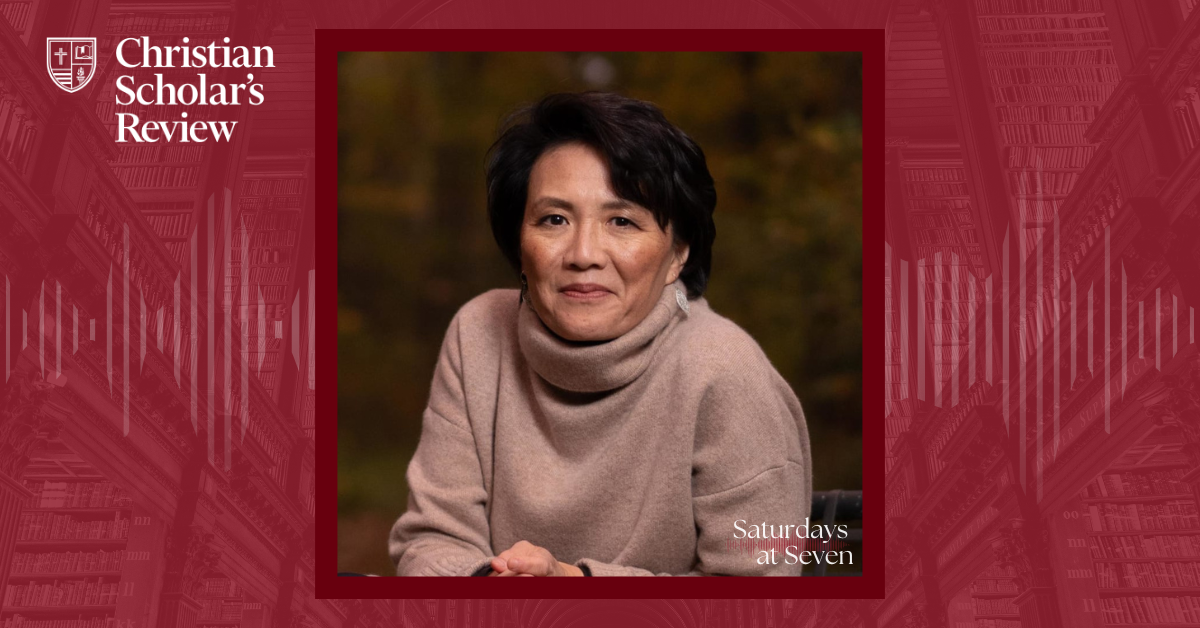
In the twenty-ninth episode of the third season of the “Saturdays at Seven” conversation series, Todd Ream talks with Mia Chung, Executive Director of the Octet Collaborative at the Massachusetts Institute of Technology. Chung begins by exploring the relationship shared by genius and effort. As a concert-level pianist, Chung began playing the piano at the age of seven. By the age of nine she determined she would pursue a calling as a concert pianist. While blessed with a considerable measure of talent, that talent needed to be accompanied by hours of practice during which she pursued technical precision. Over time, however, she also notes she needed to develop an appreciation for what beauty as expressed through music could offer. That appreciation not only added to her ability to perform as a pianist but also sent her down a path in search of the relationship beauty shares with truth and goodness. Chung discusses the lessons she learned as an undergraduate at Harvard College, as a graduate student at the Yale School of Music and the Julliard School, and as a faculty member at Gordon College and the Curtis Institute of Music. Each one of those chapters added in its own unique way to Chung’s ability to appreciate that relationship. Only now looking back can Chung see how the lessons learned during each one of those chapters prepared her to lead the Octet Collaborative at the Massachusetts Institute of Technology (MIT). While Chung originally sought to establish a comparable Christian study center at her undergraduate alma mater, a core group of faculty members at MIT were already in place and eager to support such an effort. Chung then closes by discussing ways that the Collaborative and the faculty who invest in its efforts are prepared to be of greater service to the mission of the Church.

“Co-Creating as Image Bearing” ft. Yale University’s James J. Choi I Saturdays at Seven – Season Three, Episode Eighteen Post

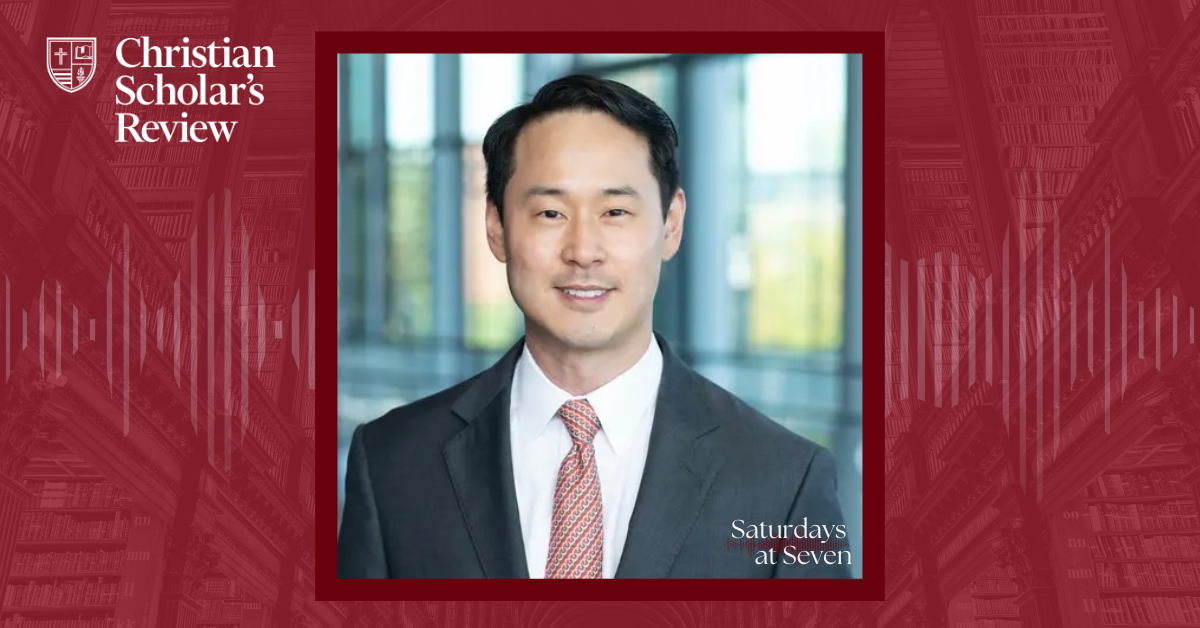
In the eighteenth episode of the third season of the “Saturdays at Seven” conversation series, Todd Ream talks with James J. Choi, Professor of Finance at Yale University and a TIAA Institute Fellow. Choi opens by reflecting upon the current state of retirement savings practices, ones which data indicate accomplish their intended purposes, ones which fail to do so, and ones which offer mixed results. While sliding scales of greater employer contributions designed to incentivize employee contributions are amongst the most common, data indicates employees on the higher ends of pay scales take the greatest advantage. What options are thus also needed to support the retirement efforts of employees who cannot afford to forgo immediate access to five, six, or seven percent of their income? Choi then discusses how he became interested in economics and, in particular, personal finance. Although he found himself exhausted by school at the end of his undergraduate years, he returned to Harvard University for graduate school and encountered mentors who helped shape his vocation and provide him with the tools and temperament needed to succeed in academia. That career in academia has now led Choi to serve for approximately 20 years at Yale University’s School of Management where he found a community which he appreciates and to which he believes he contributes. In order for economists to make valued contributions, he argues humility is a critical virtue. He believes he and his colleagues continuously need to realize that while their work may be of value, their methods may not be able to answer as many questions as they may initially believe. Choi closes by exploring ways economists and the Church can be of greater service to one another, joining forces, for example, in efforts such as poverty alleviation.

“Your Mind, Your Heart, and Your Soul” ft. Palm Beach Atlantic University’s Debra A. Schwinn I Saturdays at Seven – Season Three, Episode Six Post

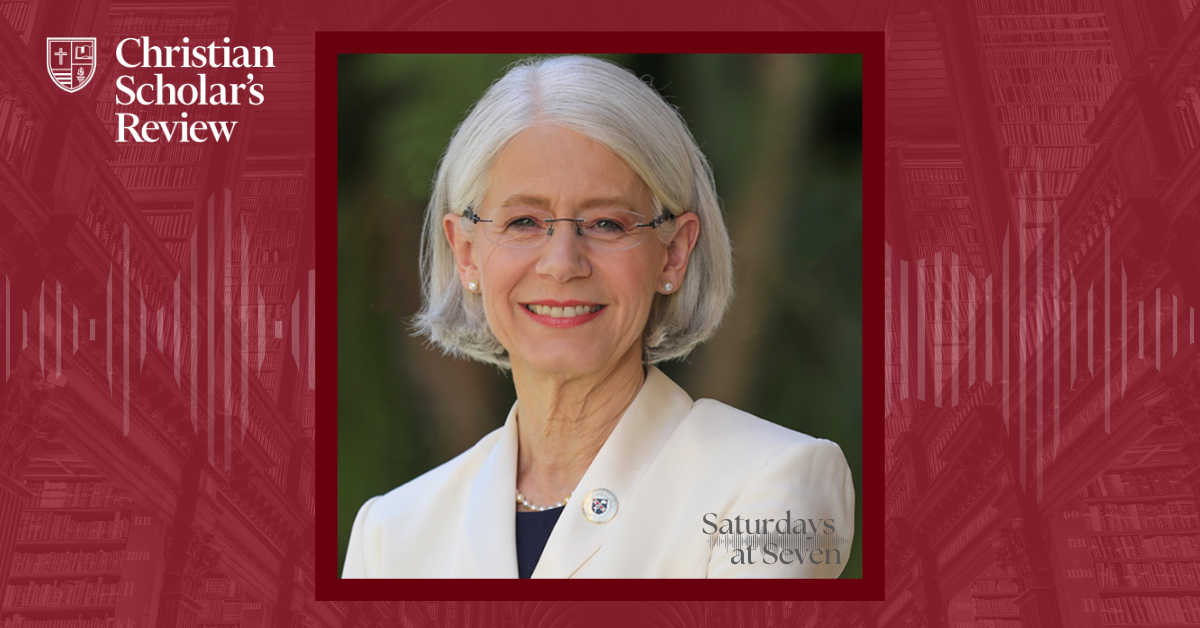
In the fifth episode of the third season of the “Saturdays at Seven” conversation series, Todd Ream talks with Debra A. Schwinn, President of Palm Beach Atlantic University. Schwinn opens by discussing the current state of medical education. As a physician scientist who served in several different capacities over the course of her career, Schwinn encourages the next generation of physicians to persist in their calling with hope and dexterity. With those ends in mind, she explains that the Christian liberal arts are amongst the best ways to cultivate such qualities. Schwinn then transitions to her own calling, initially as a concert violinist but eventually to chemistry and to anesthesiology. Such a commitment led her to serve in larger ways as someone called to exercise administrative insights, culminating as dean of the school of medicine at the University of Iowa. When the time came to make a transition, Schwinn found herself called to serve as president of Palm Beach Atlantic University (PBA). While her tenure began during Covid, Schwinn soon found that the rapid growth West Palm Beach was experiencing was also creating opportunities for PBA students in the form of internships, PBA’s Workship program, and PBA’s new business school. Such rapid growth, however, has also meant PBA leaders need to think in disciplined yet creative ways about how they continue to foster the university’s relationship with the Church.

An Appeal to Embrace Purposeful Mentorship Post

Writing in the pages of the New York Times, reporter Hans Sanders tells the story of Cris Hassold of New College Florida. A story that in so many ways captures the best of what the university can provide in a developing culture where campus life feels decadent and disconnected. In it, we find a professor dedicated…